
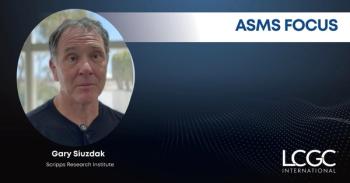
Siuzdak separates true standard-based empirical spectra from artifactual signals, warning AI trained on flawed data risks perpetuating errors.
Siuzdak separates true standard-based empirical spectra from artifactual signals, warning AI trained on flawed data risks perpetuating errors.
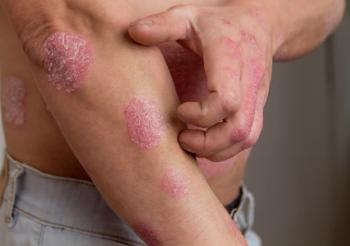
High-performance liquid chromatography (HPLC) profiles serum N-glycan ratios to track psoriasis severity and treatment.

This week, Chromatography Online presented ASMS 2026 recaps, HILIC deep-dives, AI in drug discovery, and a public health story from GC-MS.

Gas chromatography-mass spectroscopy (GC–MS) and high-performance liquid chromatography (HPLC) reveal how stir-frying builds complex flavors stage by stage.
Gary Siuzdak explains how uMRM converts inconsistent untargeted LC–MS data into standardized MRM transitions.
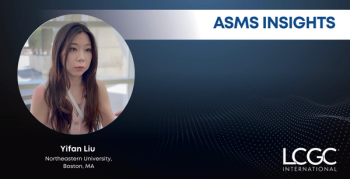
In the final installment of this four-part series, Yifan Liu of Northeastern University (Boston, MA) forecasts where metabolomics will be headed in the next ten years.
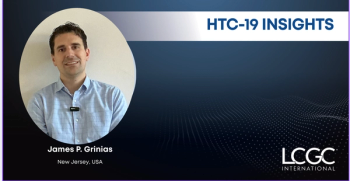
James Grinias from Rowan University, New Jersey, USA, discusses sustainability and modern capillary LC systems.

Two-dimensional gas chromatography (2D- GC) identifies 88 sulfur compounds shaping the key aromas of soy sauce flavor Baijiu.

The panel unpacks the defining challenge of PFAS analysis: a chemical class so vast and diverse it pushes current methods to their limits.
Jim Grinias from Rowan University, NJ, USA highlights advances in miniaturized capillary LC–MS that simplify system setup and improve ease of use. He also discusses low-flow challenges and how integrated components can enhance performance and reproducibility.
High-performance liquid chromatography (HPLC) reveals how melanoma vesicles suppress immunity, informing immunotherapy response tracking.
In this month's LCGC Blog, Caitlin Cain from the University of Virginia examines whether technological advances in chromatography—particularly the adoption of big data, artificial intelligence (AI), and machine learning (ML)—are reducing the emphasis on the fundamental chromatographic theory that is key to understanding the technique.
In the third of this four-part series, Yifan Liu of Northeastern University (Boston, MA) discusses the a need for dedicated LT-ZIC-HILIC retention time library for metabolic research.
Jonathan Maurer from the University of Geneva, Switzerland describes using HILIC for oligonucleotide analysis in practice and the role of HILIC for other biopharmaceutical applications.
Jonathan Maurer from the University of Geneva, Switzerland describes some of the challenges and misconceptions surrounding hydrophilic interaction chromatography (HILIC) and oligonucleotide analysis.
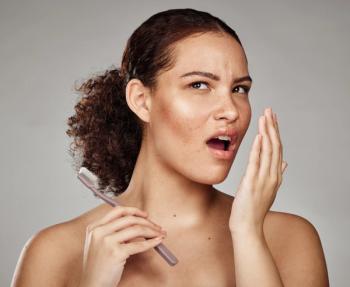
Gas chromatography (GC) measures volatile sulfur compounds (VSCs) in breath samples to assess remote halitosis diagnosis reliability.

Ultrahigh-performance liquid chromatography coupled with tandem mass spectrometry (UHPLC-MS/MS) identifies phenolic compounds driving honey's bioactive properties
In the second of this four-part series, Yifan Liu of Northeastern University (Boston, MA) discusses the biggest bottlenecks in untargeted metabolomics right now.
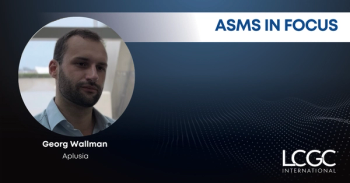
Wallman argues proteomics is moving from niche tool to high-throughput platform core, with the greatest untapped potential in covalent drug programs and targeted protein degradation.
Meet the expert panel exploring the analytical challenges of environmental PFAS detection in this LCGC International Peer Exchange®.

Gas chromatography-mass spectrometry (GC-MS) reveals harmful cooking emissions in New York City restaurant kitchens, raising worker health concerns.
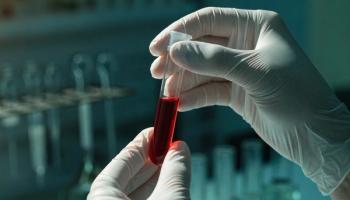
Liquid chromatography-mass spectrometry (LC-MS) reveals how flunitrazepam degrades post-mortem, aiding forensic overdose confirmation.
In the first of this four-part series, Yifan Liu of Northeastern University (Boston, MA) discusses her ASMS 2026 presentation, Low-Temperature HILIC Provides Enhanced Separations and Stability for LC–MS-Based Metabolomics.
Wallman explains that PeptDeepKontext is designed to generalize without lab-specific calibration, though highly unusual setups may still benefit from additional fine-tuning in the future.
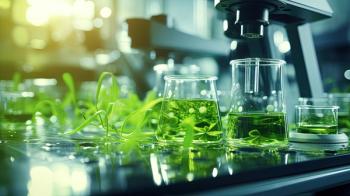
Gas chromatography-mass spectrometry (GC-MS) and spectroscopy confirm algae biodiesel as a potential clean, efficient fuel.

AI and robotics are converging to make chromatographic method development faster and smarter.

LCGC International spoke to Sandy Al Bardawil and Ludivine Ferey, authors of a review article summarizing recent advances in chromatographic methods coupled with MS for the characterization of therapeutic oligonucleotides.
Wallman unpacks how graph-level fragmentation in fragDETR captures internal fragments and neutral losses, with peak and intensity improvements concentrated in challenging non-standard peptides.
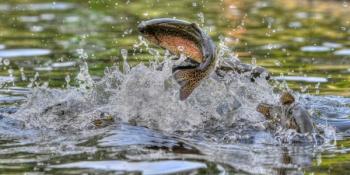
High performance liquid chromatography (HPLC) verifies creatine uptake via two distinct transporter genes in rainbow trout.
This week's Chromatography Online highlights span LC solvent mismatch solutions, advanced PFAS monitoring by GC–MS and TD–GC–MS, deep learning in DIA proteomics, multidimensional LC–MS for plant extracts, PEG column guidance, and LC–MS/MS and GC–MS applications in consumer product safety and disease research.