




Biopharmaceuticals and Protein Analysis
Latest News
Advertisement
Latest Videos


Advertisement
More News

Researchers at the Institute of Marine Research in Bergen, Norway used liquid chromatography–mass spectrometry to analyze resolvins in fish and human cells.

A new approach for purifying immunoglobulin-based therapies was created by Pfizer researchers.

To detect popular party drugs in human waste, researchers combined headspace solid-phase microextraction and solid-phase microextraction to detect these substances and their metabolites.
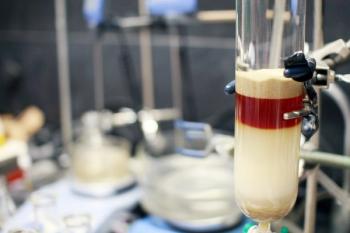
University of Geneva researchers led a collaboration for testing different size-exclusion chromatography columns to compare the capability for characterizing mRNA.

Researchers at LUT University highlight challenges in calculating adsorption values during aqueous chromatography and explore new methods to close this knowledge gap.

To better analyze polyphenols, scientists from Sapienza University of Rome examined the capabilities of supercritical fluid chromatography (SFC), comparing it to traditional methods.

Countercurrent chromatography systems were tested and combined to optimize their capacity for handling non-polar and polar substances.

A new study done by scientists in Switzerland and Sweden investigated the use of automated systems to develop multispecific antibodies.

To create a technique suited for analyzing proanthocyanidins and their properties, scientists combined high-speed countercurrent chromatography (HSCCC) and electrospray ionization–tandem mass spectrometry (ESI–MS/MS).

Circular dichroism and fluorescence were used to create a platform for monitoring changes in monoclonal antibodies.

Researchers tested immobilized metal affinity chromatography’s potential for broad applications.

Using two-dimensional liquid chromatography–mass spectrometry, a new workflow was developed to characterize phosphorodiamidate morpholino oligomers, which can help treat infectious diseases.

Recently, we spoke with Esther Olonimoyo from the University of Maryland, who recently published a study using high-performance liquid chromatography to analyze short chain fatty acids.

To better detect polycyclic aromatic hydrocarbons in the human body, a UHPLC–MS/MS method was developed and tested on urine samples from workers exposed to diesel exhaust.

To quantify antibiotics in ICU patients’ blood, dried blood spot analysis was sued alongside UHPLC–MS/MS to monitor these substances in a more convenient matter.

In a new study, researchers used GC–MS and LC–MS were used to detect composition fraud in food supplement creation.

Organic contaminant transformations in water were researched to understand the mechanisms behind such phenomena.

A gas chromatography–mass spectrometry-based approach was created and optimized to analyze reaction products of partial isobutane oxidation.

Researchers from Waters and Biospring studied the contribution of nucleotide type and modifications on the retention and resolution of 22–24 nt long oligonucleotides in different chromatographic methods.

Capillary gas electrophoresis was used recently to study what optimizes messenger RNA analysis.

Hydrophobic interaction chromatography (HIC) is useful, albeit costly, for purifying proteins. Researchers aimed to reformulate HIC isotherms using salt-dependent water activity to optimize the process.

Shea kernels contain bioactive secondary metabolites that can offer potential health benefits. Researchers aimed to learn more about these substances.
Essentials of LC Troubleshooting, Part VII: How Wide Should Those Peaks Be? (Large Molecule Edition)
In the latest edition of "LC Troubleshooting", Dwight Stoll explores troubleshooting tips for liquid chromatography, particularly focusing on peak width challenges in large molecule separations and effective solutions.

To meet the increasing worldwide demand for monoclonal antibodies, it is crucial to develop purification methods that are both efficient and easily scalable. Membrane chromatography offers a promising solution for streamlining antibody purification, thanks to its ability to handle high processing volumes rapidly. Convective membrane chromatography has become popular for purifying monoclonal antibodies. Researchers created a new model for modeling mass transfer during purification.

To address multi-drug resistance (MDR) among harmful substances, liquid chromatography–tandem mass spectrometry was used to test fosfomycin as a means of bypassing growing MDR amongst microorganisms.
Advertisement
Advertisement