




Biopharmaceuticals and Protein Analysis
Latest News
Advertisement
Latest Videos

Shorts
0:37
Tackling Complex Molecules in the Lab
8 months ago
by
Kate Jones
Advertisement
More News
As a long-standing member of the chromatography community, I am continually awestruck by the rate of change we consistently experience. Through the collective efforts of an entire community, we realize a fast-paced evolution that serves the world. In this article, we will aim to make the rapidly expanding and dynamic field of biopharmaceuticals approachable by taking a high-level look into its most recent success: peptide-based therapeutics.
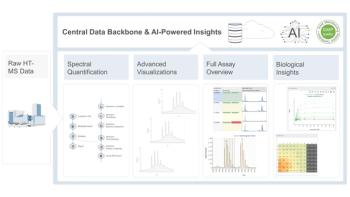
High-throughput mass spectrometry (HT-MS) is becoming a driving force in modern drug discovery. This article explains how a purpose-built digital ecosystem—featuring structured data, automation, artificial intelligence (AI)-driven analytics, and cloud scalability—is essential to translate massive HT-MS data sets into reproducible, actionable decisions.

Explore the complexities of GLP-1 impurity detection using HPLC/UHPLC and innovative strategies to enhance analysis and regulatory compliance.

Giulia Mazzoccanti spoke to LCGC International about the development and application of electrostatic repulsion-reversed phase (ERRP) chromatography for peptide separations.

Torgny Fornstedt, Jörgen Samuelsson, and Martin Enmark discuss a novel machine learning workflow for oligonucleotide analysis that is helping to enhance method development and impurity profiling efficiency.

Analyzing Small RNA-based Therapeutics and Their Process Impurities Using Fast and Sensitive LC–HRMS
Discover innovative LC–HRMS methods for analyzing RNA-based therapeutics, enhancing biopharma development and regulatory compliance in drug characterization.
Static and dynamic electrostatic repulsion-reversed phase (ERRP) has been compared for the separation of peptide impurities.

The advancements in HILIC–MS for oligonucleotide analysis are discussed, highlighting its potential as a viable alternative to traditional methods.

A reversed-phase liquid chromatography–charged aerosol detector (RPLC–CAD) method was developed and validated per ICH Q2(R1) guidelines for simethicone quantification.
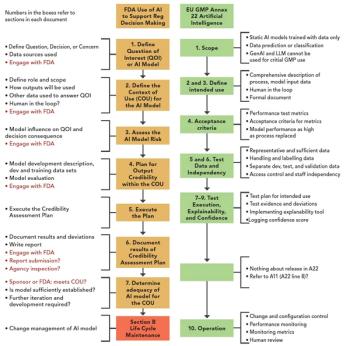
Does AI/ML help to enhance chromatographic peak integration? What do regulators say? Are you being seduced by technology?

SFC Europe 2025—the 19th International Conference on Packed Column Supercritical Fluid Chromatography and Related Techniques—will be held in Basel, Switzerland, on October 5–7, 2025. LCGC International spoke to John Reilly, Maria Kristina Parr, and Larry Miller about the important role that SFC now plays in life science analysis
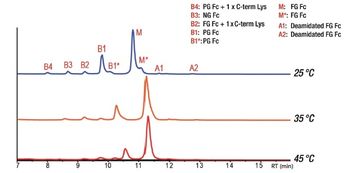
This article discusses the advantages of a native anion exchange method coupled to mass spectrometry (MS) for charge heterogeneity analysis of immunoglobulin G4 (IgG4)-based mAbs, which are currently being studied more intensively.

LCGC International spoke to Bo Zhang from Xiamen University in China about the advantages of stereolithographically printed 3D-printed columns that offer scope for negligible scaling-up costs, and the future opportunities and challenges for this novel technology

This article explores advanced oligonucleotide analysis techniques, including chromatography methods for therapeutic RNA, siRNA, and mRNA, enhancing nucleic acid research.
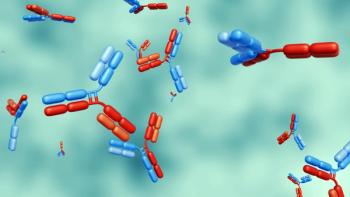
Explore the complexities of bispecific antibodies and multispecific biologics, focusing on production, purification, and analytical challenges in biopharmaceuticals.

In this study, we applied a high-sensitivity MAPPs workflow using magnetic bead-based HLA-DR/DP/DQ immunoprecipitation and high-resolution mass spectrometry (HRMS) to assess the immunogenicity risk of six marketed mAbs across a panel of 10 HLA-typed donors.

This article reviews literature related to 2D-LC applications in the biopharmaceutical field over the past six years (2018-2024).

Curcumin is a polyphenol believed to have anticancer effects. To better quantify its existence in plasma, reversed-phase high-performance liquid chromatography (RP-HPLC) was used to create a new analytical approach for quantifying this substance.

Best of the Week: Call for New Technology Submissions, Decoding Plant Stress Responses, Quantifying Cocoa Alkaloids
Published: | Updated:
In this article, you’ll find some of the top content that was published on LCGC this week, including calls for new chromatography technologies and interviews with rising stars in the field.

To create a new approach for monitoring and quantifying free fatty acids (FFAs), Chinese researchers combined stable isotope derivatization coupled with liquid chromatography–triple quadrupole mass spectrometry (ID-LC-QQQ-MS).

Enantiomer self-disproportionation can occur during various scientific processes. To understand temperature’s relationship with this phenomenon, researchers studied how temperature affected SDE in chromatographic separation.

Researchers from Comenius University Bratislava used LC–MS/MS to analyze albendazole substances in plasma samples.

Researchers at the Institute of Marine Research in Bergen, Norway used liquid chromatography–mass spectrometry to analyze resolvins in fish and human cells.

A new approach for purifying immunoglobulin-based therapies was created by Pfizer researchers.

To detect popular party drugs in human waste, researchers combined headspace solid-phase microextraction and solid-phase microextraction to detect these substances and their metabolites.
Advertisement
Advertisement