




Giorgia Purcaro from the University of Liège was interviewed at RAFA 2024 by LCGC International on the benefits of modern multidimensional GC methods to analyze mineral oil aromatic hydrocarbons (MOAH) and mineral oil saturated hydrocarbons (MOSH).
Giorgia Purcaro from the University of Liège was interviewed at RAFA 2024 by LCGC International on the benefits of modern multidimensional GC methods to analyze mineral oil aromatic hydrocarbons (MOAH) and mineral oil saturated hydrocarbons (MOSH).

In this edition of “Inside the Laboratory,” Andrew Zydney of Pennsylvania State University discusses his laboratory’s work with using high performance liquid chromatography (HPLC) to analyze biopharmaceutical products before and after membrane separation processes.

A Monday session at the Eastern Analytical Symposium, sponsored by the Chinese American Chromatography Association, explored key challenges and solutions for achieving more sensitive oligonucleotide analysis.

The method of standard additions (MoSA) enables quantification of volatile impurities in condensed-phase samples, such as emulsions, for which matrix-matched calibration standards are required. The technique is, however, expensive because it requires multiple analyses of each sample.

This article will discuss an ion-pair reversed-phase liquid chromatography mass spectrometry (IP-RPLC–MS) workflow for the characterization of three messenger RNA (mRNA) key critical quality attributes: 5’ Cap, ORF, and poly(A) tail.

The evolution of LC–MS for characterizing mRNA therapeutics is discussed.
Scientists from Peking Union Medical College & Chinese Academy of Medical Sciences created a new method for separating palonosetron hydrochloride, which is frequently used to prevent acute or delated nausea and vomiting caused by chemotherapy.

Manitoba Centre for Proteomics and Systems Biology scientists produced a new means of predicting peptide retention times for hydrophilic interaction liquid chromatography (HILIC) at acidic pH in formic-acid based eluents.

Politecnico di Milano scientists recently created a new optimization strategy for chromatographically purifying oligonucleotides.
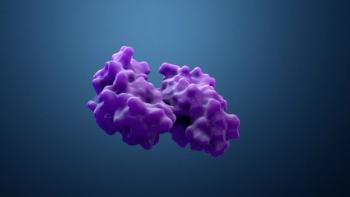
Michael G. Bartlett of the University of Georgia looked at how hydrophilic interaction liquid chromatography (HILIC) has evolved for oligonucleotide analysis in a new article.

Scientists recently used thermal desorption (TD) and gas chromatography– time-of-flight mass spectrometry (GC×GC-TOFMS) to track per- and polyfluoroalkyl substances (PFAS) emissions from materials used in firefighter gear.

Researchers from Bristol Myers Squibb and Sanofi recently tested a new means of using hydrophobic interaction chromatography (HIC) for removing impurities in monoclonal antibodies (mAbs).

Northwest University and Shaanxi Institute for Food and Drug Control scientists recently tested a new means of separating bioactive compounds from herbal extracts.

Navin Rauniyar and Xuemei Han of Tanvex Biopharma USA recently discussed how identifying product-related variants through characterization enables the recognition of impurities that compromise the quality and safety of drugs.
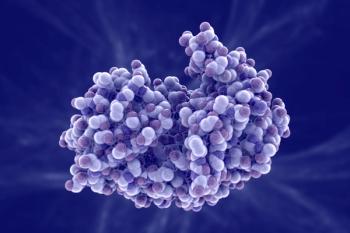
In this article, the use of comprehensive two-dimensional liquid chromatography (LC×LC) coupled to mass spectrometry (MS) for characterizing glycosylation of therapeutic enzymes is presented.
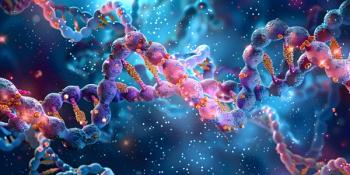
Hydrophilic interaction chromatography–mass spectrometry (HILIC-MS) offers a flexible and efficient alternative to ion-pairing reversed-phase liquid chromatography (IP-RPLC) for oligonucleotide analysis, with column selectivity and mobile phase pH being key factors in optimizing retention and detection.

Separation and Characterization of Macromolecules 11 (SCM-11) will take place from 22–24 January 2025 in Amsterdam, The Netherlands.

As part of our ISC 2024 coverage, we recently interviewed Alexandre Goyon of Genentech about his research and his being awarded our Rising Stars of Separation Science Award for Outstanding Achievement in Pharmaceutical Analysis.
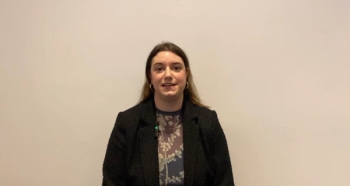
As part of our ISC 2024 coverage, we recently interviewed Amarande Murisier of the University Hospital of Lausanne, Switzerland (CHUV) about her winning the Rising Stars of Separation Science Award for Biopharmaceutcal Analysis and her scientific background.
Amarande Murisier has earned recognition in the field of biopharmaceutical separation sciences with method development of SEC and IEC hyphenated with MS.

The 34th International Symposium on Chromatography kicked off on October 6 in Liverpool, featuring two plenary sessions and an opening ceremony.

MS-SMART integrates three intelligent algorithms: automatic mining of diagnostic ions, rapid filtration of alkaloids from untargeted MS/MS data, and structural recommendations for filtered components.

Scientists from Tianjin universities and Cleveland State University investigated how to characterize a potent chemical compound in Platycodon grandiflorus roots.

Here is some of the most popular content posted on LCGC International this week.

Hangzhou Dianzi University scientists recently tested a new metal–organic framework (MOF)-based system for extracting benzodiazepines (BZPs) from urine.