




Scientists recently developed new GC/LC-Q-TOF/MS-based method for determining pesticides in Angelica sinensis, a traditional Chinese medicine.
Scientists recently developed new GC/LC-Q-TOF/MS-based method for determining pesticides in Angelica sinensis, a traditional Chinese medicine.

Researchers from Austria, Greece, and Italy conducted a study to analyze volatile organic compounds (VOCs) present in Irish and Scotch whiskys using solid-phase microextraction (SPME) Arrow with comprehensive two-dimensional gas chromatography coupled to mass spectrometry (GC×GC–MS) to examine the organoleptic characteristics that influence the taste of spirits.

A study has used gas chromatography coupled to a time-of-flight mass spectrometer to build an electron ionization mass spectra database of more than 250 chemicals classified as either volatile or semi-volatile compounds. An additional, confirmatory layer of liquid chromatography–mass spectrometry analysis was subsequently performed.

Limited toxicokinetic and toxicologic information is available about a diverse set of per- and polyfluoroalkyl substances (PFAS), but methods based on gas chromatography–tandem mass spectrometry (GC–MS/MS) can help unravel some of the mystery.

Recent advances in green chemistry have made multivariate experimental design popular in sample preparation development. This approach helps reduce the number of measurements and data for evaluation and can be useful for method development in gas chromatography.
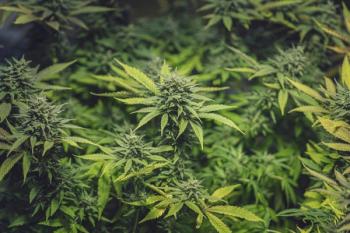
Messina Institute of Technology scientists used gas chromatography–mass spectrometry (GC–MS) was used to profile illegal samples of Cannabis sativa L.

Here is some of the most popular content posted on LCGC International this week.

In this article, the authors describe a simple workflow to develop a GC×GC method for a specific sample upon initial use, with the aim of decreasing the time to accomplish functional workflows for new users.
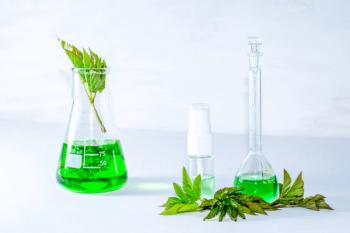
Everyone is talking about sustainability, and organizations are creating sustainability programs. But what does green chemistry really mean, and how does it apply to gas chromatography?
LCGC International spoke to Phil Marriott and Humberto Bizzo about a recent paper they published identifying the incorrect use of retention indices in gas chromatography and how this problem can be rectified in practice.

In this feature article, we profile three global cities (Cairo, Beijing, and Delhi) and how they are combatting the air pollution crisis to better protect the health of their residents.

Webcasts
Webinar Date/Time: Thursday, November 21, 2024 8am PST | 11am EST | 4pm GMT | 5pm CET

This review aims to provide a summary of the most current analytical techniques and their applications in per- and polyfluoroalkyl substances (PFAS) research, contributing to the ongoing efforts to monitor and mitigate PFAS contamination.

Scientists recently used thermal desorption (TD) and gas chromatography– time-of-flight mass spectrometry (GC×GC-TOFMS) to track per- and polyfluoroalkyl substances (PFAS) emissions from materials used in firefighter gear.

In this LCGC Blog, Daipayan Roy and Muhammed Qamar Farooq of Amgen discuss the history and impact of supercritical fluid chromatography (SFC) throughout the years.

Scientists from Institut de Combustion, Aérothermique, Réactivité et Environnement (ICARE-CNRS) in Orléans, France and Chromatotec in Saint-Antoine, France recently created a new algorithm for detecting volatile organic compounds (VOCs) in ambient air.

As part of our ISC 2024 coverage, we recently interviewed Caitlin Cain of the University of Michigan about her scientific background and her thoughts on winning our Rising Stars of Separation Science Award for Gas Chromatography.

Caitlin Cain has developed one-dimensional and comprehensive two-dimensional gas chromatographic methods using novel data analysis approaches.

A morning session at the International Symposium on Chromatography in Liverpool presented analytical challenges and potential solutions for PFAS analysis, oil pollution, and microplastics.

The 34th International Symposium on Chromatography kicked off on October 6 in Liverpool, featuring two plenary sessions and an opening ceremony.
Here is some of the most popular content posted on LCGC International this week.

ETHZ and Agroscope scientists tested a new means of analysis against secondary electrospray ionization (SESI) coupled to high-resolution-mass spectrometry (HRMS) for exhaled breath analysis.
Here is some of the most popular content posted on LCGC International this week.

Posters at the 2024 conference will feature research on a variety of topics from PFAS testing to the HPLC analysis of soft drinks.

The 2024 Gulf Coast Conference will include a variety of presentations on chromatography. This article features a sampling of some upcoming sessions.