






Gas Chromatography (GC)
Latest News
Advertisement
Latest Videos


Advertisement
More News

Environmental polycyclic aromatic hydrocarbons can prove dangerous if metabolites enter human systems. A new gas chromatography-based approach was developed to analyze the hydroxy derivatives in wastewater samples.

Analysis of VOCs is essential to maintain product consistency by detecting whether growing, refining, and production processes have an impact on the smell and taste of the product or whether a product has been tampered with.

Discover a novel GC-based method for accurately analyzing organic carbonates in lithium-ion batteries without the need for complex calibrations.

Discover a generic gas chromatography method for efficiently analyzing residual solvents in pharmaceuticals, ensuring compliance with regulatory standards.

Injecting too little into a liner in splitless mode can cause band broadening and increased activity. This article examines these effects in split mode.

A gas chromatography–mass spectrometry-based approach was created and optimized to analyze reaction products of partial isobutane oxidation.

New gas chromatography-based approaches were tested for detecting volatile organic compound (VOC) emissions for binders used in mineral wool insulation products.
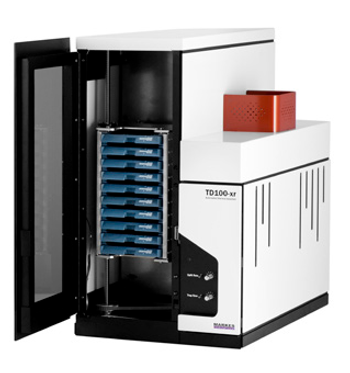


Monitoring the quality of essential oils is vital for protecting consumer health. Researchers recently combined gas chromatography and mass spectrometry approaches to gather data on mandarin essential oils.

As a precursor to the Lindau Nobel Laureate Meetings, Texas A&M University held a meeting for future Lindau attendees to highlight the institution’s scientific facilities. One such attendee is Caitlin Cain of the University of Michigan, one of LCGC International’s 2024 Rising Stars of Separation Science.
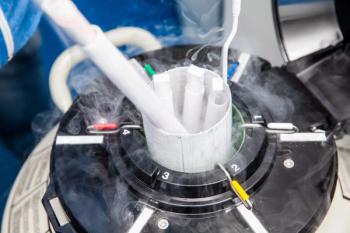
Cryogenic systems were recently tested for their ability to improve gas chromatography’s ability to modulate multi-component mixtures.

New QuEChERs-based methods were created to detect pesticide residues in commercial dry pet food.

Here is some of the most popular content posted on LCGC International this week.

The latest edition of “GC Connections” presents an annual review of new developments in the field of gas chromatography introduced in 2024–2025.
Here is some of the most popular content posted on LCGC International this week.

High-temperature gas chromatography (HTGC) is typically limited by a lack usable stationary phases. University of Rouen-Normandy researchers created their own stationary phases and tested them under HTGC conditions.

Dimethylamine (DMA) is the smallest organic amine, typically being found in both humans and marine ecosystems. Dimitrios Tiskas of Hannover Medical School recently analyzed the nature and significance of DMA and other amines.
Here is some of the most popular content posted on LCGC International this week.

Ion mobility spectrometers can detect trace compounds quickly, though they can face various issues with detecting certain peaks. University of Hannover scientists created a new system for resolving hyper-fast gas chromatography (GC) peaks.

Many multi-column gas chromatography systems use two-position multi-port switching valves, which can suffer from delays in valve switching. Shimadzu researchers aimed to create a new sampling and switching module for these systems.

As the push for green chemistry continues to grow, University of Almeria researchers created a review for ways chromatographic techniques could be more environmentally friendly.
Best of the Week: Future of Green Chromatography, BASF and Mingyang Collaboration, Cannabis Analysis
Here is some of the most popular content posted on LCGC International this week.
Advertisement
Advertisement
Trending on LCGC International
1
HPLC-FLD Confirms Aflatoxins in Peanuts, Pistachios
2
Industry Roundup: Shimadzu Debuts GCMS-TQ RX Series, Tackling Helium Shortage and Laboratory Throughput Pressures
3
GC×GC–TOF-MS Detects Persistent Organic Pollutants in Sediment
4
GC-MS Profiles Nano Garlic and Lemon Oils
5