




LCGC International sat down with Christopher “Chris” Reddy of Woods Hole Oceanographic Institution, whose research was the basis for a recently released documentary.
LCGC International sat down with Christopher “Chris” Reddy of Woods Hole Oceanographic Institution, whose research was the basis for a recently released documentary.

Scientists from the China University of Sciences combined magnetic solid-phase extraction (MSPE) with gas chromatography–mass spectrometry (GC–MS) to analyze perfluoro carboxylic acids (PFCAs) in different water environments.

Here is some of the most popular content posted on LCGC International this week.

A method to help detect genotoxic impurities (GTIs) using headspace gas chromatography (HS-GC) and deep eutectic solvents (DESs) has been developed.

A European Union reference laboratory recently created a new method for analyzing gas chromatography (GC)-amenable pesticides in foods of animal origin.

Spanish scientists recently tested flow injection analysis–mass spectrometry (FIA–MS) and its effectiveness in detecting fraudulent substances in Coleus forskohlii food supplements.

Here is some of the most popular content posted on LCGC International this week.

Jiangsu Police Institute scientists recently created a solid-phase microextraction (SPME)-based method for determining amphetamine-type stimulants.

In the first LCGC Blog of 2025, Caitlin Cain of the University of Michigan highlights the divide between gas and liquid chromatographers, and why both types of techniques should be in the same conversations.

In 2024, we launched a content series, covered major conferences, presented prestigious awards, and continued our monthly Analytically Speaking podcasts. Below, you'll find a selection of the most popular content from LCGC International over the past year.
This article highlights a curated selection of the most popular GC-related content, with a focus on the diverse applications of the technique, as featured in LCGC.

In this LCGC International interview with Beatrice Campanella from the Institute of Chemistry of Organometallic Compounds (ICCOM) in Pisa, Italy, which is part of the Italian National Research Council (CNR), we discuss her recent research work published in Food Chemistry on the subject of a method for quantifying methionine and selenomethionine in food matrices using gas chromatography–mass spectrometry (GC–MS) with aqueous derivatization by triethyloxonium salts (1).
Here is some of the most popular content posted on LCGC International this week.

Separation scientists frequently encounter critical pairs that are difficult to separate in a complex mixture. To save time and expensive solvents, an effective alternative to conventional screening protocols or mathematical peak width reduction is called iterative curve fitting.

Messina Institute of Technology scientists used gas chromatography–mass spectrometry (GC–MS) to profile illegal samples of Cannabis sativa L.

LCGC International spoke with Jim Gearing, Associate Vice President of Marketing, Agilent Gas Phase Separations Division; Massimo Santoro, Group Business Development Director at Markes International; Ed Connor, GC Product Manager at Peak Scientific; and Bruce Richter, Vice President of Research & Development at Restek Corporation.

LCGC International spoke to Phil Marriott and Humberto Bizzo about a recent paper they published identifying the incorrect use of retention indices in gas chromatography and how this problem can be rectified in practice.
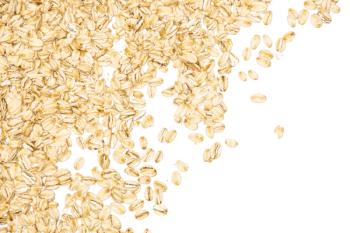
In the testing of six different oat brands, headspace sorptive extraction and comprehensive two-dimensional gas chromatography time-of-flight mass spectrometry (GC×GC–TOF-MS) reveal how various packaging types can affect and alter the oats’ volatile profile, underscoring the potential impact of packaging on food quality.

The Chromatographic Society (ChromSoc) has announced the winners of the Martin Medal and the Silver Jubilee Medal for 2025. Professor Bogusław Buszewski of Nicolaus Copernicus University in Torun, Poland, has been awarded the prestigious Martin Medal, and the 2025 Silver Jubilee Medal has been awarded to Elia Psillakis of the Technical University of Crete in Greece.

Three analytical and two pre-treatment methods—gas chromatography–mass spectrometry (GC–MS), gas chromatography–tandem mass spectrometry (GC–MS/MS), and liquid chromatography–tandem mass spectrometry (LC–MS/MS) plus liquid-liquid extraction (LLE) and dried blood spot (DBS) —were compared for the quantitation and characterization of barbiturates.

The volatile organic compounds (VOCs) that make up the flavor profile of cigars are examined using gas chromatography (GC) and E-nose.

Shanghai University of Sport scientists recently developed a doping control method based on gas chromatography combustion isotope ratio mass spectrometry (GC/C/IRMS).

A scientist from Agilent Technologies spoke about research analyzing extractables and leachables identified in rubber gasket extracts.

Giorgia Purcaro from the University of Liège was interviewed at RAFA 2024 by LCGC International on the benefits of modern multidimensional GC methods to analyze mineral oil aromatic hydrocarbons (MOAH) and mineral oil saturated hydrocarbons (MOSH).
Here is some of the most popular content posted on LCGC International this week.