





Gas Chromatography (GC)
Latest News
Advertisement
Latest Videos






Advertisement
More News

This past week, LCGC International published a variety of articles on hot topics in separation science.

The role of gas chromatography (GC) in forensic analysis is spotlighted.

How to take ownership of your next career steps
Webcasts
Webinar Date/Time: Wednesday, October 29, 2025 Morning Session: 2:00pm GMT | 3:00pm CET | 9:00am EST Afternoon Session: 5:00 pm GMT | 6:00 pm CET | 12:00 pm EST

Webcasts
Webinar Date/Time: Thu, Oct 23, 2025 10:00 AM EDT

Webcasts
Webinar Date/Time: Wed, Oct 22, 2025 11:00 AM EDT

Webcasts
Webinar Date/Time: Thursday, October 16, 2025 8am PDT | 11am EDT | 4pm BST | 5pm CEST

Trap focusing offers a powerful solution to common challenges in headspace (HS) and solid-phase microextraction–gas chromatography (SPME–GC) analysis of foodstuffs, including poor peak shape, limited sensitivity, and restricted dynamic range. This article explores how automated cryogen-free focusing, combined with multi-step enrichment and re-collection capabilities, can improve the detection and quantitation of both aroma-active compounds and trace-level contaminants. Using real-world examples, including flavor profiling of cola and garlic, and quantitation of ethylene oxide and epichlorohydrin in spices, enhanced chromatographic performance, greater confidence in compound identification, and lower detection limits than traditional workflows such as direct SPME or QuEChERS (Quick, Easy, Cheap, Effective, Rugged, and Safe) are demonstrated.

Gas chromatography (GC) liners are offered in dozens of different configurations and internal diameters. The liner is designed with baffles or glass wool to best vaporize and mix the sample prior to transferring it to the head of the analytical column. Split liners have considerably more flow and are designed to handle high split ratios. For example, some liners have a glass dimple at the bottom to allow for higher flow rates (low pressure drop). Some split liners have an outer diameter of 6.3 mm while splitless liners have an outer diameter of 6.5 mm. It has been reported that these liners have been used interchangeably, which begs the question: Does the outer diameter matter?
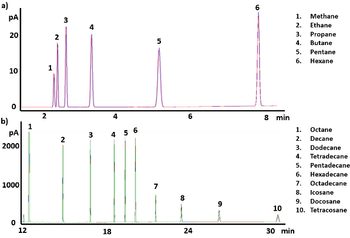
Discover how a novel alicyclic polydimethylsiloxane stationary phase enhances gas chromatography for precise carbon number grouping and hydrocarbon analysis.

Are you ready to separate the facts from the fiction?

In this installment, we will describe several modes of MS/MS detector operation.

Recent Advances in Gas Chromatography will be held on Tuesday, September 30, 2025, at the Science and Industry Museum in Manchester, UK.

Looking at the fundamental terminology and data analysis principles in benchtop GC–MS

Switching from helium as a carrier gas is less of a problem than people think. Is it time for you to think about it?

The approach describes a new untargeted, trapped-headspace (THS)-GC-QMS-IMS setup for an exhaustive VOC analysis of complex food, beverage, and flavor products, and allows the classification of mango cultivars in combination with chemometric data evaluation.

Lina Mikaliunaite shares her journey from studying liquid chromatography as an undergraduate to working in industry with GC×GC, highlighting the mentors, research experiences, and career steps that shaped her path in separation science.
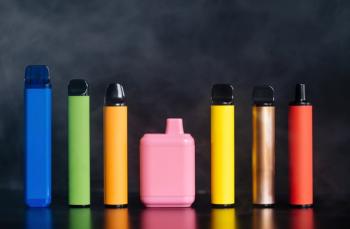
Researchers at the University of Huddersfield analyzed 60 new and used disposable e-cigarettes using HS-GC–MS and HPLC–DAD, finding concerning levels of ethyl maltol and benzoic acid and detailing their chemical composition and changes with use.

In new research, two transition substances in myrrh oil were studied during gas chromatography, in order to monitor for any changes in peak shape.

In the second part of this interview with Maria Olds of the University of Texas at Arlington, she discusses the consequences of not accounting for preanalytical factors in blood alcohol concentration (BAC) analysis.
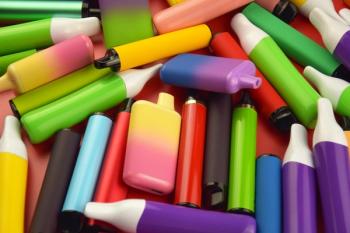
A recent study created a new technique for quantifying propylene glycol, a notable substance found in electronic cigarettes, using gas chromatography–mass spectrometry (GC–MS).

Best of the Week: Forensic Chromatography, Precision in Ethanol Testing, Analyzing Plant-Based Bioactives
Published: | Updated:
In this article, you’ll find some of the top content that was published on LCGC this week, including our upcoming forensic science content series and an interview on preanalytical factors for ethanol testing.
In the first part of this interview with Maria Olds of the University of Texas at Arlington, she discusses why preanalytical techniques should be considered for ethanol analysis.

Ink authentication is often complicated by tampering, aging, and chemical variability. Now, forensic scientists are turning to advanced gas chromatography (GC) techniques to enhance the accuracy and efficiency of ink analysis.

Continued helium use in gas chromatography–mass spectrometry/flame ionization detection has proven problematic. To combat this, alternative efforts are being tested.
Advertisement
Advertisement
Trending on LCGC International
1
Green Chemistry Meets Affinity Chromatography
2
AI ML Now: Gert Desmet on the State of Artificial Intelligence and Machine Learning in Separation Science
3
HILIC and the Shift Beyond TFA in GLP-1 Analysis
4
Conversations with Michael Dong: Reversed-Phase Chromatography: Retention Mechanism of Hydrophobic Interaction
5