

In biotherapeutics manufacturing, controlling size variants of therapeutic monoclonal antibodies (mAbs) is critical for ensuring product quality.

In biotherapeutics manufacturing, controlling size variants of therapeutic monoclonal antibodies (mAbs) is critical for ensuring product quality.

Scientists from the University of Isfahan in Iran recently developed a new system for detecting and quantifying B vitamins in human samples.

This article discusses the challenges and effective solutions for high performance liquid chromatography (HPLC)-based analytical characterization of virus-like particles (VLPs).

In this month’s column, I highlight some of the primary considerations we face in method development and point to resources that can help users overcome uncertainty and develop highly effective 2D-LC methods.

In the world of liquid chromatography, innovative strides in column technology continue to take place. We are also reminded that there is always more to learn about “well-known” methodologies, and our craft is continuously influenced by important social concerns.

Governments are striving to implement policy changes towards a greater use of green technology, specifically around the generation of energy. Individuals and industrial organizations have also taken up the challenge, and now many companies are driving to significantly reduce their environmental footprint, or indeed become carbon negative within very short time frames.

An unexpected retention order for ketamine analogs was observed when using a biphenyl stationary phase for liquid chromatography-mass spectrometry (LC–MS).

In this edition of The LCGC Blog, Emanuela Gionfriddo discusses the two world-class scientists and trailblazer women in separation chemistry and the awards they received at Pittcon 2024.

Tony Edge, Stephane Moreau, Carsten Paul, and Fraser McLeod discuss the latest trends and developments in LC.

How long should you perform an extraction of woodruff leaves so that you don’t end up with a harmful amount of coumarin, but still get the characteristic flavor of the finished May wine?

LCGC’s Senior Technical Editor uses artificial intelligence (AI) platform ChatGPT to answer questions about the role of AI in separation science. Do you agree with ChatGPT?

Here are the top five articles that the editors of LCGC International published this week.

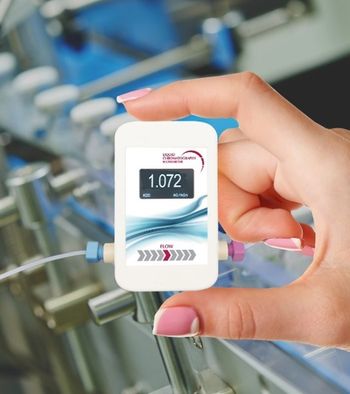
The flowmeter, Testa said in a press release, was compared favorably as an alternative to more traditional flow calibration methods for HPLC pumps.

Scientists from Wuhan Textile University recently tested a new solid-phase extraction system for analyzing covalent organic frameworks (COFs).

Scientists from the Shenyang Pharmaceutical University in China have developed a new quality assessment system for various types of traditional Chinese medicine (TCM).

In this installment, we apply the concepts developed in last month’s installment by demonstrating how they can be used to help troubleshoot problems in LC involving pressure and flow.

This article covers liquid chromatography columns and accessories commercially released after Pittcon 2023 through the 2024 conference.

A report estimates that the market for high performance liquid chromatography equipment will grow at a 4.61% CAGR between 2023 and 2033.

A recent study used ultrahigh-pressure liquid chromatography (UHPLC) to identify traces of drugs on smartphones.

As LCGC International celebrates Earth Day, we spotlight the current chromatographic research that is advancing environmental analysis and sustainability efforts. In this interview, we spoke to Daniel Armstrong, professor of chemistry and biochemistry at the University of Texas at Arlington, about his work using mathematical strategies to minimize analytical method greenness scores (AMGS) in HPLC enantioseparations.

In this interview, Angela Calderón of Auburn University discusses the importance of using more environmentally friendly analysis techniques.

Chromatographic and spectroscopic techniques alike were reviewed for their current effectiveness and future potential in this lecture session at Analytica 2024.

This article describes newly introduced high-performance liquid chromatography (HPLC), mass spectrometry (MS), chromatography data systems (CDS), and related products in 2023–2024. It summarizes their technical specifications and significant user benefits.

In the present study, a gradient reversed-phase high-performance liquid chromatography (RP-HPLC) method has been designed and validated to quantify ornidazole (OZ) in the marketed formulation (oral gel) with the application of QbD.

The 26th Norwegian Symposium on Chromatography was held 21–23 January 2024. The symposium has strong traditions in the Norwegian separation science community, serving as a forum for excellent scientific talks, networking, and social events.