






A little preparation eases the challenges of new methods—and increases the fun.
A little preparation eases the challenges of new methods—and increases the fun.

This simple, rapid, and accurate HPLC-UV method can facilitate routine therapeutic drug monitoring in neonates.

Barry L Karger is Director Emeritus of the Barnett Institute, and is the James L. Waters Emeritus Chair and Distinguished Professor Emeritus at Northeastern University in Boston.

A kinetic plot is a powerful tool, but how do you construct one—from either experimental data or data from other sources? We explain.
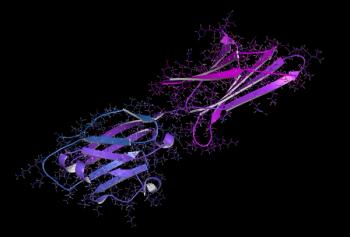
New developments in metal-organic frameworks (MOFs) for LC seek to control MOF distribution on the silica surface, improve understanding of the role of the substrate, and enhance robustness and reproducibility.

HPLC is emerging as the preferred analytical method for potency testing of cannabinoids, but fundamental work is needed to solve critical issues and contribute to advancing knowledge.

Barry L. Karger and James P. Grinias are the winners of the 15th annual LCGC Lifetime Achievement and Emerging Leader in Chromatography Awards, respectively, for 2022. Here, we review their achievements.

A HPLC method was developed to measure trimethylamine in fish oil supplements, to determine if the level of this compound affects product quality attributes such as rancidity.

An undeniable effect of the COVID-19 pandemic is that we have learned how to adapt (quickly) to sudden changes.

Kinetic plots can help us understand how different combinations of parameters will perform in relation the time needed to acquire a particular column efficiency—and thus resolution.

QuEChERS has been updated to suit modern instrumentation. Now also “efficient and robust,” QuEChERSER is a “mega-method” that covers a wider polarity range.

We review different approaches and coupling strategies for analyzing monoclonal antibody aggregates with 2D-LC.
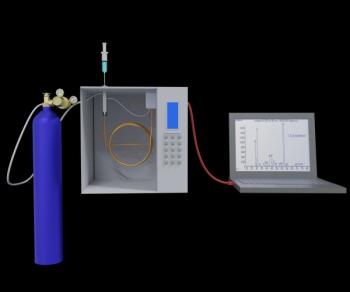
Compact instrumentation offers important advantages for many workflows, as illustrated by these examples.

Errors arising from the DNPH approach commonly used to analyze carbonyl compounds in smoke from heat-not-burn (HNB) tobacco can be avoided by using the approach described in this study.

Are we ready to let software and instruments take over the art of separations?

Here, a new automated active pharmaceutical ingredient (API) extraction platform is integrated with online liquid chromatography (LC) to assess drug product potency. The platform dissolves the tablet coating (if present), disintegrates the tablet, and disperses and solubilizes the tablet for analysis.

Deviations from the expected pressure in modern LC systems (too low, too high, or fluctuating) can be diagnosed and more quickly resolved using the streamlined troubleshooting practices shown here.

In this month’s blog, we provide information about the Subdivision on Chromatography and Separations Chemistry (SCSC) of the Analytical Division of the American Chemical Society (ACS), sharing our main goals and introducing our newly appointed executive board members.

Method validation processes will need to be refined to better suit forensic laboratories.

An improved LC–MS/MS method that can rapidly detect fipronil, an insecticide harmful to human health, is presented here for chicken eggs, feed, and soil.

What leads to an asymmetric peak shape? Physiochemical phenomena can help chromatographers identify whether the cause of asymmetry has a chemical or physical origin.

In this series of blog posts, I’m going to explore how the challenges of adopting methods from the literature, or from internal or external clients, can often be made easier, and more enjoyable, by taking time for some detective work prior to even entering the laboratory.

Peer-Reviewed Article
The UHPLC–MS/MS method can accurately determine the presence of these illegal feed additives in swine tissues.

Column: Perspectives in Modern HPLC
With a new free simulator, educators and students can perform virtual HPLC experiments under isocratic or gradient conditions applicable to real instrumentation and method development.

Column: LC Troubleshooting
As the field moves toward routine use of pressures well above 400 bar, the effect of pressure on retention should not be overlooked.