

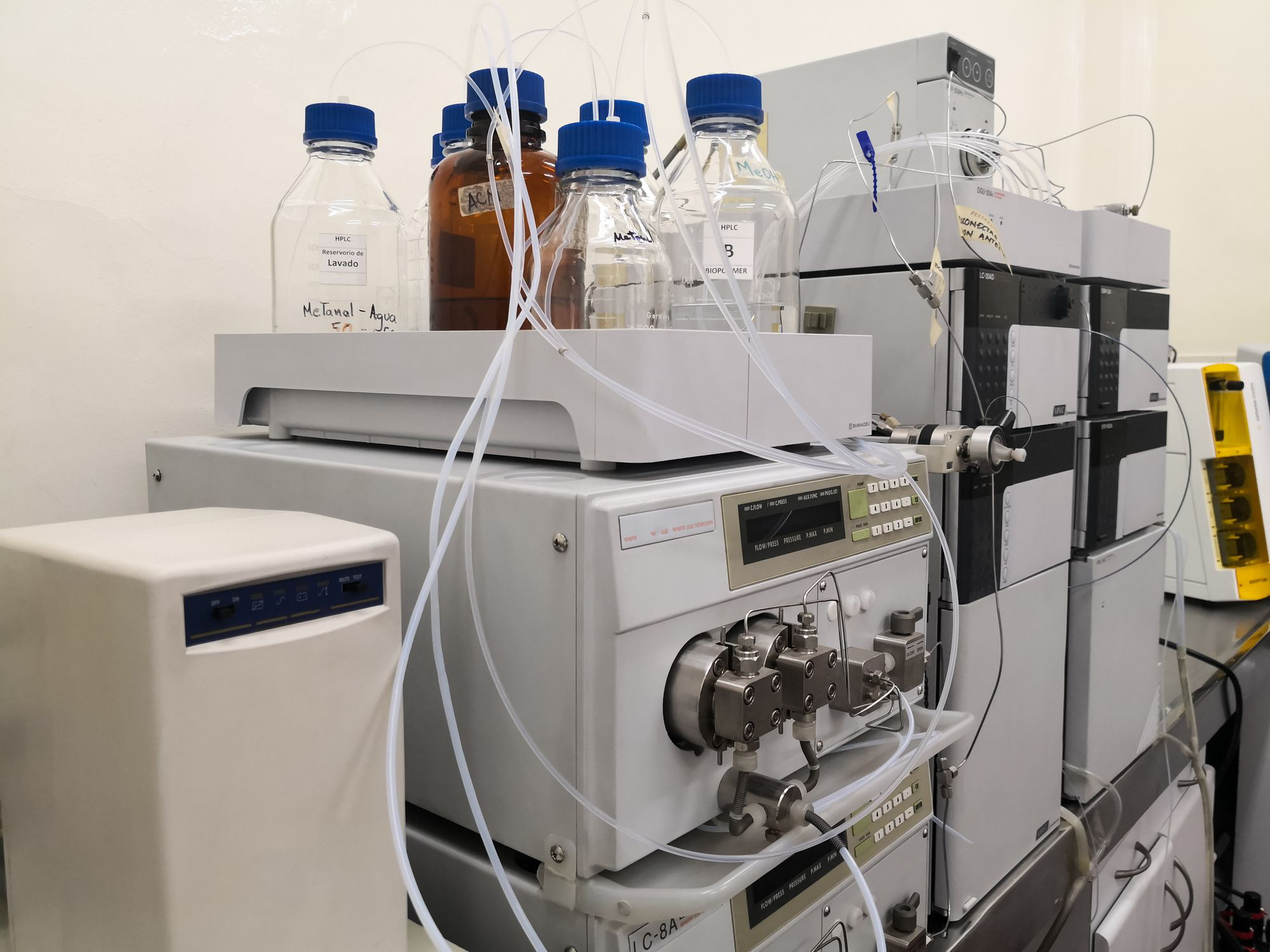


A general discussion of the megatrends of separation science equipment (both high performance liquid chromatography [HPLC] and mass spectrometry [MS]) and their applications in recent years is presented.
A general discussion of the megatrends of separation science equipment (both high performance liquid chromatography [HPLC] and mass spectrometry [MS]) and their applications in recent years is presented.

When can analyte retention deviate from what is expected or normal? We explain three subtle causes.
The new General Chapter <621> does reflect the great work of the Pharmacopoeias in helping chromatographers to use more modern technology for their regulated methods, speeding up analysis, and reducing waste. The latest revision allows us to adjust column dimensions for gradient separations, which is a significant advance. Although these freedoms are welcomed, one must be very mindful of the requirements or limits of the allowable changes and the verification work that underpins our demonstration of equivalent performance of the adjusted method.

Even relatively simple mixtures are not always easy to separate. What are the options for adjusting selectivity in reversed-phase LC separations?

Peter Schoenmakers and Emanuela Gionfriddo are the winners of the 16th annual LCGC Lifetime Achievement and Emerging Leader in Chromatography Awards, respectively.

A column with chemically modified column hardware showed improvements in analytical performance for siRNA compared to a conventional stainless-steel column.

When considering different ways to improve an established LC method, it helps to start by reviewing some essential concepts.

Robots outperform humans in five areas, and thus can be particularly beneficial for performing sample preparation for HPLC.
A harmonization of all conventional hold-up volume methods was successfully applied to RPLC, HILIC, AEX, and RP-AEX mixed-mode chromatography, regardless of the mobile phase.

An article from The Robot Report contrasted the performance of robots in industry against those of humans. The takeaways from the report are as follows.

Quantifying the content of coumarin and cinnamaldehyde in cinnamon products

As HPLC 2023 approaches, The Column spoke with the organizers, Oliver Schmitz and Michael Lämmerhofer, to find out what attendees can expect from the conference, which is a highlight in the chromatography calendar.

Estimating expected peak widths helps us determine when a column and LC system is not performing optimally.

TRLC can obtain separations similar to those of reversed-phase LC while using only water as the mobile phase.

In this extended special feature to celebrate the 35th anniversary edition of LCGC Europe, key opinion leaders from the separation science community explore contemporary trends in separation science and identify possible future developments.

The values determined by van’t Hoff analysis only have practical significance if we analyze the results obtained with well-planned and systematically varied experiments.

Learning or mastering new skills as an adult can feel daunting. These three tips will help.

At the heart of most chromatographic analyses are the gravimetric and volumetric operations used to prepare samples, standards, and HPLC mobile phases.
I recently read a nice article from The Robot Report (1) that contrasted the performance of robots in industry against those of humans. The takeaways from the report are as follows.

Knowing the tips and tricks of producing quality LC–MS data for peptide analysis can help streamline troubleshooting when problems occur.

There are various physical and chemical causes of low detection sensitivity. Here, we address some of these causes, and how to troubleshoot them.

The application of porous layer open tubular (PLOT) columns can be expanded beyond light compounds to separations of analytes with heavier boiling points.
This case study of the career path of a separation scientist illustrates the diversified roles of an analytical chemist in nonclinical drug development.

The return of the in-person HPLC Conference was welcomed by the separation science community. There were a lot of developments to share.

The method presented here, which uses a novel needle trap device (NTD) with sol-gel PEG-coated fibers in conjunction with GC, is a simple, inexpensive, and accurate tool for the analysis of trace levels of PCBs in water samples.