





Here are the top five articles that the editors of LCGC International published this week.
Here are the top five articles that the editors of LCGC International published this week.
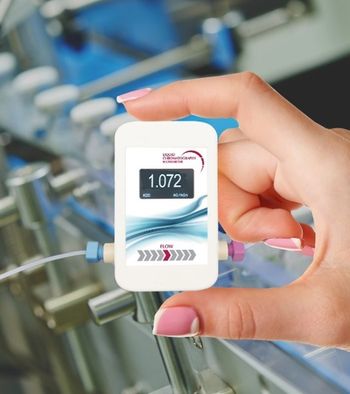
The flowmeter, Testa said in a press release, was compared favorably as an alternative to more traditional flow calibration methods for HPLC pumps.

SPONSORED
Fritiof Pontén, PhD, CEO of Biotech Fluidics AB, shares some insights on helping customers find the right solutions for their fluidic systems.

Scientists from Wuhan Textile University recently tested a new solid-phase extraction system for analyzing covalent organic frameworks (COFs).

In this interview for ASMS 2024, Liusheng Huang of the University of California San Francisco discusses his upcoming presentation about performing microvolume analysis on antimalarial drugs.

Xinyi Biyan is a Chinese patent medicine with significant therapeutic effects, widely used clinically to treat acute and chronic rhinitis or allergic rhinitis.

LCGC International interviewed Peter Horvatovich of the University of Groningen about his upcoming presentation at ASMS and his expectations for the convention.

Scientists from Changchun University of Chinese Medicine used UHPLC-Q-Orbitrap-MS/MS analysis to identify the active compounds in TongFu XieXia Decoction for treating intestinal obstruction.

Scientists from the Lunan Pharmaceutical Group explored the use of UHPLC-MS/MS to test the effects of Shouhui Tongbian capsules (SHTBs) on slow transit constipation (STC).

Scientists from the Shenyang Pharmaceutical University in China have developed a new quality assessment system for various types of traditional Chinese medicine (TCM).

Scientists from Chongqing University Cancer Hospital recently developed a new system for analyzing the potential impact of retention time (RT) prediction on targeted LC–MS-based lipidomics.

Brivaracetam has been approved for prescription use in the last decade for treatment of patients experiencing focal, or partial, seizures.
Here are the top five articles that the editors of LCGC International published this week.
Scientists from Florida State University used Marfey’s reagent and reversed-phase liquid chromatography–tandem mass spectrometry (LC–MS/MS) to analyze D-amino acids.

In this installment, we apply the concepts developed in last month’s installment by demonstrating how they can be used to help troubleshoot problems in LC involving pressure and flow.

This article covers liquid chromatography columns and accessories commercially released after Pittcon 2023 through the 2024 conference.

Recent advances in coating techniques and improved polymers employed as gas chromatographic stationary phases have resulted in commercializing low phase ratio capillary column technology with respectable chromatographic efficiency and inertness.
Researchers propose a suite of batch effect removal neural networks in large liquid chromatography-mass spectrometry experiments to maximize sample classification performance between conditions.

U.S. Environmental Protection Agency (EPA) Method 1633 signifies a pivotal shift in per- and polyfluoroalkyl substance (PFAS) determination, extending beyond drinking water.

Yelena Sapozhnikova from the United States Department of Agriculture spoke to The Column about her innovative research investigating PFAS in plastic food storage bags using targeted and non-targeted liquid chromatography–tandem mass spectrometry.

Michelle Colgrave of Edith Cowan University and Australia’s national science agency is the recipient of the 2024 Harvey W. Wiley Award.

French scientists recently created a new analytical method for quantifying micropollutants in different species of gammarids.
Here are the top five articles that the editors of LCGC International published this week.

Scientists from Hangzhou Medical College recently recorded the effectiveness of novel quality control strategies for the determination of vitamin D using liquid chromatography–tandem mass spectrometry (LC–MS/MS).

HRIM-MS has shown unique capabilities when used to analyze cyclic peptide therapeutics, and enhances the analysis of biopharmaceuticals by efficiently filtering out interfering compounds for direct analysis within a complex mixture. These findings demonstrate the technique's utility and versatility.