




Saer Samanipour from the Van ‘t Hoff Institute for Molecular Sciences (HIMS) at the University of Amsterdam spoke to LCGC International about the benefits of a data-driven reversed-phase liquid chromatography (RPLC) approach his team developed.
Saer Samanipour from the Van ‘t Hoff Institute for Molecular Sciences (HIMS) at the University of Amsterdam spoke to LCGC International about the benefits of a data-driven reversed-phase liquid chromatography (RPLC) approach his team developed.
Fabrice Gritti of Waters spoke with LCGC International about his career in chromatography.

Here is some of the most popular content posted on LCGC International this week.

Mithibai College of Arts scientists recently used liquid chromatography-tandem mass spectrometry (LC–MS/MS) for detecting nitrosamines in blood pressure medication.

Informative panel discussions featuring key opinion leaders from the separation science sector discussing the latest technology trends and developments in liquid chromatography, gas chromatography, sample preparation, and data handling.

Scientists recently developed new GC/LC-Q-TOF/MS-based method for determining pesticides in Angelica sinensis, a traditional Chinese medicine.

LCGC International sat down with Faith Johnson of ECOLAB to discuss her career and work with the Females in Mass Spectrometry (FeMS) group.

A study has used gas chromatography coupled to a time-of-flight mass spectrometer to build an electron ionization mass spectra database of more than 250 chemicals classified as either volatile or semi-volatile compounds. An additional, confirmatory layer of liquid chromatography–mass spectrometry analysis was subsequently performed.

The evolution of LC–MS for characterizing mRNA therapeutics is discussed.
Everyone is talking about sustainability, and organizations are creating sustainability programs. But what does green chemistry really mean, and how does it apply to gas chromatography?

Manitoba Centre for Proteomics and Systems Biology scientists produced a new means of predicting peptide retention times for hydrophilic interaction liquid chromatography (HILIC) at acidic pH in formic-acid based eluents.
Here is some of the most popular content posted on LCGC International this week.
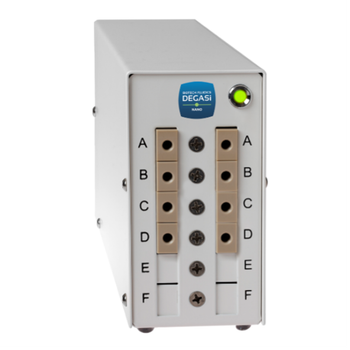
Biotech Fluidics recently released the Biotech Micro Flow Meter, a tool for continuously monitoring the consistency of nanoscale dispensing systems as well as UHPLC and LC/MS solvent/reagent delivery systems.
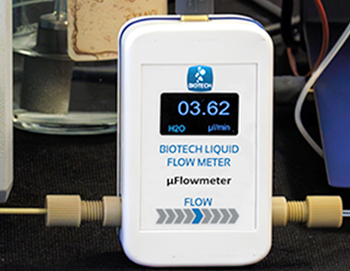
Biotech Fluidics reports that Dr Maisch HPLC GmbH have installed a Biotech Liquid Micro Flow Meter in their testing set-up to validate the performance of all capillary columns it manufactures.
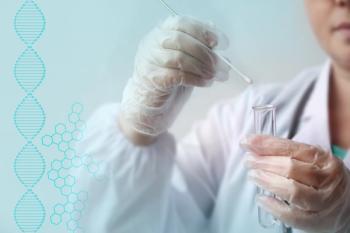
Scientists from the Institute of Analytical Chemistry of the Czech Academy of Sciences and Masaryk University recently tested various saliva sampling methods to optimize bile acid analysis.
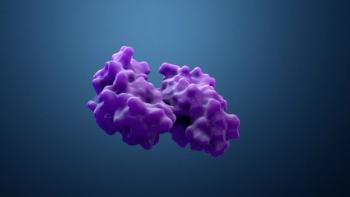
Michael G. Bartlett of the University of Georgia looked at how hydrophilic interaction liquid chromatography (HILIC) has evolved for oligonucleotide analysis in a new article.
Here is some of the most popular content posted on LCGC International this week.

This review aims to provide a summary of the most current analytical techniques and their applications in per- and polyfluoroalkyl substances (PFAS) research, contributing to the ongoing efforts to monitor and mitigate PFAS contamination.

Raquel Gonzalez de Vega of the University of Graz recently spoke to us about her work tracking per- and polyfluoroalkyl substances (PFAS) in ski wax products.

It has been more than five years since the last update in this column on the evolution of the Hydrophobic Subtraction Model (HSM) of reversed-phase selectivity and characteristics of new stationary phases recently characterized using the model. In this installment, Dwight Stoll discusses the continuing evolution of the model.

ISC 2024 in Liverpool, U.K. included an illuminating session on contemporary omics applications.
Hydrophilic interaction chromatography–mass spectrometry (HILIC-MS) offers a flexible and efficient alternative to ion-pairing reversed-phase liquid chromatography (IP-RPLC) for oligonucleotide analysis, with column selectivity and mobile phase pH being key factors in optimizing retention and detection.
In this LCGC Blog, Daipayan Roy and Muhammed Qamar Farooq of Amgen discuss the history and impact of supercritical fluid chromatography (SFC) throughout the years.

Analyzing functional foods reveals numerous health benefits. These foods are rich in bioactive compounds that go beyond basic nutrition, boosting the immune system and improving overall wellness. However, analyzing these compounds can be challenging. This article discusses AI algorithms to support automated method development for liquid chromatography, simplifying the process, enhancing labor efficiency, and ensuring precise results, making it accessible to non-experts for tea analysis.

The European Commission's regulation on maximum levels for certain contaminants in food highlights the need for precise and reliable methods to quantify per- and polyfluoroalkyl substances (PFAS) in various food matrices. This article discusses development and validation of a robust method for analyzing 21 PFAS compounds in chicken eggs using solid-phase extraction (SPE) and liquid chromatography–mass spectrometry (LC–MS).