



University of Tübingen scientists recently tested a new approach to hydrophilic-interaction chromatography (HILIC) to address retention time repeatability issues.

University of Tübingen scientists recently tested a new approach to hydrophilic-interaction chromatography (HILIC) to address retention time repeatability issues.

Scientists from the National Veterinary Research Institute used UHPLC-MS/MS as part of a new antimicrobial detection method in edible pig tissue.
In this continuing series from LCGC, we go on location to the Grinias Research Lab at Rowan University to see a liquid chromatographic analyzer in action.

ICAR scientists developed a new LC–MS/MS method for detecting trace amounts of toxic substances in sandy loam soil.
Scientists from Roche Diagnostics in Germany are testing a new liquid chromatography (LC)-based approach for advancing process analytical technology (PAT) in biopharmaceutical processing.

Here are the top five articles that the editors of LCGC International published this week.

Scientists in France took 122 swabs from the smartphones of music festival goers to test for a variety of illicit drugs including cocaine and MDMA.

In this edition of “Inside the Laboratory,” Lee Blaney of the University of Maryland Baltimore County (UMBC) discusses his laboratory’s work with using liquid chromatography (LC) techniques to analyze and measure contaminants of emerging concern (CECs) in water, soil, and environmental samples.

Scientists from the University of Isfahan in Iran recently developed a new system for detecting and quantifying B vitamins in human samples.

In this continuing series from LCGC, we go on location to the Grinias Research Lab at Rowan University and speak to graduate students about their backgrounds, research interests, and future plans.

Scientists from Hebei Medical University developed a sensitive liquid chromatography-tandem mass spectrometry (LC–MS/MS) method for analyzing free fatty acids in human serum.
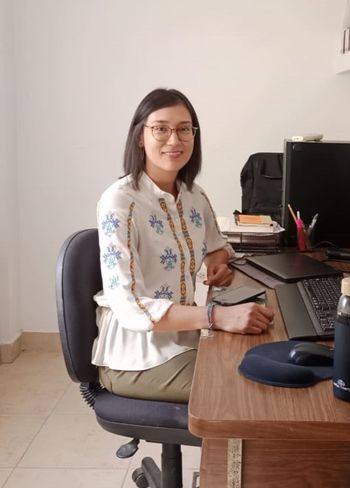
LCGC International sat down with Susana Palma of CIAD to discuss her career and work with the Females in Mass Spectrometry (FeMS) group.
Here are the top five articles that the editors of LCGC International published this week.

LCGC International sat down with Colleen Maxwell of the University of Leicester to discuss her career and work with the Females in Mass Spectrometry (FeMS) group.

This article discusses the challenges and effective solutions for high performance liquid chromatography (HPLC)-based analytical characterization of virus-like particles (VLPs).

In this month’s column, I highlight some of the primary considerations we face in method development and point to resources that can help users overcome uncertainty and develop highly effective 2D-LC methods.
Here are the top five articles that the editors of LCGC International published this week.

The “farmer-managed natural regeneration,” or FMNR, project has been ongoing for more than two years, aimed at re-greening deforested land.

In the world of liquid chromatography, innovative strides in column technology continue to take place. We are also reminded that there is always more to learn about “well-known” methodologies, and our craft is continuously influenced by important social concerns.

Governments are striving to implement policy changes towards a greater use of green technology, specifically around the generation of energy. Individuals and industrial organizations have also taken up the challenge, and now many companies are driving to significantly reduce their environmental footprint, or indeed become carbon negative within very short time frames.

An unexpected retention order for ketamine analogs was observed when using a biphenyl stationary phase for liquid chromatography-mass spectrometry (LC–MS).

In this edition of The LCGC Blog, Emanuela Gionfriddo discusses the two world-class scientists and trailblazer women in separation chemistry and the awards they received at Pittcon 2024.

Tony Edge, Stephane Moreau, Carsten Paul, and Fraser McLeod discuss the latest trends and developments in LC.

How long should you perform an extraction of woodruff leaves so that you don’t end up with a harmful amount of coumarin, but still get the characteristic flavor of the finished May wine?

LCGC’s Senior Technical Editor uses artificial intelligence (AI) platform ChatGPT to answer questions about the role of AI in separation science. Do you agree with ChatGPT?