Sponsored Content - NA
Sensitive detection of more than 250 pesticide residues in foods using the Agilent Ultivo Triple Quadrupole LC/MS system
Sponsored Content - NA
Sensitive detection of more than 250 pesticide residues in foods using the Agilent Ultivo Triple Quadrupole LC/MS system
Sponsored Content - NA
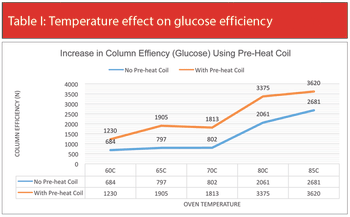
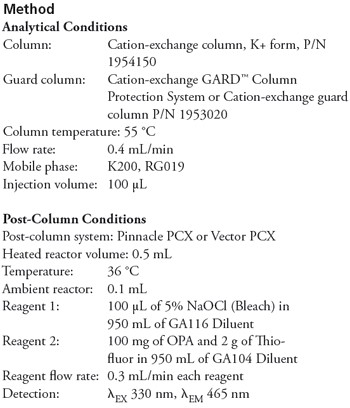
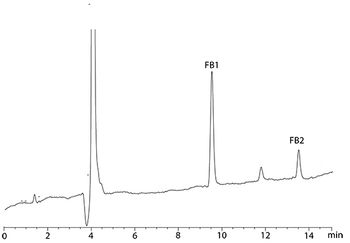
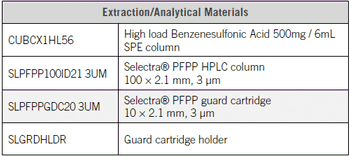
Analysis of paralytic shellfish toxins using a HPLC single step-gradient method with products of post-column derivatization detected using a fluorescence detector
The Application Notebook
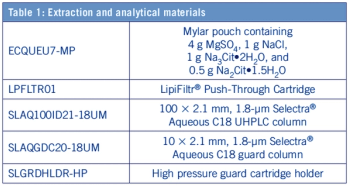
The easy to use, new LipiFiltr® push-through purification cartridge was designed to remove lipids from acetonitrile extracts. This application will outline the performance benefits achieved using the new LipiFiltr® cartridges in applications involving multiclass, multiresidue analysis for pesticides in complex, high fat samples.

The Application Notebook
In this study, a fast, sensitive, and selective multiresidue method has been developed by coupling QuEChERS sample preparation with LC–MS/MS. Using time-managed-MRM™ in the QSight® triple quadrupole mass spectrometer, the optimum dwell time can be generated automatically for MRM transitions based on the number of coeluting transitions, expected cycle time, retention time, and tolerance time window of the targeted analytes. Such method automation results in improved data quality and better sensitivity, accuracy, and reproducibility, as demonstrated in this study by the results of 213 pesticide residues analyzed in grape samples.

The Application Notebook
The building blocks of peptides and proteins, amino acids, are present in animals, humans, and plants. The analysis of amino acids is of essential significance in several areas including food science, clinical diagnostics, and pharmaceutical products research. Classical liquid chromatography (LC) determination of amino acids is performed with sample pretreatment including pre-column as well as post-column derivatization to improve or enable spectroscopic detection.


The Application Notebook
A sensitive determination method with automated solid‑phase extraction (SPE) is presented and the recovery rates are compared with manual extraction. The automated extraction was developed with the SPE robot FREESTYLETM SPE module (LCTech GmbH). According to the European Regulation (EC) No 470/2009, CHROMABOND® HLB was applied for SPE (1). A high performance liquid chromatography tandem mass spectrometry (HPLC–MS/MS) method with the biphenyl phase NUCLEODUR® π2 was used for the subsequent analysis.


The Application Notebook
The Application Notebook
The Application Notebook
The Application Notebook

The Application Notebook
The Application Notebook
Sponsored Content - NA
An isocratic HPLC method showing the separation of an artificial sweetener in a cola beverage. The chromatogram shows the advantage of using 230nm instead of 254nm for improved detection but minimizing the baseline interferences.
Sponsored Content
With the evolving market and demand for matrix-optimized transitions, the Agilent P&EP 4.0 Analyzer includes the addition of 7,800 matrix-optimized transitions to provide customers with their optimal pesticides analysis.
Sponsored Content - NA
195 pesticides were chosen to evaluate both the traditional time segment (TS) acquisition and dMRM acquisition structures. The use of dMRM provides the capability to better tackle large multi-analyte analysis.

The Application Notebook

The Application Notebook
The Application Notebook