

The Application Notebook
QuEChERS is a quick-easy-cheap-effective-rugged-safe extraction method developed in 2003 for the extraction of pesticide residues in agricultural commodities (1,2).
The Application Notebook
QuEChERS is a quick-easy-cheap-effective-rugged-safe extraction method developed in 2003 for the extraction of pesticide residues in agricultural commodities (1,2).

The Application Notebook
This application note demonstrates how comprehensive 2D-LC can be used to resolve the complex mixture of hydrophilic phenols found in virgin olive oil and investigates differences in the phenol composition of several olive oils.
The Application Notebook
Agilent Technologies
The Application Notebook
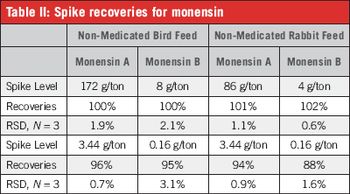
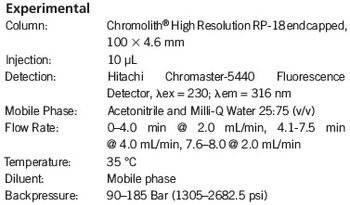
Polyether antibiotics are commonly used for preventing coccidiosis and other infections in poultry and for improving feed efficiency for beef cattle and swine.

The Application Notebook
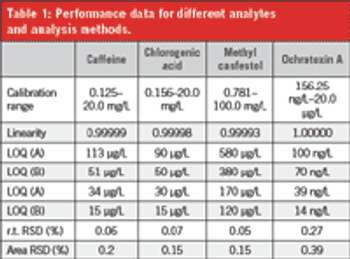
In this application we demonstrate the analysis of coffee and coffee products according to DIN methods. The performance of the analysis is shown for linearity, limit of detection (LOD), limit of quantification (LOQ), retention time, and area precision.

The Application Notebook
Fusel alcohols, a common byproduct of fermentation, in abnormal quantities or types can indicate alcoholic beverage adulteration.

Special Issues
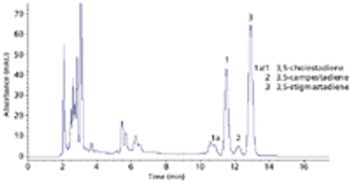
The presence of polymerized triacylglycerides or chlorophyll degradation products in olive oil indicates that the oil has been refined or subject to other thermal treatment processes.

The Application Notebook
EMD Millipore

The Application Notebook
Malvern Instruments Ltd.
The Application Notebook
UCT, LLC

The Application Notebook
Teledyne Tekmar
The Application Notebook
Agilent Technologies Inc.
The Application Notebook
Pickering Laboratories, Inc.

The Application Notebook
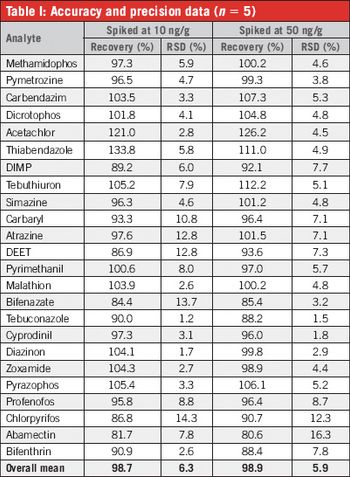
Contamination of food products with pesticides is a growing concern because of recognized damaging health effects. This concern is particularly acute for baby foods because of the vulnerability of young children to harmful effects of synthetic chemicals, particularly pesticides. This application note presents results for analysis of trace levels of 24 organophosphorus (OP) pesticides in baby foods using the Shimadzu GCMS-TQ8030 triple quadrupole GC–MS-MS.
The Application Notebook
EMD Millipore
The Application Notebook
Pickering Laboratories, Inc.

The Application Notebook
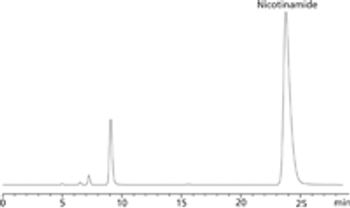
Beverages, such as sodas and energy drinks, can include a number of polar ingredients, which are easily soluble in the water matrix of the drinks. These ingredients include sweeteners (sugars and sugar substitutes), caffeine, vitamin supplements, amino acids, organic acids, and plant extracts. Because the analytes are already in solution, there is no need for extensive sample preparation. Dilution followed by direct injection into an HPLC is typically suitable.
The Application Notebook
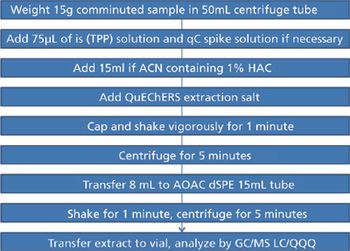
Sample preparation for multiresidue pesticide screening for agriculture commodities can be cumbersome and laborious for multiple sample extractions. With recent advances in multiresidue pesticide screening, methods have been simplified by the introduction of QuEChERS.
The Application Notebook
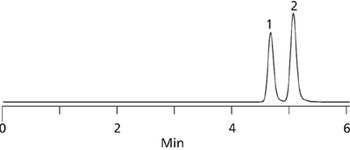
Caramel colorings are used as additives in a broad range of food and beverage products, but have no nutritional or preservative function. Recently, the potential hazard to humans of ammonia- and ammonia-sulfite-process caramel colorings was raised, because they contain the by-product 4-methylimidazole, which is a potential carcinogen (1).

The Application Notebook
Pickering Laboratories Inc.
The Application Notebook
OI Analytical
The Application Notebook
Waters Corporation
The Application Notebook
UCT Application Note

The Application Notebook
One fast, simple QuEChERS extraction for a broad range of pesticides.
The Application Notebook
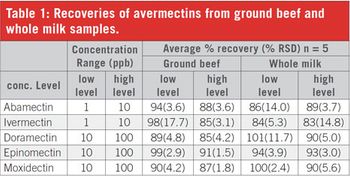
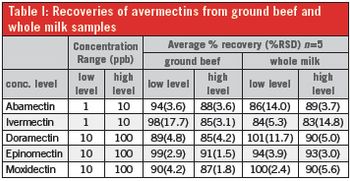
Avermectins are 16-membered ring macrolide drugs that are used as veterinary antihelmintics. The lowest allowable limit for these compounds in food products is set based on worldwide safety evaluations. Regulatory MRLs for avermectins can vary worldwide but are generally in the ppb concentration range. The sensitive analysis of avermectins in food products such as milk and meat can be challenging due to their complex sample matrices.
The Application Notebook
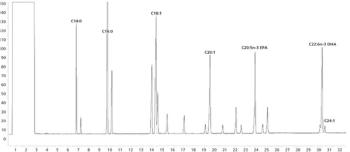
The health benefits of fish oil in one's diet has been widely established. Common edible fish sources include salmon, trout, tuna, swordfish, and others. The omega-3 fatty acids, EPA and DHA, in dietary supplements (capsules) are primarily derived from smaller oily fish, notably anchovy, horse mackerel, bunker, capelin, and sand eel.
The Application Notebook
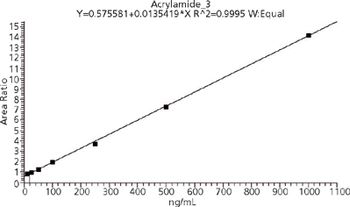
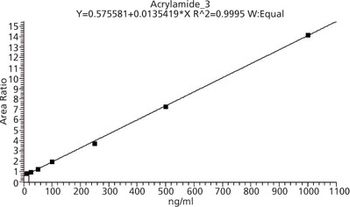
Acrylamide is a neurotoxic compound classified as a probable human carcinogen and genotoxicant (1). In 2002, researchers in Sweden uncovered the presence of acrylamide in certain fried and baked foods at relatively high levels (2).

The Application Notebook
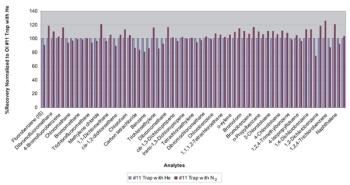
Levels of benzene, toluene, ethylbenzene, xylenes, and styrene (BTEXS) are a concern in olive oil. These compounds find their way into olive trees and hence into olives and olive oil mainly as a result of emissions from vehicles, bonfires, and paints into ambient air near orchards. This analysis uses a PerkinElmer? TurboMatrix? 110 Headspace (HS) sampler with a Clarus? SQ 8 gas chromatograph–mass spectrometer (GC–MS) to achieve detection limits below 5 ng/g and concentrations up to 100 ng/g.
The Application Notebook
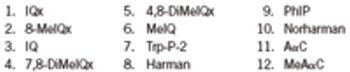
Heterocyclic amines (HCAs) are a class of compounds that are formed when amino acids from meat proteins react with glucose and creatine under high-temperatures, as is associated with frying or grilling over an open flame (1–3). Studies have correlated the consumption of high levels of HCAs with an increased risk of some forms of cancer.
The Application Notebook
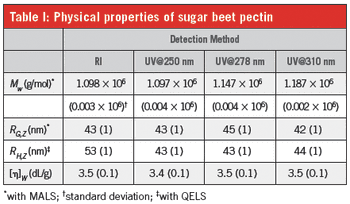
The need to increase the use of low valued co-products derived from the processing of sugar beets has prompted the investigation of the structure of the pectin extracted from sugar beet pulp. The characterization of sugar beet pectin is essential as it has the potential to be used in the production of industrial products, e.g., as an emulsifying agent in food systems.