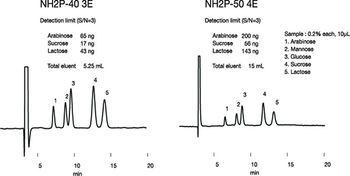
Due to the highly polar nature of saccharides, the analysis of sugars is typically achieved using hydrophilic interaction chromatography (HILIC).

Due to the highly polar nature of saccharides, the analysis of sugars is typically achieved using hydrophilic interaction chromatography (HILIC).

This application note demonstrates the comprehensive 2D-LC analysis of different types of beer. Nontargeted, multisample analysis (fingerprinting analysis) enabled a classification of the different types of beer analyzed.

Due to the highly polar nature of saccharides, the analysis of sugars is typically achieved using hydrophilic interaction chromatography (HILIC).

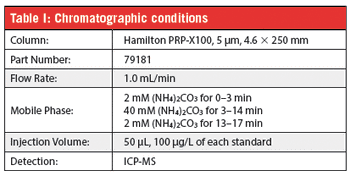
Organic arsenic compounds added to feed stocks of chicken and poultry pose serious environmental and ecological threats. National and worldwide health organizations, such as the United States Environmental Protection Agency and the US Food and Drug Administration, have recently implemented more stringent concentration limits for arsenic species in drinking water and foodstuffs.

The global demand for fish as a natural source of fresh animal protein, essential fats, minerals, and vitamins continues to rise with the human population.

In brewing, barley undergoes a malting process, the grain if first drenched to make it germinate and then dried in kilns to capture the sugar and flavor compounds for the brewing process.

Vicinal diketones (VDKs) are naturally produced compounds in the fermentation process. The monitoring of VDK levels is of great importance as the concentration of these compounds can greatly alter the flavor of a beverage.

B vitamins are a group of water soluble vitamins that play an important role in cell metabolism. This group consists of a number of compounds including thiamine (vitamin B1), riboflavin (vitamin B2), niacin and nicotinamide (vitamin B3), and pyridoxine and pyridoxal (vitamin B6).

Lactulose, a semi-synthetic disaccharide, is a useful indicator for heat induced modifications in milk. Lactulose can be derived from lactose by alkaline isomerization or enzymatic transgalactosylation of fructose.


Carbendazim is a widely used, broad-spectrum fungicide to control mold on citrus crops.

Due to the highly polar nature of saccharides, the analysis of sugars is typically achieved using hydrophilic interaction chromatography (HILIC).

Organic arsenic compounds added to feed stocks of chicken and poultry pose serious environmental and ecological threats.

Deoxynivalenol is a common mycotoxin found in agricultural grain crops and final consumer processed products.

This study illustrates the successful combination of fast GC and tandem mass spectrometry to determine 360 pesticides spiked in a QuEChERS apple extract.

Two species of spearmint oil (Mentha spicata and Mentha gracilis) are cultivated in the United States.


Modified starches are important materials used in many applications including foodstuffs.

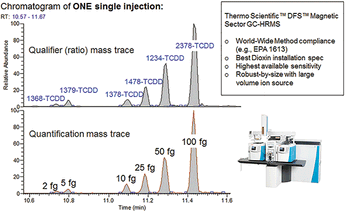
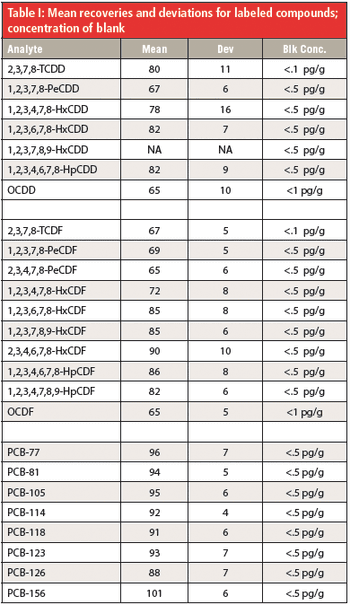
The dioxin family consists of 210 compounds, of which 17 contain the 2,3,7,8 pattern of chlorination.

Two species of spearmint oil (mentha spicata and mentha gracilis) are cultivated in the United States.

Hydrophilic interaction chromatography (HILIC) provides an alternative approach for the separation of highly polar substances.

QuEChERS is a quick-easy-cheap-effective-rugged-safe extraction method developed in 2003 for the extraction of pesticide residues in agricultural commodities (1,2).

This application note demonstrates how comprehensive 2D-LC can be used to resolve the complex mixture of hydrophilic phenols found in virgin olive oil and investigates differences in the phenol composition of several olive oils.


Polyether antibiotics are commonly used for preventing coccidiosis and other infections in poultry and for improving feed efficiency for beef cattle and swine.

In this application we demonstrate the analysis of coffee and coffee products according to DIN methods. The performance of the analysis is shown for linearity, limit of detection (LOD), limit of quantification (LOQ), retention time, and area precision.

Fusel alcohols, a common byproduct of fermentation, in abnormal quantities or types can indicate alcoholic beverage adulteration.

The presence of polymerized triacylglycerides or chlorophyll degradation products in olive oil indicates that the oil has been refined or subject to other thermal treatment processes.


Malvern Instruments Ltd.