

Sponsored Content - NA
This poster describes the analysis of 117 environmental air pollutants in high-humidity airstreams using thermal desorption with dual-column GC–MS/FID.
Sponsored Content - NA
This poster describes the analysis of 117 environmental air pollutants in high-humidity airstreams using thermal desorption with dual-column GC–MS/FID.
Sponsored Content - EU
• Robust and sensitive sampling, using HiSorb™ high-capacity sorptive extraction probes with preconcentration on the Centri® platform. • Enhanced confidence in identification, through use of the Tandem Ionisation® providing hard & soft EI spectra in a single run. • Highly sensitive SCD screening for odour taints caused by trace sulfur species.
Sponsored Content - NA
This application demonstrated a fragrance profiling study by a CDS Analytical 7000C concentrator with a dynamic headspace module on a PAL RTC rail. The results were compared to direct GC injection.
Sponsored Content - EU
Using a single-platform, multi-hyphenated analytical system, to detect odour taints and to provide flexible yet comprehensive aroma profiling of hops and beer
Sponsored Content - NA
Using a single-platform, multi-hyphenated analytical system, to detect odour taints and to provide flexible yet comprehensive aroma profiling of hops and beer
Sponsored Content - NA
Automated thermal extraction and GC/MS determination of VOCs in packaging for filled cookies, crackers, and soft candy is demonstrated to identify compound migration potential.
Sponsored Content
• Analytical methods for semi-volatile organic compounds can be streamlined. • Small-volume extraction techniques offer benefits over large volumes. • New techniques reduce sample preparation time and labor requirements.
Sponsored Content
• Modern software makes tracking and scheduling maintenance more efficient • Systems schedule maintenance based on instrument usage
Sponsored Content - EU
Aroma compounds in scented wax candles as well as aroma and odor emissions were determined by GC/MS after direct thermal extraction and air sampling with sorbent tubes.
Sponsored Content - EU
Data acquired using the Centri® automated multi-mode sampling and preconcentration system for GC–MS can be used to generate insights into the aroma profiles of foods.
Sponsored Content - EU
Dual GC poster that includes gas management selection chart and GC column selection chart
Sponsored Content - NA
Zebron gas management filters and click-on GC traps remove contaminants from mobile-phase gases, reduce column bleed, increase column life, protect GC detectors.
Sponsored Content - NA
Zebron gas management filter selection chart by the GC instrument and the fitting size
Sponsored Content - EU
Zebron gas management filter selection chart by the GC instrument and the fitting size
Sponsored Content - NA
Dual GC poster that includes gas management selection chart and GC column selection chart
Sponsored Content - EU
Zebron gas management filters and click-on GC traps remove contaminants from mobile-phase gases, reduce column bleed, increase column life, protect GC detectors.
Sponsored Content - EU
Zebron click-on trap step-by-step installation instruction
Sponsored Content - EU
Zebron gas filter step-by-step installation instruction
Sponsored Content - NA
Zebron click-on trap step-by-step installation instruction
Sponsored Content - NA
Zebron gas filter step-by-step installation instruction
Sponsored Content - NA
This application note presents thermal extraction of phthalates in accordance with IEC Method 62321-8 using a 6150 Pyroprobe.
Sponsored Content - EU
Solvent-reduced determination of 100 contaminants from low double-digit to low triple-digit pg/L in 100 mL surface water samples, meeting the requirements of the EU-WFD based on SBSE-TD-GC-MS/MS
Sponsored Content - EU
Quantifies affinity, stoichiometry of biomolecular assemblies, helping understand the mechanism of interaction and develop therapeutics that target and modulate them.
Sponsored Content - NA
Quantifies affinity, stoichiometry of biomolecular assemblies, helping understand the mechanism of interaction and develop therapeutics that target and modulate them.
The Application Notebook
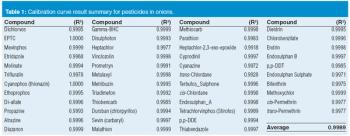
Most recently formulated pesticides are smaller in molecular weight and designed to break down rapidly in the environment.

The Application Notebook
SPME-GC–MS with on-column injection can be successfully employed for flavour profiling of food samples. The on-column injector of the GC-2010 can be used for SPME without any modifications, only an external ring adapter was used to facilitate the injection. The data can be compared with sensorial data of food.

The Application Notebook
The composition and analysis of fragrance components in home and personal care (HPC) products is very complex and unquestionably time consuming.

The Application Notebook
The QuEChERS method for pesticide analysis was first introduced by USDA scientists in 2003. The EN method 15662:2007 is a European variation to the QuEChERS method. The method uses acetonitrile extraction, followed by the salting out of water from the sample using anhydrous magnesium sulphate (MgSO4, NaCl and buffering citrate salts to induce liquid–liquid partitioning.

The Application Notebook
Polybrominated diphenyl ethers (PBDEs) are bioaccumulativetoxic compounds that are used as flame retardants. They have high boiling points and low thermal stability which makes analysis by GC–MS challenging. Additional bromines increase the thermal instability. A method was developed to analyze for polybrominated biphenyls using a large volume injection, short analytical column, and high mass tuning algorithm on the Thermo Scientific DSQ II with detection by EI Single Ion Monitoring (SIM).

The Application Notebook
Rapid sample preparation using the CUSTODIONâ„¢ solid phase microextraction (SPME) syringe was applied to chemical warfare agents (CWAs), CWA simulants, by-products, and precursors. The samples were analyzed quickly and reliably with a sample-to-sample cycle time of less than 3 min using the GUARDIONâ„¢-7 portable capillary gas chromatograph toroidal ion trap mass spectrometer (GC–TMS).