

We present two cases where understanding the specific interactions between particular analyte functional groups and LC instruments and columns is critical for successful separations.
We present two cases where understanding the specific interactions between particular analyte functional groups and LC instruments and columns is critical for successful separations.

Analyzing representative standard mixtures, APIs, and synthetic impurities shows that when TRLC is combined with RPLC in 2D-LC, separation performance is improved. We explain why.
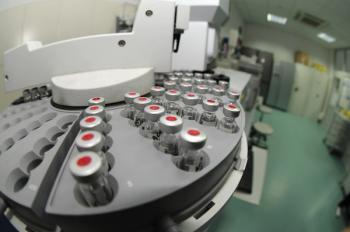
We offer troubleshooting tips for various gas chromatography (GC) detectors, as well as provide an overview of the different options chromatographers have when using a GC detector.

An examination of the principles behind “salting out,” and when it can be applied in analytical extractions to enhance the extraction yield.

When used appropriately in RPLC, ion pairing agents can increase the separation and retention of charged analytes. But should they be explored in other modes of HPLC as well?

Forensic laboratories need to revise their procedures for uncertainty assessment in blood alcohol determinations. We explain why.

Giorgia Purcaro of the University of Liège discusses the advantages offered by the liquid chromatography–comprehensive multidimensional gas chromatography time-of-flight mass spectrometer/flame ionization detector (LC–GCxGC–TOF-MS/FID) method in the analysis of mineral oil.

The fallout from the Covid-19 global pandemic remains in progress in 2023. Because of the current ongoing global recession, we anticipated that many workers would be concerned about their current jobs and how to adjust to rising inflation. In this year’s LCGC Salary Survey, we sought to explore these topics.

For this year’s career issue, LCGC North America teamed up with the American Chemical Society Subdivision on Chromatography and Separations Chemistry to ask the analytical chemistry community what skills new employees in the field need to succeed. In this report, we analyze the survey results and explore how they can inform the future of analytical chemistry curriculum development.

LCGC North America spoke to Caroline McGregor and Justin Pennington of Merck Research Laboratories regarding what employers are looking for in candidates they are considering for open separation scientist positions.

A great deal has changed in the relationship between employers and the separation scientists who work for them. What does this change mean for both parties?

Since 2008, the Chinese American Chromatography Association (CACA) has hosted career development workshops at Pittcon, featuring over 65 well-established pharmaceutical, biotechnology, and contract research organizations, and academia professionals. This year’s workshop featured five speakers, all of whom shared valuable insights and advice for individuals at different stages of their careers, including graduate students, early-career professionals, high-level managers, and aspiring entrepreneurs.

Separation scientists could strengthen their scientific work by practicing skills commonly associated with the liberal arts.

Understanding separation principles is the key to success. Here's why.

Five prior winners of our annual Emerging Leader Award give their perspectives on how to thrive and find success in the separation science field.