

LCGC Europe
The 5th International Workshop on Electrochemistry–Mass Spectrometry (ElCheMS5) will be held 11–12 June 2019 at the University of Münster, Germany, and is hosted by the group of Uwe Karst and Martin Vogel.
LCGC Europe
The 5th International Workshop on Electrochemistry–Mass Spectrometry (ElCheMS5) will be held 11–12 June 2019 at the University of Münster, Germany, and is hosted by the group of Uwe Karst and Martin Vogel.

LCGC Europe
The Chromatography Society’s (ChromSoc) annual Spring Symposium “Separation Science: Driving Pharmaceutical Development and Manufacture” will take place on 9 May 2019 in Sunderland, UK.
LCGC Europe
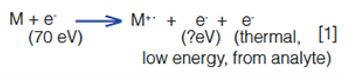
The “must know” details of which all electron ionization (EI) gas chromatography–mass spectrometry (GC–MS) users should be aware.
LCGC is pleased to announce the addition of Ken Broeckhoven to its editorial advisory board (EAB).
LCGC North America
Organized by Yu Zhou, this symposium will be held in Room 115C from 8:30 to 11:45 am.
LCGC North America
This symposium, organized by Hui Zhang and Chang Liu, will be held in Room 120A from 8:30 to 11:45 am and covers the topic of affinity selection by mass spectrometry (ASMS), an attractive alternative for drug discovery.
LCGC North America
This symposium on drug discovery is organized by Sammy Datwani, and will be held in Room 117 from 1:30 to 4:45 pm.
LCGC North America
This extensive poster session covers the many uses of chemometrics across a host of analytical chemistry measurement technologies and applications. It is being held at the Expo floor, at the back of aisles 1500–2300 from 2:00 to 4:30 pm.
LCGC North America
This morning session, to be held in Room 122A and with Sarah Rutan of Virginia Commonwealth University (Richmond, Virginia) presiding, begins at 8:30 am.
LCGC North America
The ceremony begins at 8:30am in Room 126A.
LCGC North America
This morning session, to be held in Room 116 and with Ryan C. Bailey of the University of Michigan (Ann Arbor, Michigan) presiding, begins at 8:30 am.
LCGC North America
A morning session on miniature mass spectrometers and ambient ionization, to be held in Room 122B and beginning at 8:30 am, will be chaired by Zheng Ouyang of Tsinghua University.
LCGC North America
This Tuesday morning symposium, “Recent Advances in Two-Dimensional Liquid Chromatography-Theory and Practice,” in room 118B, brings together experts in 2D-LC from both academic and industrial laboratories.
LCGC North America
The 2019 winners of the LCGC Lifetime Achievement and Emerging Leader Awards, Milos Novotny of Indiana University, and Ken Broeckhoven of the Vrije Universiteit Brussel, will be honored in this Tuesday afternoon session, in room 125.
LCGC North America
Fenella G. Frances of the Library of Congress will present the plenary lecture, entitled, “Preserving and Revealing History-Challenges of a Cultural Heritage Scientist” at 5:00 pm in Grand Ballroom B.
LCGC North America
In this networking session, attendees, allies, and individuals from underrepresented groups will share their experiences in promoting welcoming and inclusive environments. Join the discussion from 2:00 to 3:30 pm in room 203A.
LCGC North America
This 5:00 pm lecture will be given by Fraser Stoddart of Northwestern University. Stoddart was the 2016 Nobel Laureate in Chemistry.
LCGC North America
Li Tao of Bristol-Myers Squibb will preside over this afternoon symposium which presents experts from both academia and industry discussing recent advances and current practice in analytics for therapeutic proteins.
LCGC North America
Mary Ellen McNally, of FMC Agricultural Solutions, will be presiding over this morning session with an introduction starting at 8:30 am.
LCGC North America
This morning session, chaired by Ann Knolhoff of the Food and Drug Administration, starts at 8:30 am and will cover different approaches for developing and implementing non-targeted and suspect screening workflows using high-resolution mass spectrometry to identify unknowns.
LCGC North America
John Stephens of Bidwell Training Center (Pittsburgh, Pennsylvania) presides over this session, to be held in Room 118B and starting at 8:30 am.
LCGC North America
This symposium on drug discovery is organized by Sammy Datwani, Room 117 from 1:30 pm–4:45pm.

LCGC North America
In the late “noughties” we couldn’t avoid the webinars, seminars and online calculators which were being released by HPLC column manufacturers to extol the virtues of the “new” core-shell particle morphology that promised high performance at lower back pressures.

The Column
Click the title above to open The Column March 2019 North American issue, Volume 15, Number 3, in an interactive PDF format.
The Column
Click the title above to open The Column March 2019 Europe & Asia issue, Volume 15, Number 3, in an interactive PDF format.

The Column
This article describes how to prevent the loss of sample analytes by understanding the factors responsible for poor recoveries.