

Modern HPLC method development is dominated by a small number of pH adjusting reagents and buffers that are prevalent even when the method uses UV detection. This is driven primarily by the requirements of mass spectrometry.
Modern HPLC method development is dominated by a small number of pH adjusting reagents and buffers that are prevalent even when the method uses UV detection. This is driven primarily by the requirements of mass spectrometry.

LCGC E-Books
The Research Awards will be presented today, at the beginning of the Biemann Medal Lecture session in the Murphy Ballroom, at 4:45 pm.
The Tuesday morning oral sessions on “Environmental: Emerging Contaminants” -in Honor of Ron Hites-will be held 8:30-10:30 am in Room B308–309. The session, chaired by Susana Y. Kimura of the Department of Chemistry at University of Calgary in Calgary, in Alberta, Canada, addresses analytical strategies for a range of environmental contaminants.
The Tuesday afternoon session on “Instrumentation: Innovative Separations Approaches Coupled to MS,” will be held 2:30-4:30 pm in the Auditorium of Building A. The session, chaired by Xing-Fang Li of the Department of Laboratory Medicine and Pathology at the University of Alberta, in Edmonton, Alberta, Canada, addresses analyses related to biology, proteomics, environmental studies, petroleum, and more.
LCGC Asia Pacific
Click the title above to open the LCGC Asia Pacific May/June 2019 regular issue, Volume 22, Number 2, in an interactive PDF format.
The morning session “Imaging: Instrumentation & Method Development,” will be held from 8:30 to 10:30 am in Room B302–305. The session, chaired by Martina Marchetti-Deschmann of the Faculty of Technical Chemistry at TU Wien in Wein, Austria, includes talks on a variety of aspects of mass spectrometry imaging.
The Monday afternoon session on “Food Safety & Chemistry: Foodomics, Allergens, Bacteria, Foods, and Supplements,” will be held 2:30-4:30 pm in Room B405-407. The session, chaired by Michelle Colgrave, Molecular Analysis Team Leader in CSIRO Agriculture and Food, based at the Queensland Bioscience Precinct in Brisbane, Australia, addresses topics related to the analysis of coffee, milk, carbohydrates, quinoa, wine, and more.
The Column
Click the title above to open The Column June 2019 Europe & Asia issue, Volume 15, Number 6, in an interactive PDF format.
The Column
Click the title above to open The Column June 2019 North American issue, Volume 15, Number 6, in an interactive PDF format.

LCGC Europe
This is the fifth in a series of articles exploring current topics in separation science that will be addressed at the HPLC 2019 conference in Milan, Italy, from 16–20 June.
LCGC Asia Pacific
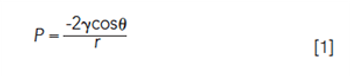
When can we use completely aqueous eluents with reversed-phase stationary phases, and what happens if we make a mistake?

LCGC Asia Pacific
In this excerpt from LCGC’s e-learning platform, CHROMacademy.com, recovery problems in solid-phase extraction (SPE) are discussed.

The Column
The Column spoke to Robert Shaw, Steph Turnbull, and Sophie Bailes from AstraZeneca about their work in quality by design (QbD) in the pharmaceutical industry.

The Column
Calling all innovators (or anyone seeking to justify a new instrument purchase)!

The Column
A newly developed HILIC stationary phase containing modified diol groups on a polymer-based particle has offered renewed hope of an alternative to IP-reversed-phase LC.

LCGC Europe
Adding an inline mixer between the sample injector and column in a liquid chromatography (LC) system can be an effective way to resolve problems with peak shape caused by the sample diluent.

LCGC Europe
Tomas Cajka previews his keynote lecture at HPLC 2019, where he will introduce an LC−MS workflow (LIpids, Metabolites and eXposome compounds [LIMeX]) for simultaneous extraction of complex lipids, polar metabolites, and exposome compounds that combines LC–MS targeted and untargeted analysis.

LCGC Europe
Davy Guillarme previews his presentation at HPLC 2019 highlighting the new trends in LC×LC applied for biopharmaceutical characterization, including the hyphenation with high‑resolution mass spectrometry (HRMS) and ion mobility spectrometry (IMS).
LCGC Europe
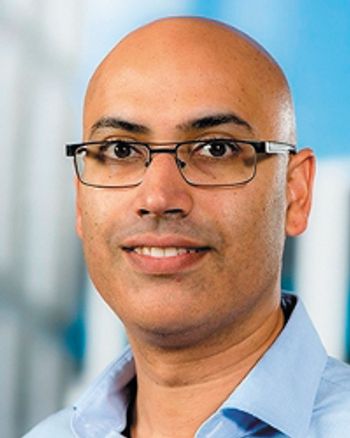
Rawi Ramautar discusses capillary electrophoresis–mass spectrometry for metabolomics and previews the topic for HPLC 2019.

LCGC Europe
Barbara Bojko previews the topic of solid-phase micoextraction for clinical and pharmaceutical research.

LCGC Europe
Achille Cappiello previews the topic and the benefits of liquid-electron ionization liquid chromatography–mass spectrometry interfaces for HPLC 2019.
LCGC Europe
The 11th Encontro Nacional de Cromatografia (11ENC) will be held 9–11 December 2019 at Hotel Aldeia dos Capuchos, Congress Centre, in Caparica, Portugal.
LCGC Europe
A guide to solving recovery problems in solid-phase extraction (SPE)
Special Issues
Click the title above to open the LCGC Europe HPLC 2019 Show Guide, Vol 32, No 06, in an interactive PDF format.
LCGC Europe
Click the title above to open the LCGC Europe June 2019 regular issue, Vol 32, No 06, in an interactive PDF format.
Special Issues
Click the title above to open the Recent Developments in HPLC and UHPLC 2019 special issue in an interactive PDF format.
LCGC North America
Click the title above to open the LCGC North America June 2019 issue, Volume 37, Number 6, in an interactive PDF format.
Special Issues
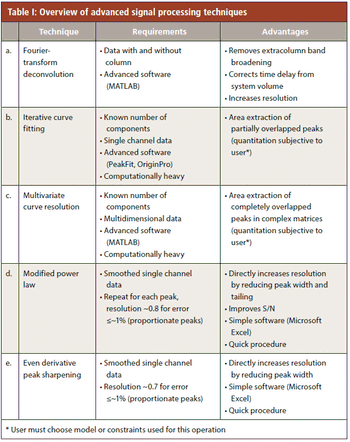
The advantages and limitations of several recently introduced mathematical procedures for enhancing peak resolution in liquid chromatography (LC) are described. Despite advanced separation technologies and extensive knowledge in method development, peak overlap is still commonly observed. This article gives a brief overview of the advantages and limitations of recently introduced mathematical procedures for enhancing resolution.