


Prompted by a recently reviewed manuscript and a question from a reader, John Dolan examines the variability of retention times observed in LC methods in this month's installment of "LC Troubleshooting."


Prompted by a recently reviewed manuscript and a question from a reader, John Dolan examines the variability of retention times observed in LC methods in this month's installment of "LC Troubleshooting."

This month's installment of "Column Watch" is the conclusion of a two-part series in which columnist Ron Majors examines trends in column and sample prep introductions at Pittcon 2007.

The major advantages of monolithic phases are their ability to withstand high mobile phase flow rates and the rapid separations at low back pressure that can be achieved with their use.

it has been more than 10 years since solvent recycling has been the main subject of an "LC troubleshooting" column, so this month, John Dolan revists this subject.

Fast, reliable measurements of lipophilicity has a great impact on the compounds' selection process at an early stage of dug discovery. The guest columnit examines HPLC methods for this purpose.

Separation instrument techniques are among the most widely used technologies in the analytical instrumentation market. They span the entire industrial and regional marketplace. The lab separations market includes chromatographic techniques such as analytical and preparative HPLC, GC, IC, TLC, flash, and low pressure LC.

An overview is presented of possible pathways to enhance peak capacity in liquid chromatography (LC). The peak capacity in a chromatographic separation is directly related to the plate number and thus to column length and particle size. Serial coupled columns can be used to obtain long effective column lengths, reaching over 100000 theoretical plates and peak capacities up to 900. Some theoretical considerations are made on column dimensions and particle size and examples are given of high resolution "GC-like" separations in LC using state-of-the-art LC hardware. Recent developments in LC hardware have also enhanced the applicability of two-dimensional LC–LC and comprehensive LCÃ-LC. Both techniques are extremely powerful to unravel complex samples.

This month's installment of "Column Watch" is the first of a two-part series in which Ron Majors examines the trends and highlights in columns and consumables at Pittcon 2007.

A reluctance to make any changes to a validated or compendial method is common, and often well founded.


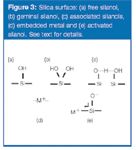
According to "Column Watch" Editor Ron Majors, Type C silica is a term introduced by Dr. Joseph Pesek of San Jose State University (California).

John Dolan considers some techniques to improve detection limits, no matter what the application is.

HPLC is among the most dynamic markets in the laboratory analytical and life science instrument industry. The market can be segmented into six different categories, which include conventional HPLC, capillary/nano LC, fast LC, preparative HPLC, amino acid analyzers, and gel permeation chromatography systems. Conventional HPLC systems, which account for the majority of the market, are standard HPLC instruments with typical flow rates between 1–10 mL/min. However, other HPLC systems designed for specific applications and that remedy some of the shortcomings of conventional LC systems, are becoming more significant in the market.


Excess variability is not acceptable in a pharmaceutical method.

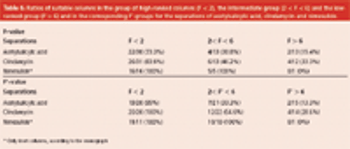
This article gives an overview of the performance of a previously developed system for the ranking of C18 reversed-phase columns applied to different pharmaceutical analyses. The separation of eight different drug substances from their respective impurities was studied. The chromatographic procedure for acetylsalicylic acid, clindamycin hydrochloride, buflomedil hydrochloride, chloramphenicol sodium succinate, phenoxymethylpenicillin and nimesulide was performed according to the corresponding European Pharmacopoeia monograph. The separations of dihydrostreptomycin sulphate and vancomycin were performed according to literature. It was found that that the column ranking system is a helpful tool in the selection of suitable columns in these analyses.

In any field there are often "misconceptions" or "myths" that are perpetuated and passed on to the next generation. These myths are often driven by a lack of understanding by practitioners of the real issues. In this instalment of "Column Watch", the 10 most popular myths around high performance liquid chromatography (HPLC) column technology will be demystified by discussing the issues at hand. Among some of the popular myths that will be dispelled are that "All C18 (L1) columns are the same", "You can't reverse an HPLC column", "High temperature always leads to better separations" and "The higher the carbon load the better the reversed-phase column".

This month's instalment of "LC Troubleshooting" presents two examples of sample degradation inside the liquid chromatography (LC) column. Depending upon the type of samples you analyse, sample degradation might or might not be a problem that you encounter regularly. However, most of us run a sufficiently wide variety of sample types over our careers that we will probably run into some samples that do not behave as expected.

Chromatographers worldwide suffer from the same problems.

The authors describe a study that was conducted to evaluate the correlation between the slope of the response line and the response factor of an ELSD that are ordinarily regarded as independent numerical coefficients.

Sometimes it is easy to ignore the fittings and tubing that are used to connect various parts of the liquid chromatography (LC) system. After all, it's the pump, injector, column and detector that do all the work - right? Well, yes and no. It is possible to compromise an otherwise excellent separation by the improper use of fittings, but with reasonable care, you should not have problems with most applications. This month's instalment of "LC Troubleshooting" takes a look at the important components that are used to connect various parts of the LC system and how to use them wisely.