

LCGC North America
How to optimize the key variables in LC–MS analysis
LCGC North America
How to optimize the key variables in LC–MS analysis

Special Issues
This MS-based method represents a simple, fast, and attractive alternative to current immunoassay-based methods for the quantitation of albumin and creatinine in urine. This protocol enables the direct detection and measurement of the intact analytes from the same sample preparation, requiring only a 10-fold dilution of a urine sample into a MALDI-TOF matrix solution.

Special Issues
A gas chromatography–time-of-flight mass spectrometry method was developed to screen for and quantify regulated allergens in approximately 5 min. This method used a short and narrow chromatographic column along with mathematical deconvolution of the TOF-MS data to separate the target allergens from each other in the standards and from matrix interference in samples.

Special Issues
This study demonstrates that GC–TOF-MS can be a useful approach to generate comprehensive fragrance profiles of essential oils. Peak deconvolution enables discrimination between closely eluted compounds, and soft electron ionization, assisted by comparison of ion ratios, makes it possible to discriminate between isomeric monoterpenes with very similar mass spectra at conventional 70-eV ionization energies.

Special Issues
The power of nontargeted metabolite profiling is illustrated in a study focused on the determination of molecular markers in malting barley that are predictive of desirable malting quality for brewing applications. The metabolite extraction, detection, and analysis methods are high throughput and reproducible, and therefore, this approach represents a practical addition to the plant breeder’s molecular toolbox.

LCGC North America
In this article, we discuss the use of CE-MS (sheath flow interface) for analysis of intact proteins as well as of protein digests. We discuss the unique aspects that the user needs to be aware of while testing biotherapeutics versus small molecule drugs. We also highlight that the optimization of CE and MS parameters together result in the creation of a more robust and reproducible protein analysis approach. Finally, we list some of the most common errors that are likely to occur during CE-MS analysis and suggest ways to overcome them.

The Column
In clinical and forensic/toxicology laboratories, urine is a preferred matrix from which to quantify drug concentrations because it yields accurate results and allows for noninvasive collection methods. Prior to excretion, drug metabolites in the body undergo a glucuronidation reaction, resulting in a glucuronide bond that must be cleaved before mass spectrometry (MS) analysis by a β-glucuronidase enzyme hydrolysis. Many laboratories employ a “dilute-and-shoot” method after hydrolysis to decrease residual protein or enzyme concentration, but this method negatively affects column lifetime and reduces the sensitivity of analyte detection. By using a β-glucuronidase removal approach, analysts are able to see an increase in sensitivity and a reduction in MS instrument maintenance.

LCGC North America
While immunoassay (EIA) is a prevalent screening technique it is also prone to issues such as high false positive rates because of lack of analyte specificity. Mass spectrometry was therefore investigated as an alternative screening technique for the ability to improve analyte specificity on a comparable time scale. In this study, a rapid online sample preparation and injection method was developed using a commercially available guard cartridge on a conventional LC–MS-MS system. Using a two-point calibration curve to provide semi-quantitation, a robust method was developed and validated that improved upon the high false positive rate observed in immunoassay screening.

Special Issues
This study of a selected group of PPCP contaminants in eastern North Carolina demonstrates the advantages and disadvantages of LC–MS and GC–MS as well as SPE and liquid–liquid extraction.

Special Issues
An LC–MS method for simultaneous quantification of buprenorphine and three metabolites: norbuprenorphine, buprenorphine glucuronide, and norbuprenorphine glucuronide.
Special Issues
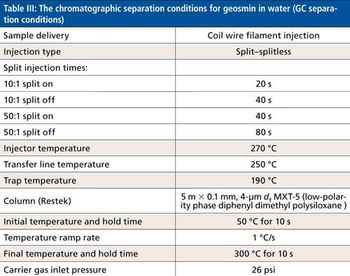
A look at the use of field-portable GC–MS with solid-phase microextraction, purge-and-trap, thermal desorption, and heated headspace sampling techniques to provide a fast response for in-field analysis of SVOCs in a wide variety of environmental-type samples including potable waters, tea, plants, and road gravel.

Special Issues
Validation of this rapid bioanalytical method for the determination of moxidectin in cattle hair demonstrated that the method is accurate, reliable, and reproducible.

Special Issues
We present a brief review of this year's ASMS conference, which took place June 5–9 in San Antonio, Texas.
Special Issues
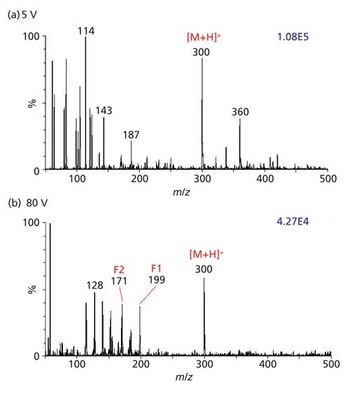
A newly discovered method, matrix-assisted ionization (MAI), is described for generating gas-phase ions from volatile and nonvolatile compounds. The method is both simple and sensitive.

Special Issues
High-resolution mass spectrometry (MS) is not readily compatible with chromatographic techniques using high-salt mobile phases. This study presents the development and use of 2D-LC–MS via an on-line desalting step for the analysis of monoclonal antibodies and antibody–drug conjugates.

Special Issues
Measuring trypsin inhibitors in legumes is important to feed processors, who are concerned with providing high-quality products for animal feed. In this study, a rapid, accurate, and precise method for the quantification of trypsin inhibitor activity is evaluated.

Special Issues
The development of various analytical MS methods to investigate the chemical composition of liquids used in electronic cigarettes and characterize their quality is presented in this study.

Special Issues
A review of the central role LC–MS plays in characterizing mAbs and biosimilars, including highlights of top-down and middle-up approaches to measure the intact masses of mAbs and their subunits, the current state of peptide mapping techniques, and glycoprofiling methods.
LCGC North America
The past decade has brought exponential growth in the number of mass spectrometry (MS) ionization techniques based on desorption and ionization (DI) processes. Here, the three key applications for DI are discussed: rapid, in situ screening; direct analysis of extracted samples or of planar chromatography spots; and scanning samples along x and y axes.

LCGC North America
This study describes the need to recover compounds above the boiling point of naphthalene by optimizing the thermal desorption chemistry for the determination of VOCs from C3 to C26 in soil gas samples using Method TO-17. Figures of merit, such as breakthrough, precision, linearity and detection capability will be presented, in addition to evaluating its real-world capability at sites with moderate diesel and semi-volatile polynuclear aromatic hydrocarbon (up to pyrene) contamination, in the presence of high humidity.

Special Issues
An LC–MS-MS method is presented that can assist with monitoring substance abuse patients who are prescribed naltrexone, a narcotic antagonist.
Special Issues
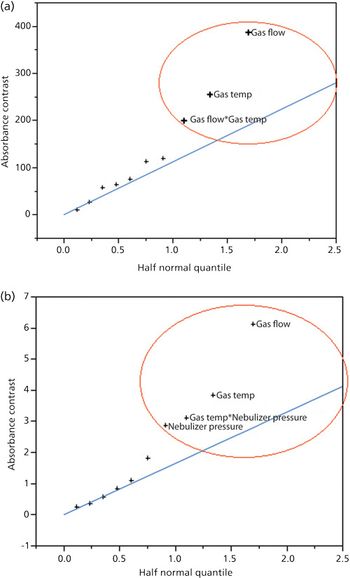
This article presents a step-by-step DoE optimization strategy for an electrospray ionization source with the aim to quantitatively analyze 18 compounds in a metabolomic study of human urine.

Special Issues
Enhanced chromatographic resolution (GC×GC), increased resolving power with high-resolution TOF-MS, and software designed to leverage these attributes are combined to provide data that are easy to process and interpret.

Special Issues
This article provides useful tips for smooth validation of multi-analyte LC–MS-MS methods and summarizes important validation outcomes for 295 analytes, including more than 200 mycotoxins.

LCGC North America
Non-targeted metabolite profiling by ultrahigh-performance liquid chromatography coupled with mass spectrometry (UHPLC–MS) is a powerful technique to investigate the influence of genetic and environmental influence on metabolic phenotype in plants. The approach offers an unbiased and in-depth analysis that can reveal molecular markers of desirable phenotypic traits which can be complementary to genetic markers in plant breeding efforts. Here, the power of non-targeted metabolite profiling is illustrated in a study focused on the determination of molecular markers in malting barley that are predictive of desirable malting quality for brewing applications.