Mass Spectrometry

Latest News


i4-531031-1408662450461.gif

Special Issues

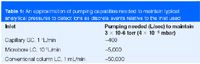
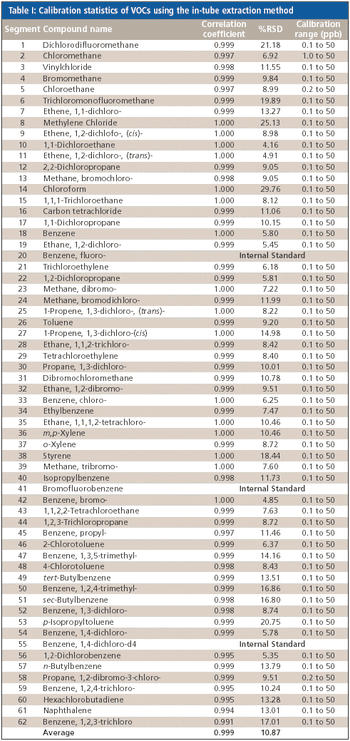
Over the last 10 years, several solvent-free microextraction techniques for gas chromatography (GC) and mass spectrometry (MS) have been developed. Two of these techniques, solid-phase microextraction (SPME) and stir-bar sorptive extraction (SBSE), are available commercially for the analysis of volatile compounds, such as flavors in foods and beverages, and toxic organic compounds in environmental applications. Other techniques, such as open tubular trapping, inside needle capillary adsorption trap (1), in-tube SPME, capillary microextraction, needle trap, and headspace solid-phase dynamic extraction (2), were also developed for different applications. The basic principle for all of these techniques is essentially the same. Volatile and semivolatile compounds are adsorbed on a sorbent coating, often packed on the interior surface of a capillary column or stainless steel needle. After the sample is concentrated on the coating, the compounds are desorbed thermally in the heated injection port of a gas..


i4-531028-1408662461850.jpg

Special Issues

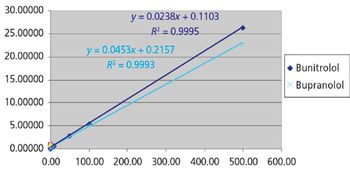
Automated solid-phase extraction (SPE) has been used extensively with liquid chromatography–tandem mass spectrometry (LC–MS-MS) to facilitate high-throughput analysis in the pharmaceutical, diagnostic, and forensic toxicology areas. In this work, we demonstrate the use of a systemized approach to SPE method development and LC–MS-MS analysis. This approach provides dramatic savings in analysis time and takes advantage of new innovations in high performance liquid chromatography (HPLC) columns to provide the cleanest extracts for LC–MS injection.

i4-531035-1408662440165.jpg

Special Issues

Illegal drug use worldwide is at an all-time high. There is a crucial need for fast and accurate analysis to positively identify suspected drugs in criminal investigations. Gas chromatography combined with time-of-flight mass spectrometry (GC–TOFMS) can be a valuable tool for drug testing in forensic crime laboratories. Method development and GC–TOFMS experimentation was conducted in cooperation with a local crime laboratory. The laboratory testing presented will illustrate highly efficient methods and data developed for crime labs that assist in the battle against illegal drugs. Many drug classes have chemical properties that present particular analytical challenges, such as poor detector response, chemical lability, or poor chromatographic peak shape. This article presents GC–TOFMS methods developed for several major drug classes and chemical functionalities. The major drugs included in the initial method development are methamphetamine, ecstasy, and heroin. Robust and accurate..

i4-531036-1408662437417.jpg

Special Issues

Liquid chromatography with tandem mass spectrometry (LC–MS-MS) led to a revolution in environmental testing. The coupling of liquid chromatography with tandem mass spectrometry created a powerful analytical tool for the analysis of emerging environmental contaminants. Pharmaceuticals and personal care products, perfluorinated compounds, brominated flame retardants, and disinfection byproducts were chosen as examples to illustrate the use of this new technique in environmental analysis.

i4-531033-1408662442629.jpg

Special Issues

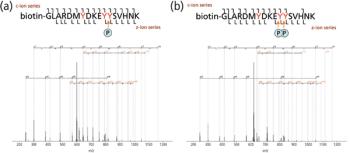
Successful characterization of protein posttranslational modifications (PTMs) is critical to our understanding of many biological processes. Unfortunately, attempts to describe PTMs often prove experimentally difficult and result in ambiguous conclusions. As technologies in the field of mass spectrometry (MS) continue to improve, people are turning increasingly to mass spectral techniques for PTM characterization. Recently, novel modes of peptide fragmentation have emerged that are giving scientists greater ability to elucidate protein posttranslational modification. One example is electron-capture dissociation (ECD), an alternative fragmentation mechanism for use in peptide analysis via tandem mass spectrometry. ECD selectively cleaves N-Cα bonds of the peptide backbone, yielding c- and z-ions without the loss of labile PTMs. ECD therefore holds advantages over conventional fragmentation techniques such as collisionally induced dissociation (CID), which often cleave PTMs from the peptide backbone,..

LCGC North America

Recent work suggests that the practical value of hyphenated techniques is limited by difficulties inherent in achieving definitive compositional answers in general MS. This article argues that it is not impossible in certain cases.

i3-460301-1408658707581.gif

LCGC North America

"As research advances, about half of what we will teach you . . . will turn out to be wrong. The problem is, we presently don't know which half." Powerful Medicines, Jerry Avorn, 2004

The Column

Understanding how imaging can advance life science research and what issues need to be addressed to unlock the true potential of mass spectrometry-based imaging raises awareness of new possibilities for researchers. This article explores mass spectrometry imaging, aiming to educate about scientific opportunities to consider and the pitfalls to avoid.