





Mary Ellen McNally knows how to solve complex and pressing problems in the industry.
Mary Ellen McNally knows how to solve complex and pressing problems in the industry.

Modern ion mobility–mass spectrometry (IM–MS) is a key separation technology for detailed molecular characterization studies and also as part of emerging data acquisition strategies for demanding small molecule and several applications. Here is what you need to know.

Analysis of extractables and leachables (E&L) from plastic packaging is of great importance for pharmaceutical product safety. Accurate and rapid identification of unknown compounds in E&L is often complex and challenging. To address this challenge, we demonstrate a quick method for oligomer determination using LC–QTOF-MS.

Supplementing short pulse lasers with laser postionization increases ionization yields for desorption and ablation of solid samples in mass spectrometry. Here, we give an overview of the mechanisms and technical requirements for molecular photoionization in femtosecond (fs) laser desorption postionization mass spectrometry (LDPI-MS).

Using ion mobility, analytes that have the same molecular mass can be separated by their shape, centers of mass, and collision cross section, but challenges such as ion loss can still occur. A new development in ion mobility separation, high-resolution ion mobility (HRIM), addresses such problems, and is particularly well suited to challenging applications, such as glycosylation monitoring of biological drugs and vitamin D analysis.

Two-dimensional liquid chromatography (2D-LC) allows much greater resolution of peaks than is possible in a classical single dimensional separation. For the next development in separations, we employed 2D-LC in two highly orthogonal dimensions of separation with four mass spectrometers for detection, with parallel detection in each dimension. We have further broken ground by using three dimensions of separation with four mass spectrometers, using two parallel second dimensions.

Decomposing animal tissue releases volatile organic compounds (VOCs), of interest in forensic science. We describe the use of GC×GC–qMS/FID retrofitted with a reverse fill/flush (RFF) flow modulator for analyzing these VOCs in a tropical climate.

Highlights of the new high-performance liquid chromatography, mass spectrometry, and chromatography data systems introduced over the past year.

We present our annual review of new products in gas chromatography, introduced between spring 2020 and spring 2021.

This article looks at the benefits of combining dynamic headspace sampling (DHS) with capillary GC–TOF-MS as a tool for untargeted analysis of aroma compounds in food and beverages. Applications for the analysis of strawberry yoghurt, chocolate, and red wine are described.
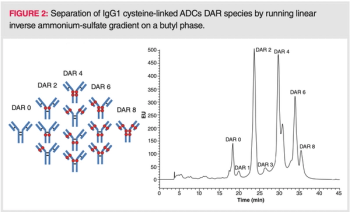
In the second part of this review of the current state of HIC, some practical considerations are explained, including method development, selection of the phase system, combined salt systems, and possibilities to combine HIC with other chromatographic modes.

LCGC Europe spoke to Stefan Van Leeuwen and Bjorn Berendsen from Wageningen Food Safety Research, The Netherlands, about a novel non-targeted approach to analyze PFASs using LC–HRMS with fragment ion flagging (FIF).
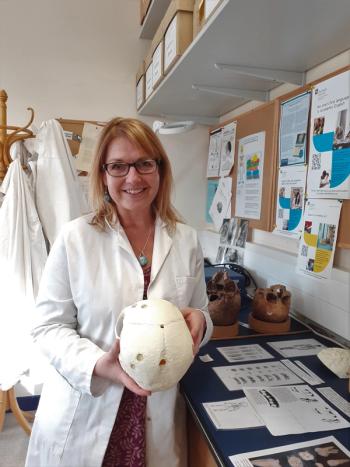
Rebecca Gowland and her colleagues in the Department of Archaeology at Durham University in the United Kingdom have tested, for the first time, the applicability of a new method of sex estimation utilizing enamel peptides from a sample of permanent and deciduous teeth at different stages of mineralization, from nonadults of unknown sex, including perinates, and using a minimally destructive acid etching procedure and subsequent nano liquid chromatography– tandem mass spectrometry. She spoke to us about her efforts.

Industrial laboratories have played a major role in innovation and commercialization of new technologies in energy and chemicals. In this special session, Joseph Powell, the Chief Scientist at Shell Oil Company, will present case studies in technology development in biofuels and new energies.
This Monday afternoon session brings together five young leaders in the field of mass spectrometry (MS) to discuss cutting-edge developments in imaging MS technologies. These presentations will be of interest to practitioners of metabolomics, proteomics, imaging, fundamental ion chemistry, and biomedical analyses, as well as the analytical community at large.
Professor Richard Yost of the University of Florida is widely recognized as a leader in mass spectrometry and analytical chemistry, most notably for his co-invention of the triple quadrupole mass spectrometer, which has revolutionized important measurements impacting many fields of study.
The talks in this Monday morning session highlight recent advances in mass spectrometry (MS) for reaction monitoring approaches for small and large molecules. Presentation of both approaches is intended to cross-fertilize ideas and to be informative for both analytical and process scientists.

Recent advances in stationary phases for hydrophobic interaction chromatography (HIC) permit HIC–MS analysis of intact antibodies and other proteins using direct flow to the mass spectrometer.

An improved method for determining total galactooligosaccharide (GOS) content in food and supplements using high performance anion exchange chromatography with pulsed amperometric detection is described.

Fundamentals
Here are some great tips for optimizing liquid chromatography (LC)–electrospray ionization (ESI)–MS to achieve the best possible results every time. This is a beginner’s guide to LC-ESI–MS.

As we approach the holiday season, in what has a been the most challenging of years both inside and outside of the laboratory, I wanted to produce a more light-hearted yet inspiring review of 2020 within the Arch Sciences Group laboratories.

Per- and poly-fluoroalkyl substances (PFAS) are a family of potentially thousands of synthetic compounds that have long been used in the manufacture of a variety of common products with stain-repellent and nonstick properties. Their signature strong fluorine and carbon bonds make them difficult to break down and, as a result, they are among the most persistent of today’s environmental pollutants. Alarmingly, PFAS can be found in drinking water and have been shown to accumulate in the body with the potential to cause multiple health problems, such as hormone disruption and cancer. Advances in mass spectrometry have facilitated the detection of known PFAS contaminants as well as the identification of poorly studied and novel compounds in watersheds. This article explores the detection of known and novel PFAS contaminants in aqueous film-forming foams and raw drinking water sources in North Carolina, using new advances in mass spectrometry and data acquisition to improve identification and quantitation.
Long chain fatty acids (LCFAs) function as a source of metabolic energy, substrates for membrane biogenesis, and storage of metabolic energy. Oxylipins, oxygenated derivatives of LCFAs, regulate the activity of many cellular processes. Existing methods for the analysis of LCFAs and oxylipins have limited compound coverage and sensitivity that, therefore, prevent their application in biological studies. In this work, we developed a high-throughput LC–MS method for analysis of 51 LCFAs and oxylipins. LCFAs and oxylipins were first extracted from biological samples via solid-phase extraction. The extracted molecules were analyzed by targeted comparative metabolomics. Saturated and monounsaturated LCFAs were analyzed in single ion reaction mode, while polyunsaturated LCFAs and oxylipins were analyzed in multiple reaction monitoring mode. Using this method, we successfully quantified 31 LCFAs and oxylipins from mouse livers.

Over the last decade, matrix-assisted laser desorption–ionization (MALDI) imaging has become an indispensable tool for a broad range of applications, from studying plant metabolomics to discovering biomarkers of disease to developing new therapies. As such, MALDI imaging is revolutionizing preclinical drug discovery pipelines by providing direct distribution monitoring of therapeutic compounds and their metabolites along with untargeted pharmacodynamic information. A key application of MALDI imaging is tissue analysis for oncology, and recent developments in MALDI technology promise greater benefits to cancer research. The combination of MALDI with laser-induced post-ionization (PI) enhances the detection and imaging of pharmaceutical compounds and other classes of compounds, allowing for significant advances in the use of MALDI imaging for studying drug metabolism and pharmacodynamics in tumor tissues. This article describes the value of MALDI Imaging for oncology applications and examines the potential for laser-induced PI, including the ability to achieve up to three orders of magnitude higher sensitivity and to image metabolite classes previously undetectable with traditional MALDI.

Consumer marketing approaches are creeping into the marketing of scientific instruments. With a careful approach, you can cut through the hype.