


We are investigating fundamental relationships between the structures of molecules and their interaction with different materials, in the context of on-line supercritical fluid extraction–supercritical fluid chromatography (SFE–SFC).
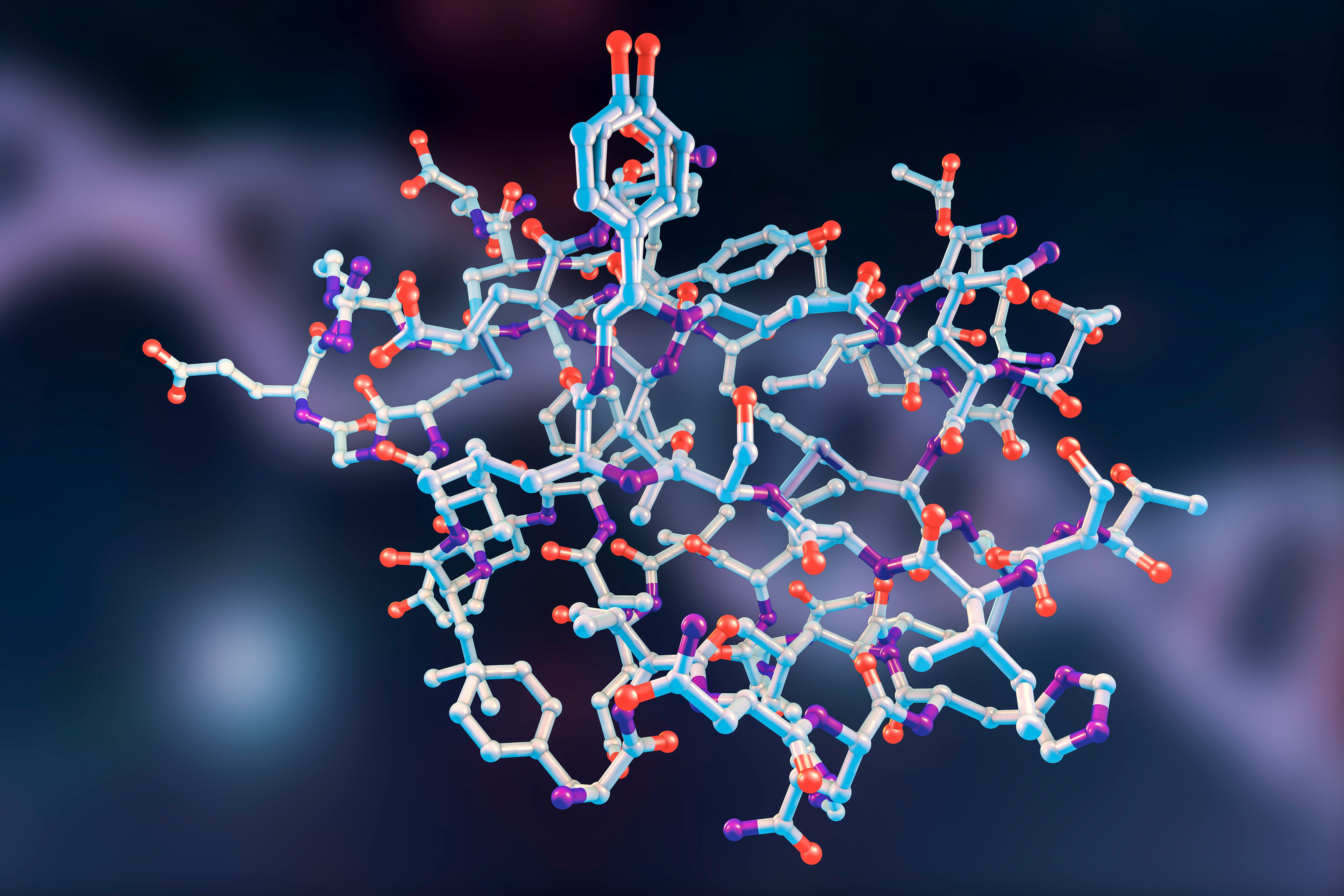
Improving Fingerprinting of Therapeutic Peptides Using Ternary Eluent Compositions in Supercritical Fluid Chromatography (SFC)
We are investigating fundamental relationships between the structures of molecules and their interaction with different materials, in the context of on-line supercritical fluid extraction–supercritical fluid chromatography (SFE–SFC).

Lipids in SFC are mainly separated according to their lipid classes, which simplifies quantification with standards. In this study, SFC coupled with drift time IM‑QTOF-MS was used to characterize the HepG2 lipidome.

James P. Grinias is an Associate Professor in the Department of Chemistry & Biochemistry at Rowan University in Glassboro, New Jersey, and the winner of the 2022 Emerging Leader in Chromatography Award, which is presented by LCGC magazine.

Barry L. Karger and James P. Grinias are the winners of the 15th annual LCGC Lifetime Achievement and Emerging Leader in Chromatography Awards, respectively, for 2022. Here, we review their achievements.

LCGC Europe
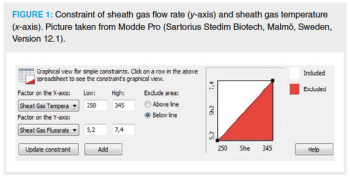
The optimization of adjustable factors in electrospray ionization (ESI) by design of experiments (DoE) is presented. This approach allows a comprehensive and systematic optimization of all relevant factors for the ionization of compounds and increases the understanding about factor influences on the ionization efficiency.
LCGC Europe
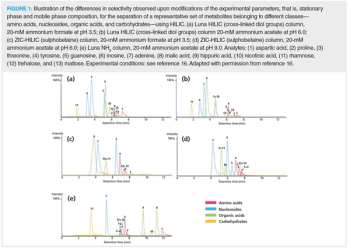
This review article discusses the novel separation and detection strategies that are considered promising in clinical metabolomics to enhance the metabolome coverage. It includes hydrophilic interaction chromatography (HILIC), supercritical fluid chromatography (SFC), multidimensional LC approaches, as well as ion-mobility mass spectrometry (IM-MS) and data-independent acquisition (DIA) analysis methods.

Special Issues
Supercritical fluid chromatography (SFC) is a well-established analytical technique used in the pharmaceutical industry for decades. However, it is still considered a new technique in some areas, for example, implementing the technique for purity profiling in late-stage development and production. In pharmaceutical analytical departments, SFC serves a wide variety of purposes, including compound purification, purity profile, and chiral analysis. Depending on the phase of drug development, the analytical performance requirements, such as speed of analysis, efficiency, and sensitivity, may vary considerably. The end goal is to provide robust, reliable and transferable analytical SFC methods. The challenges for future development and widespread implementation of SFC and the implementation of SFC in quality control (QC) laboratories using modern instrumentation are also discussed.

LCGC, the leading resource for separation scientists, is proud to announce that Ronald E. Majors and Zachary S. Breitbach are the winners of the 11th annual LCGC Lifetime Achievement and Emerging Leader in Chromatography Awards, respectively. Majors and Breitbach will be honored in a symposium as part of the technical program at the Pittcon 2018 conference in Orlando, Florida, on February 26, 2018.

The Column
The three-day Chromatographic Society meeting was held on Monday 15th until Wednesday 17th May 2017 and was hosted by Pfizer at Discovery Park in Sandwich, Kent, UK. This comprehensive symposium featured oral presentations from leading practitioners of supercritical fluid chromatography (SFC) and ultrahigh-pressure liquid chromatography (UHPLC) from throughout Europe. Some of the latest innovations and applications were described and the lectures were augmented and supported by a comprehensive exhibition of instrumentation and consumables. The attendees gained insight into practical application of these techniques across a variety of industries-particularly the pharmaceutical industry. As was anticipated, in a comprehensive programme there was a significant focus on SFC for chiral and preparative-scale analysis.

LCGC Europe
There has been a great renewal of interest in supercritical fluid chromatography (SFC) as a performing analytical tool for various types of applications recently. SFC is particularly suitable for pharmaceutical analysis, where it is required to have separation methods offering high throughput, elevated efficiency, and, importantly, sensitivity for the determination of drugs in various matrices, such as drug formulation and biological fluids. However, SFC has also been used for other applications, including food analysis, polymer analysis, and environmental analysis, as reported in a recent review.

LCGC Europe
Some 50 years after Giddings’s iconic comparison of the separation speed of gas chromatography (GC) and liquid chromatography (LC), the authors revisit this comparison using kinetic plots of the current state‑of‑the-art systems in LC, supercritical fluid chromatography (SFC), and GC. It is found that, despite the major progress LC has made in the past decade (sub-2-µm particles, pressures up to 1500 bar, core–shell particles), a fully optimized ultrahigh-pressure liquid chromatography (UHPLC) separation is still at least one order of magnitude slower than capillary GC. The speed limits of packed bed SFC are situated in between.
LCGC North America
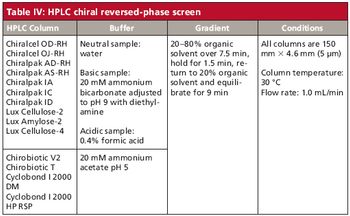
A set of extended chiral separation screens using HPLC and SFC has been tailored to meet the specific and changing needs of customers in a pharmaceutical development setting.
The Column
Pyrethroids are synthetic chemical compounds similar to the natural chemical pyrethrins and commonly used as household insecticides and insect repellents. Typically, pyrethroids possess multiple stereogenic centers and individual stereoisomer can have widely differing biological activities. Rapid, reliable, and precise determination of the isomeric ratios of these chiral pesticides is of great importance not only for product formulation but also for the subsequent study on the pharmacokinetics and metabolism of the pesticides. High performance liquid chromatography with chiral stationary phases (CSPs) has been the predominant tool for separating chiral pesticides. However, the complexity of the pyrethroids resulting from the multiple stereogenic centers presents a special challenge for baseline resolution of all isomers. Numerous CSPs, many of which are not available commercially, have been created to separate synthetic pyrethroids with varying degree of success (1-7).
Waters Corporation and Thar Instruments, Inc., have entered into a new phase of their cooperative agreement to help bring "green" alternatives to chemical analysis.