

Sponsored Content
- Conventional light scattering comes with various limitations - New light scattering technology benefits protein/polymer characterization
Sponsored Content
- Conventional light scattering comes with various limitations - New light scattering technology benefits protein/polymer characterization
Sponsored Content
In this study we demonstrate the benefits of the Thermo Scientific™ Orbitrap Exploris™ 240 LC–MS/MS for intact biopharmaceutical analysis under native conditions.
Sponsored Content
In this application note we evaluate the benefits of Real-Time Search for SPS MS3 (Orbitrap Eclipse MS) to enhance TMT quantification accuracy and proteome coverage.
Sponsored Content
In this application note we discuss the AcquireX workflow using the Orbitrap ID-X for detection and quantitation in non-targeted, multiresidue LC–MS pesticide profiling.

The Column
Microfluidic lab-on-a-chip devices offer new solutions for analytical scientists. The Column spoke to Dietlev Belder from the University of Leipzig, Germany, about the latest developments in this evolving area of research.
Sponsored Content - EU
PharmaFluidics’ μPAC capLC is evaluated for different user needs ranging from 12 samples per day in comprehensive mode to 65 samples per day in throughput mode.
Sponsored Content - EU
PharmaFluidics’ μPAC capLC is evaluated for different user needs ranging from 12 samples per day in comprehensive mode to 65 samples per day in throughput mode.
Sponsored Content - EU
Overall gain in performance and increase in detection sensitivity that can be achieved for the separation of plant metabolite extracts by using µ¬PAC columns.
Sponsored Content - EU
Reveal more in your food. Using QSight LC–MS/MS to get a fast, selective, and sensitive multi-residue method for the determination of 136 pesticides in pepper.

Sponsored Content
Method Development for Simultaneous Analysis of Ultrashort-Chain, Alternative, and Legacy per- and polyfluoroalkyl substances (PFAS).
Sponsored Content - EU
This application note shows that hydrogen is a valuable alternative to helium, as it is lower in cost and provides great separation in shorter analysis time.
Sponsored Content
LCGC Europe
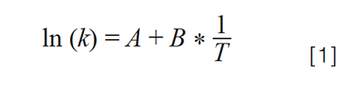
In reversed-phase liquid chromatography, increasing the column temperature usually results in a decrease in analyte retention. Will this cause problems if a method does not call for control of the column temperature but the room temperature of the laboratory environment changes?
Sponsored Content
HCPs can threaten drug product efficacy and stability. LC–MS/MS using automated sample prep can address HCP analysis challenges. Software and hardware workflow upgrades can optimize HCP analysis methods.
Sponsored Content - NA
This application demonstrates the efficacy of this chromatographic technique for a fast orthogonal analysis to evaluate mAb ADCC activity.
Sponsored Content
Learn how Janssen cut method-development time by 80% while improving quality 25-fold by upgrading their hardware and using method-development software.
Sponsored Content - EU
A simple and sensitive method is presented for the direct analysis of Glyphosate and AMPA in drinking water without sample derivatization or pre-concentration.
Sponsored Content - NA
This RAFA 2019 winner of the Best Poster Award, reviews the identification and characterization of secoiridoids isomers found in Greek extra virgin olive oil (EVOO).
Sponsored Content - AP
Automated GC/MS determination of 3-MCPD and glycidol in edible oils. Evaporation step helps reach required LODs with standard MSD and removes excess derivatization reagent for improved stability.
Sponsored Content - NA
Solid-phase extraction (SPE) is a powerful technique for LC–MS analysis. SPE offers benefits for various solutes from a wide range of samples. Modern SPE systems can remove unwanted compounds and streamline methods.
Sponsored Content - NA
Sponsored Content - NA
This application note showcases a fast and robust solution for analysis of all analytes listed in EPA Method 8327, showing reliable, sensitive quantitative results.
Sponsored Content
A fast and reliable method for comparison of related impurities in a brand and a generic over-the-counter (OTC) acetaminophen drug.
Sponsored Content
- ADCs can be analyzed using various methods other than the traditional HIC. - New chromatographic materials expand analytical techniques for APOC
Sponsored Content
Here, we demonstrate increased quantitative performance and throughput efficiency on a Thermo Scientific™ Orbitrap Exploris™ 480 LCMS combined with a FAIMS Pro™ device.
Sponsored Content
Here we investigate the optimal isolation width for the ID and quantification of proteins and peptides for the best possible accuracy and precision in LFQ experiments.