

All News
Advertisement
When purchasing analytical equipment, it is important to know that you are not just buying an instrument but investing in your lab’s future. Shimadzu not only provides the instrumentation but also the technical knowledge and support to help your lab be successful. We can assist with method development, instrument training, and many other areas of support like maintenance to ensure your systems are constantly operating at an exceptional level. From seed to sale, from accurate cannabis potency profiles to reliable, highly sensitive pesticide screening, let us deliver scalable, turnkey solutions to meet your testing needs for today and tomorrow.
Advertisement
SCIEX instruments have been designed with the production laboratory in mind. Our cannabis method was developed to allow the analysis for potency, pesticides and mycotoxins in one in injection. SCIEX also has a terpene method. All of your method requests for potency, pesticides and terpenes may be accomplished on one instrument.

I’ve often written about the “lazy” chromatography which has swept through our industry, whereby 0.1% (w/w or w/v!) TFA or Formic acid is used to “buffer” the eluent system well away from the pKa of analyte molecules, leaving most acidic analytes in the ion suppressed form and most basic analytes in the ionized form. This approach avoids having issues with retention time drift and effectively eliminates pH as a variable used to control retention or selectivity for separations involving ionogenic analytes.
Advertisement
The Column
Agilent Technologies has acquired 20 acres of land in Weld County, Colorado, USA, on which to build a pharmaceutical manufacturing facility.

The Column
Researchers from the University of Texas at Arlington (UTA) have developed a rapid, accurate, and precise method to quantify water content in solid pharmaceutical drugs using headspace gas chromatography (HSGC) (1).
Advertisement
The Column
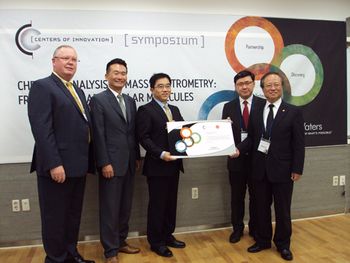
Waters Corporation has welcomed Dr. Sunghwan Kim of Kyungpook National University, Daegu, South Korea, into the Waters Centers of Innovation (COI) programme. Kim’s research focuses on polynuclear aromatic hydrocarbons (PAHs) in the environment, developing and applying analytical techniques to assess their impact.

The Column
This article describes the use of comprehensive two-dimensional gas chromatography (GC×GC) with time-of-flight mass spectrometry (TOF-MS) and tandem ionization for characterization and comparison of the composition of essential oils, aiding rigorous quality control.

The Column
Kevin A. Schug discusses how matrix-assisted laser desorption–ionization time-of-flight mass spectrometry (MALDI-TOF-MS) is one of the most versatile tools for fingerprinting mixtures.

The Column
“Practical GC” provides readers with practical advice and new experimental evidence for how to get the best results from their gas chromatography (GC) systems. The next instalment looks at the potential for reducing inlet adsorption of active compounds through the use of split injection GC.
The Column
Click the title above to open The Column September 09, 2016 Europe & Asia issue, Volume 12, Number 16, in an interactive PDF format.
The Column
Click the title above to open The Column September 09, 2016 North American issue, Volume 12, Number 16, in an interactive PDF format.

The LCGC Blog
In a recent review of blood alcohol casework performed by a forensics laboratory associated with a major metropolitan police force, I was again disheartened to find major deficiencies in method validation protocols. In this case, the analysts failed to check whether aqueous solutions for calibration and quality control were reliable surrogates for real blood samples.


LCGC Europe
The determination of the chemical composition distribution of acrylic resins is not straightforward. Pyrolysis–gas chromatography (py-GC) analyses of acrylic resins can yield problems in the recovery of the hydroxyl and acid functional fragments that form. To overcome these problems pyrolysis–liquid chromatography (py-LC) can be performed. This article describes how the validation and quantification of hydroxyl acrylate-, hydroxyl methacrylate-, hydroxyl propylacrylate-, and hydroxyl propylmethacrylate resins by py-LC is performed. Furthermore, off-line size-exclusion chromatography (SEC) coupled to py-LC is performed to determine the chemical composition distribution over the molecular weight distribution of a core–shell waterborne acrylic resin.

LCGC Europe
The 44th International Symposium of High Performance Liquid Phase Separations and Related Techniques (HPLC 2016), chaired by Professor Robert Kennedy, was held 19–24 June in San Francisco, California, USA, at the Marriott San Francisco Marquis. This instalment of “Column Watch” covers some of the highlights observed at the symposium, including stationary-phase developments, particle technology, and areas of growing application of high performance liquid chromatography (HPLC). In addition, trends and perspectives on future developments in HPLC noted from the conference are presented.

LCGC Europe
One of the common threads in the six data integrity guidance documents published to date is the need to control any blank forms used in regulated GXP laboratories. This month’s “Questions of Quality” is focused on how to interpret the regulator’s requirements for this topic. We also pose the question: Is paper the best way to record regulated data?

LCGC Europe
A universal generic high performance liquid chromatography (HPLC) or ultrahigh-pressure liquid chromatography (UHPLC) method with a primary modern column that works well for most drug analyses in a few minutes would be an attractive idea for many laboratories. With advances in column technologies, this ideal scenario is becoming more realistic, as demonstrated in the proposed 2-min generic method shown here. In addition, rationales for the selection of column and operating conditions are discussed, together with ways to extend this generic method as a starting point for stability-indicating applications by simple adjustments of gradient time and range.

LCGC Europe
The 8th International Symposium on the Separation and Characterization of Natural and Synthetic Macromolecules (SCM-8) will be held from 1– 3 February 2017, in Amsterdam, The Netherlands.

LCGC Asia Pacific
Ultrahigh-pressure liquid chromatography (UHPLC) instruments from different manufacturers and instruments with different configurations can produce significant variations in chromatographic separation. The variety in instrument configuration increases the complexity of the method development process, which now requires a more thorough evaluation of the effect of instrument variations on the method. The studies presented here determined the typical interinstrument variations in dwell volume, extracolumn dispersion, and mixing efficiency as measured by mobile-phase compositional accuracy. Additionally, the dwell volume and extracolumn dispersion were independently and systematically varied to evaluate the resulting impact on resolution for a small-molecule test mixture during gradient elution. To account for these interinstrument variations, dwell volume and wash-out volume method translation and adjustment techniques were evaluated.
LCGC Asia Pacific
While gas chromatographers may take their septa for granted, in fact these small and seemingly unremarkable polymer disks keep air out of the carrier-gas stream when used in an inlet and keep samples intact and uncontaminated when used in sample vials. Choosing the wrong septa can compromise method accuracy and repeatability as well as reduce column life in extreme cases. This instalment addresses septa for inlets and sample vials.

LCGC Asia Pacific
The past couple instalments of “Sample Preparation Perspectives” have looked at current trends in the field. Another recent trend is dried blood spot analysis and other analysis methods using minute sample amounts. This month we take a quick look at the role of sample homogeneity and the determination of sample size. Microsampling approaches, including dried blood spots, are discussed.

LCGC Asia Pacific
Significant benefits can be obtained by standardizing high performance liquid chromatography (HPLC) columns in a pharmaceutical development laboratory. Here is a story of how one organization attempted to encourage its staff to develop HPLC methods using fewer column brands and dimensions to reduce waste and efforts in method transfers downstream.

Special Issues
An introduction to The Chromatographic Society’s 60th Anniversary supplement.
Special Issues
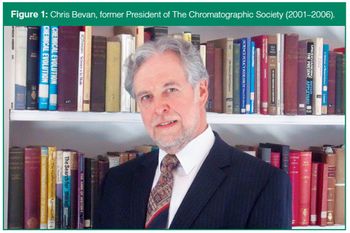
Chris Bevan, the longest serving President of The Chromatographic Society in recent times, is interviewed by another former President of The Chromatographic Society, John Lough, on the evolution of The Chromatographic Society and chromatography in a changing world.

Special Issues
A popular feature of The Chromatographic Society’s Golden Jubilee publication was an article by Waters describing their heritage and setting out their contributions to the development of chromatography. In this special feature, some of the companies who are regular exhibitors at Society events answer questions on the current and future status of chromatography.
Advertisement
Advertisement
Trending on LCGC International
1
LC-MS/MS Reveals Fentanyl Tolerance in Users
2
Automated Sample Preparation for Oligonucleotide Bioanalysis Using Magnetic SPE
3
Where LC-MS/MS Meets the ER Clock: The Case for Paper Spray-MS in Acute Drug Toxicity Screening
4
GC-IMS Detects Early Mold Warning Signs in Cigar Tobacco
5