






Multidimensional liquid chromatography (MDLC) methods have revolutionized the characterization of complex drug modalities like antibodies–drug conjugates, antisense oligonucleotides, and small interfering RNA therapeutics.
Multidimensional liquid chromatography (MDLC) methods have revolutionized the characterization of complex drug modalities like antibodies–drug conjugates, antisense oligonucleotides, and small interfering RNA therapeutics.

Our annual review of new high performance liquid chromatography instruments, mass spectrometry systems, and data processing software.

Understanding the design and operation of a quadrupole mass analyzer can help you plan, optimize, and troubleshoot analytical methods.

Barry L. Karger and James P. Grinias are the winners of the 15th annual LCGC Lifetime Achievement and Emerging Leader in Chromatography Awards, respectively, for 2022. Here, we review their achievements.

The presence of per- and polyfluoroalkyl substances (PFAS) in products used every day by millions of people is a cause of concern among both consumers and scientists. PFAS found in drinking water and the environment can cause serious health issues in animals and humans. Amanda Belunis, who is a PhD candidate at the University of Maryland in Baltimore County, has been investigating the use of liquid chromatography–tandem mass spectrometry (LC–MS/MS) to detect PFAS from a variety of environmental sources. She spoke with us about methods used to detect PFAS and described a new method that she and her team have developed to enhance PFAS detection.

Reducing matrix effects during LC–MS/MS bioanalysis is paramount. Improving sample preparation techniques is the best way to combat this issue.

Method validation processes will need to be refined to better suit forensic laboratories.

Intact mass analysis is becoming increasingly useful for characterizing biologics. We describe the current application of intact mass analysis, including quantitation, sequencing, and structural characterization.

Peer-Reviewed Article
The UHPLC–MS/MS method can accurately determine the presence of these illegal feed additives in swine tissues.

Ensuring complete overlapping (coelution) of analyte and internal standard peaks can be critical for eliminating matrix effects in LC–MS/MS analysis.
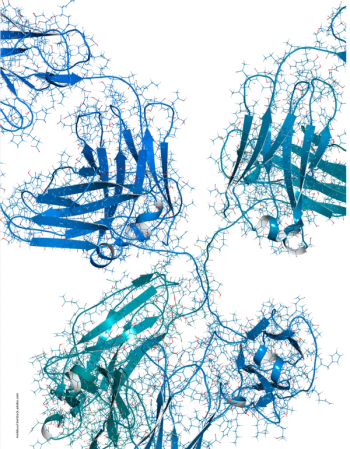
The benefits of a robustness assessment for the analysis of a NIST mAb using a wide pore C4 LC column are described.

Quantification of Tau proteoforms in cerebrospinal fluid (CSF) could be useful to diagnose neurodegenerative diseases. LC–MS/MS results can help explain the underlying molecular mechanisms of disease evolution.
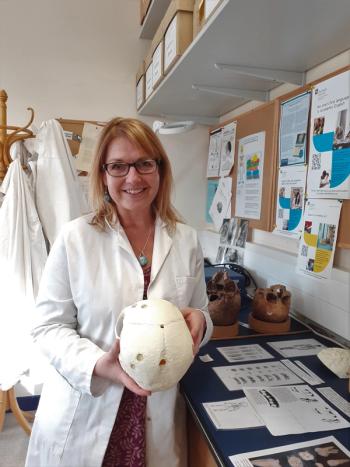
Rebecca Gowland and her colleagues in the Department of Archaeology at Durham University in the United Kingdom have tested, for the first time, the applicability of a new method of sex estimation utilizing enamel peptides from a sample of permanent and deciduous teeth at different stages of mineralization, from nonadults of unknown sex, including perinates, and using a minimally destructive acid etching procedure and subsequent nano liquid chromatography– tandem mass spectrometry. She spoke to us about her efforts.

Separation-based analysis of minute specimens including tissues, clinical fluids, or single cells requires novel miniaturized front-end approaches suitable for the quantity of starting material. This symposium will focus on systems to address this challenge.
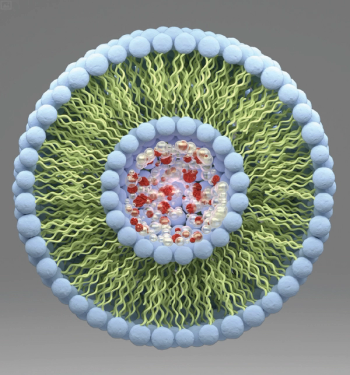
A focus on untargeted UHPLC–MS/MS lipidomics with data independent acquisition using SWATH technology. This article explores the wide-ranging potential and peculiarities of SWATH–MS hyphenated with UHPLC for the profiling of lipidomes of various biological samples.

Fundamentals
Here are some great tips for optimizing liquid chromatography (LC)–electrospray ionization (ESI)–MS to achieve the best possible results every time. This is a beginner’s guide to LC-ESI–MS.

Here are 10 great tips for optimizing LC-Electrospray Ionization (ESI)-MS so that you achieve the best possible results every time. These tips and tricks have been collated by my colleagues to form a beginner’s guide to LC-(ESI)MS and as a primer for those who are already using the technique.

Recombinant adeno-associated viral therapy (rAAV) products are particularly complex. Are liquid chromatography and LC–MS the right tools for their characterization?

Atmospheric pressure photoionization (APPI) and electrospray ionization (ESI) are compared for the mass spectrometry (MS) quantitation of pharmaceuticals frequently detected in environmental waters, including antibiotics, beta blockers, and selective-serotonin reuptake inhibitors.

As we approach the holiday season, in what has a been the most challenging of years both inside and outside of the laboratory, I wanted to produce a more light-hearted yet inspiring review of 2020 within the Arch Sciences Group laboratories.

An introduction to this special issue by our guest editor.

This modification of ASTM method D8026 for pesticides in environmental matrices includes more pesticides and lowers the reporting limits, thus increasing throughput and measurement capacity for a large surface-water monitoring project.
Tobacco-specific nitrosamines are important carcinogens in tobacco products. This article describes a fast, sensitive, selective, and robust method for analysis of these compounds in various tobacco samples by liquid chromatography–tandem mass spectrometry (LC–MS/MS). The separation of analytes from matrix interfering components was performed using a C18 column with simple LC–MS mobile phases. To minimize sample matrix effects on each analyte, a separate internal standard was used for each analyte. Two MS/MS ion pairs were used for each analyte for analyte confirmation and quantification, further enhancing the method’s selectivity and accuracy. The method was validated using different tobacco matrices.

LCGC Europe
The main objective of this review article is to provide a clear summary of the different methods that can be used to quantify endogenous small molecules. Because of the increased use of mass spectrometry (MS) in the field of bioanalysis, a special focus will be placed on quantification by liquid chromatography (LC)–MS. Practical recommendations to face this bioanalytical challenge, in particular in terms of method validation, will also be provided.
LCGC Asia Pacific
The main objective of this review article is to provide a clear summary of the different methods that can be used to quantify endogenous small molecules. Because of the increased use of mass spectrometry (MS) in the field of bioanalysis, a special focus will be placed on quantification by liquid chromatography (LC)–MS. Practical recommendations to face this bioanalytical challenge, in particular in terms of method validation, will also be provided.