



Today from 2:30–4:30 pm, an oral session on non-targeted analysis and emerging environmental contaminants will take place. We preview this session here.
Today from 2:30–4:30 pm, an oral session on non-targeted analysis and emerging environmental contaminants will take place. We preview this session here.

ASMS 2023 is excited to be hosting its annual conference in Houston, Texas. Here is what to expect on Sunday evening.

We offer a sneak peek at some of the award presentations that will be taking place at the ASMS 2023 Conference this week.

ASMS will conclude its conference at the Houston Museum of Natural Science (HMNS) on Thursday June 8th, from 7:00 to 10:00 pm. The HMNS is known for their paleontology display, giving attendees the opportunity to embark on a one-of-a-kind prehistoric journey while socializing with friends and colleagues.

The upcoming 2023 ASMS Conference will feature two concurrent tutorial sessions on Sunday, June 4, from 5:00–5:45 pm, along with a Special Keynote Section from 5:45–6:30 pm that will feature local activists from the Houston community.

A novel system combining hydrogel-modified human umbilical vein endothelial cell membrane chromatography with high-performance liquid chromatography-mass spectrometry revolutionizes the screening and purification of active ingredients in herbal medicines.

A new publication introduces a groundbreaking automated system for high-throughput mass spectrometry analysis, reshaping the future of biotherapeutic characterization.

A new approach was sought for the simultaneous verification of carboxyl and aldehyde metabolites, including analytes that were previously undetectable.

A recent study has introduced comprehensive quality control procedures for large-scale plasma proteomics analyses. The research provides valuable insights into optimizing performance, enhancing reproducibility, and ensuring quantitative accuracy in proteomics investigations.

A novel analytical method combines charge inversion ion-ion reactions with ion mobility–mass spectrometry to enhance the separation and characterization of oligosaccharides.

A new tandem mass spectrometry technique has been developed for the rapid determination of complex lipid A structures, including novel variations from arctic bacterioplankton. This study enhances our understanding of bacterial adaptations and paves the way for the development of targeted therapies and antimicrobial agents.
Using intact protein separation (IPS) together with traditional peptide separation (PS) enhanced detection for LC–MS/MS better than either method could do independently.

Extraction of gasoline and its major aromatic groups was promising using a carbon nanotube-assisted solid-phase microextraction (CNT-SPME) fiber.

A cutting-edge technique combining droplet microfluidics and mass spectrometry revolutionizes monoclonal antibody screening, enabling rapid and high-throughput analysis while setting a new standard for efficient clone selection in biopharmaceutical development.

Automation and high-throughput MALDI mass spectrometry revolutionize peptide metabolic stability screening, allowing for rapid analysis of a large number of samples and minimizing solvent waste.

A new study introduces a comprehensive two-dimensional liquid chromatography coupled with tandem mass spectrometry (2D-LC–MS/MS) method for the analysis of 112 pesticides in corn-based products. The method exhibits high precision, lower limit of quantification values, and successful detection of trace levels of pesticides in real samples, offering promise for the analysis of complex matrices.

Scientists have developed a new method for predicting and assessing the source of black inks using direct analysis in real-time mass spectrometry. By applying dimensionality reduction techniques and likelihood ratio analysis, the researchers achieved high accuracy in identifying ink sources, demonstrating the potential of this approach in forensic ink analysis.

Metabolic Perturbation Score-Based Mass Spectrometry Imaging (MPS-MSI) offers spatially resolved insights into the functional metabolic response, facilitating a deeper understanding of disease progression and drug action, and paving the way for improved therapeutic strategies and targeted interventions.

Eighty drugs prohibited in athletic competition were analyzed, with seven samples returning adverse findings compared to previous methods.
Webcasts
Webinar Date/Time: Airing 1: Thursday June 15, 2023 at 10am EDT | 3pm BST | 4pm CEST Airing 2: Thursday June 15, 2023 at 1pm EDT | 12pm CDT | 10am PDT

The eggs of the yellow-legged gull and Audouin’s gull and the blood of the greater flamingo were studied to assess their exposure to perfluoroalkyl substances (PFAS) as bioindicators of chemical pollution.
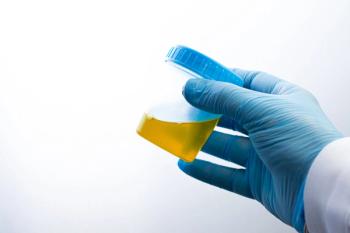
A biomarker with significant clinical and analytical potential in an enzyme present in many human diseases was determined at higher efficiency using liquid chromatography coupled to tandem mass spectrometry (LC–MS/MS).

A research team has developed a novel method for assessing the volatility of individual components in complex organic aerosol mixtures using temperature-programmed desorption and high resolution mass spectrometry, offering insights into atmospheric pollutants.

A team of researchers have created an innovative analytical platform combining asymmetrical flow field-flow fractionation (AF4) with native mass spectrometry (nMS) to characterize non-covalent protein complexes, providing valuable insights into their stability and higher-order structures.

Researchers have developed a novel liquid chromatography–mass spectrometry method for analyzing sialic acid linkage in N-linked glycopeptides, offering insights into glycosylation patterns.