






In this final part of our interview with Females in Mass Spectrometry (FeMS) Empowerment Award Winner Josephine Ouma, we discuss her future research efforts and what Women's History Month means to her.
In this final part of our interview with Females in Mass Spectrometry (FeMS) Empowerment Award Winner Josephine Ouma, we discuss her future research efforts and what Women's History Month means to her.
In this second part of our interview with Females in Mass Spectrometry (FeMS) Empowerment Award Winner Josephine Ouma, we discuss her experience with mass spectrometry and how FeMS has impacted her life.
In this first part of our interview with Females in Mass Spectrometry (FeMS) Empowerment Award Winner Josephine Ouma, we discuss her PhD research and what inspired her to join FeMS.

The researchers explored ways to simplify retention time calculation across LC–MS and various other chromatographic methods.
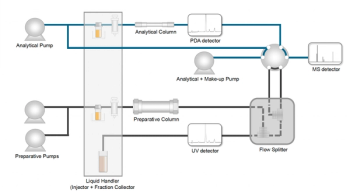
This article introduces a multi-step preparative purification workflow for synthetic peptides using liquid chromatography–mass spectrometry (LC–MS). The process involves optimizing separation conditions, scaling-up, fractionating, and confirming purity and recovery, using a single LC–MS system. High purity and recovery rates for synthetic peptides such as parathormone (PTH) are achieved. The method allows efficient purification and accurate confirmation of peptide synthesis and is suitable for handling complex preparative purification tasks.

This article discusses several practical examples using bioinert columns, demonstrating their ability to deliver reliable, high-resolution results with precision and reproducibility.

Here is some of the most popular content posted on LCGC International this week.
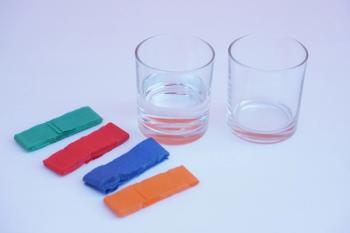
Hydrophobic deep eutectic solvents have proven useful in extracting non-polar target compounds, though researchers have shown there is room for further development.

A two-step workflow to extract pure mass spectra from comprehensive two-dimensional liquid chromatography high-resolution mass spectrometry (LC×LC–HRMS) data has been created and tested.

A new method has been created for determining N-nitrosamines (NAs) in pharmaceutical preparations using liquid chromatography with tandem mass spectrometry.

A new approach to characterizing human milk oligosaccharides was developed using a combination of liquid chromatography, mass spectrometry, and other techniques.

New types of smart proteolytic samplers were tested for their effectiveness in liquid chromatography-mass spectrometry (LC–MS)-based protein quantification.

During Pittcon 2025, Christopher Pohl and Katelynn Perrault Uptmor won awards honoring their careers. In this interview, they share their best advice for the next generation of separation scientists.

Scientists from the Zhejiang Institute of Quality Scientists used liquid chromatography–tandem mass spectrometry to detect 35 PFAS in paper and plastic products.

A new solid-phase microextraction-based technique has been developed for extracting triazole residues from environmental samples including water and juice.

Reinforcement learning was tested as a means of improving liquid chromatography method development.
Reinforcement learning was tested as a means of improving liquid chromatography method development.

High-performance liquid chromatography with diode-array detection (HPLC-DAD) was tested for detecting antibiotic residues in environmental samples.
Here is some of the most popular content posted on LCGC International this week.

Physics-informed neural networks were tested for their capabilities in predicting concentration profiles in gradient liquid chromatography.
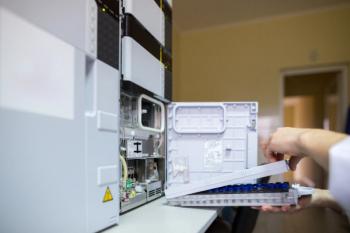
Shimadzu Corporation and Vrije Universiteit Brussel researchers recently investigated how extra-column band broadening (ECBB) can be optimized in micro-flow capillary liquid chromatography.
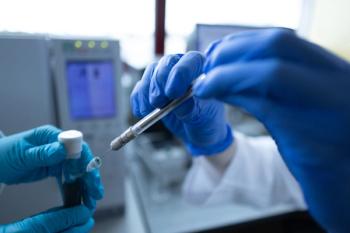
A new review article provides an overview of the use of two-dimensional liquid chromatography (2D-LC) for the quantitative analysis of natural products.

The company reported $1.68 billion in revenue at a 25.1% operating margin across its businesses in America, Europe, and Asia.
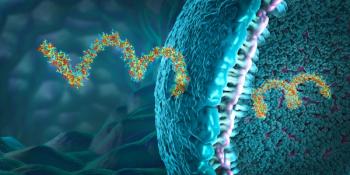
Hydrophilic interaction liquid chromatography (HILIC) has emerged as a promising alternative to traditional ion-pair reversed phase liquid chromatography (IP-RPLC) methods for separating oligonucleotides (ON). This work investigates the application of HILIC to the separation of ON sequence and length variants, duplexes, and single-stranded components.

The “matrix effect” is one of the sticky details that can make the use of liquid chromatography (LC) for quantitative purposes challenging, even though it is conceptually quite straightforward. In this installment of LC Troubleshooting, Dwight Stoll reviews what is being referred to during talks about “matrix effects”, and discusses some of the potential origins of the phenomenon in practice.