





This case study of the career path of a separation scientist illustrates the diversified roles of an analytical chemist in nonclinical drug development.
This case study of the career path of a separation scientist illustrates the diversified roles of an analytical chemist in nonclinical drug development.

The return of the in-person HPLC Conference was welcomed by the separation science community. There were a lot of developments to share.

The method presented here, which uses a novel needle trap device (NTD) with sol-gel PEG-coated fibers in conjunction with GC, is a simple, inexpensive, and accurate tool for the analysis of trace levels of PCBs in water samples.

What’s the fastest way to acquire a new chromatographic skill? The answer lies with those who are just beginning to learn.
Part 2 of a review of the recent Chromatographic Society (ChromSoc) spring symposium meeting focusing on small molecule analysis.

When esterification occurs in your LC mobile phase, knowing how baseline quality, retention, and selectivity are affected will help you mitigate the effects.

At HPLC 2022, we heard about new research and developments, in areas such as column technologies, portable instrumentation, and machine learning, among others.
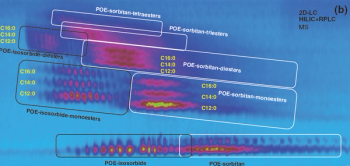
This article explores potential pitfalls associated with 1D‑LC and how 2D‑LC can overcome these obstacles.

We analytical chemists have a lot to gain by applying machine learning to our field—such as by using it to efficiently reach optimal conditions for challenging separations.

Online 2D-LC is a powerful—and accessible—tool for analyzing pharmaceutical and biopharmaceutical samples, in both R&D and QC. It’s now easier than ever to develop 2D-LC methods, and they can be run in a fully automated manner.

We continue our “Critical Evaluation” series with a consideration of liquid chromatography (LC) methods that use mass spectrometric detection.

Knowing the likely causes of baseline-related problems will help you solve them.

An overview of modern approaches to small-molecule drug discovery.

Sample preparation and analysis of pharmaceuticals in wastewater present unique challenges. Here, we describe those challenges.
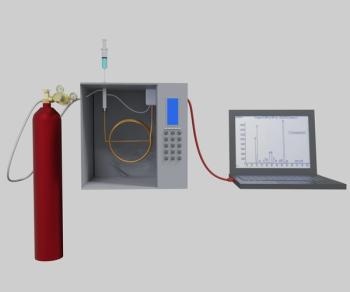
Although smaller advances have been made in the past decades, the question remains whether further extending operating pressure and decreasing particle size remains a feasible approach, or whether drastically novel approaches are required.

The fundamental mechanisms of band broadening are usually introduced to students through the van Deemter equation. Dimensional analysis of this equation can give physical meaning to the equation coefficients and enhance our understanding relative to qualitative descriptions. This approach can also guide improvements to future liquid chromatography (LC) column designs.

In this article, I share my perspective on the trends in 2D-LC, and the developments we are likely to see in the field in the near future.

This paper provides an overview of some current and emerging physicochemical analytical challenges associated with these sophisticated drug systems and some of the technical advances needed in chromatographic systems to enable their design, development, and manufacture.

Earlier this summer, separation scientists from around the world made their way to San Diego for the HPLC 2022 conference. What was it like being back to an in-person liquid chromatography conference?
The effect of the mobile phase composition, organic alcohols, ion-pair reagents, and different bonding chemistries on mAb separations is discussed.

This article introduces optimization of the two separate standard methods, BS148:2009 and ASTM D5837-15, to offer simultaneous analysis in one assay.

As two-dimensional liquid chromatography (2D-LC) becomes more widely used, system suitability tests (SSTs) become even more important.

With a new prototype, we explore how to improve the resolution power and usability of LC–MS instruments for routine analysis in pharmaceutical applications.

Although well known, the extent of adduct ion formation in LC–ESI-MS/MS, and the implications for quantitative analysis and analyte characterization are not fully appreciated. We explore this problem and explain the implications for reproducibility, quantitative and qualitative analyses, and DDA and DIA.

With the advent of ambient ionization and portable mass spectrometers, the ability to perform rapid, on-site analysis is fast becoming a reality. We review the critical recent developments enabling this capability as well as remaining challenges that must be tackled to enable widespread adoption.