Liquid Chromatography (LC/HPLC)

Latest News


Figure-1-web.jpg

A surfactant based diluent was used in sample preparation for reversed phase HPLC analysis of a drug product and its impurities in a phospholipid formulation. The use of the didodecyl trimethylammonium bromide (DDAB) enabled a consistent, quantitative extraction of the analytes of interest from the lipid matrix in a much more aqueous, weak solvent. Water was added as an anti-solvent to precipitate out the surfactant from the system to eliminate HPLC injection pressure spikes, enabling large volume injections and achieving a consistent, robust method for long term use. Method development and validation steps are described.

Adams-figure-1-web.jpg

A primary impediment to cannabinoid research is the fact that materials possessing psychoactive Δ-9-tetrathydrocannabinol are considered Schedule I drugs as defined in the U.S. Controlled Substances Act. An alternative source of cannabinoids may be found in hemp oil extracts. Hemp contains a low percentage of Δ-9-tetrathydrocannabinol (THC) by weight but relatively high amounts of non-psychoactive cannabinoids. The liquid chromatography-time of flight mass spectrometry (LC-TOF) method presented herein allows for the accurate, precise and robust speciation, profiling and quantification of cannabinoids in hemp oil extracts and commercial cannabinoid products for research and development laboratories. The method was determined to chromatographically separate 11 cannabinoids including differentiation of Δ-8-tetrahdrocannabinol and THC with excellent linear dynamic range, specificity and sensitivity.

Rudolf Krska, from the University of Natural Resources and Life Sciences in Vienna, Austria, talks about the latest analytical techniques and challenges facing analysts involved in the evolving field of mycotoxin analysis.

The carotenoid test allows one to build a simple classification map of stationary phases used in reversed-phase liquid chromatography, on the basis of the shape recognition(plotted on the x axis) the polar surface activity(plotted on the y axis) and the phase hydrophobicity (related by the bubble size).

Figure-6_web.jpg

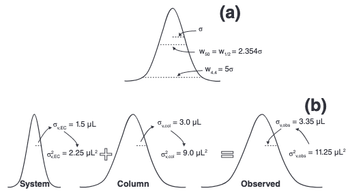
Part II of this series describes additional features of the HPLC Teaching Assistant software, including the possibility to simulate the impact of the mobile phase temperature on HPLC separations; understand the chromatographic behavior of a mixture of diverse compounds in both isocratic and gradient elution modes; show the influence of instrumentation (injected volume and tubing geometry) on the kinetic performance and sensitivity in HPLC; and demonstrate the impact of analyte molecular weight on thermodynamic (retention and selectivity) and kinetic (efficiency) performance.

What could be causing a peak to be eluted before the column dead time? In last month’s “LC Troubleshooting” (1) we looked at problems two readers had with ghost peaks in gradient runs. This month, we’ll continue looking at submitted questions and examine one submitted by another reader of this column.

Causon-Figure-2a_web.jpg

Here we propose an exemplary workflow for the analysis of phenolic extracts (i.e. wine) enabling confident differential analysis using high performance liquid chromatography in combination with low-field drift tube ion mobility quadrupole time-of-flight mass spectrometry (HPLC×IMS-QTOFMS). In this workflow, single-field collisional cross section values from low-field drift-tube IMS using nitrogen as drift gas (DTCCSN2) are readily extracted in addition to a retention time and a high resolution mass spectrum for each compound. “Alternating frames” experiments utilizing post-drift tube fragmentation also allow drift time-aligned MS/MS spectra to be obtained. Molecular feature extraction was highly repeatable with average precision values of 0.28% for retention time, 0.18% for drift time, and 1.5 ppm m/z determined for 233 molecular features found in all six technical replicates. The improved selectivity of this strategy increases confidence in intersample molecular feature alignment (i.e. compound identity confirmation), including the resolution of co-eluting isomeric compounds.

Cartenoid compounds can be used as probes for studying the stationary bonded phases devoted for reversed-phase liquid chromatography, that is, C18, phenyl-hexyl, and cholester. From one analysis achieved in supercritical fluid chromatography (SFC) that favors the chromatographic behaviors due to the stationary phase properties, bonding density, ligand type (monomeric or polymeric), and endcapping treatment, two separation factors are calculated allowing us to build a bi-dimentional map. These two axes are related either to the shape selectivity or the polar surface activity (residual silalnos). Each point on the map corresponds to a column. The retention factor of beta-carotene, which describes the phase hydrophobicity, is indicated by the size of the point. More than 200 stationary phases were studied, including small particle sizes and superficially porous ones. Moreover, the results are now available on a website, allowing you to check and compare, by selecting the required tabs, columns, manufacturer brands, and ligand nature.