
Thermo Fisher Scientific Inc. has completed the acquisition of PeproTech, Inc., a developer and manufacturer of recombinant proteins, for a total of approximately $1.85 billion.
Thermo Fisher Scientific Inc. has completed the acquisition of PeproTech, Inc., a developer and manufacturer of recombinant proteins, for a total of approximately $1.85 billion.

Markes International (Bridgend, UK) has sponsored a cross-Atlantic rowing expedition in support of Dementia UK Admiral Nurses.

Register now for a virtual symposium with presentations on Building a Cannabis Lab, Product Safety, Product Quality, Best Practices and Advanced Topics, and an interactive Certificate-Based Cannabis Testing Master Class session.
An undeniable effect of the COVID-19 pandemic is that we have learned how to adapt (quickly) to sudden changes.

The U.S. Environmental Protection Agency (EPA) Administrator, Michael S. Regan, recently announced the initiation of the agency’s “Strategic Roadmap” to address the issue of contamination with per- and polyfluoroalkyl substances (PFAS).

Thermo Fisher Scientific has announced the acquisition of global clinical research and laboratory service provider, PPD.

Holger R. Gerstel has acquired all remaining shares of the company from his brother, Eberhard G. Gerstel, completing a change of ownership for the German company.
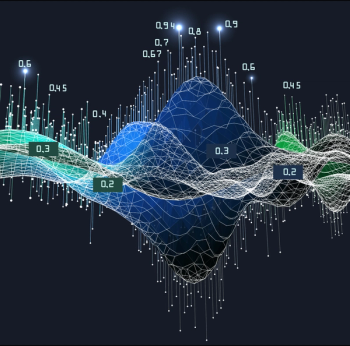
Researchers have developed two new algorithms capable of converting centroided data—generated during high-resolution mass spectrometry (MS) analysis—to mass peak profile data and vice versa.

Novasep has announced a €6 million investment of its Chasse-sur-Rhône site, in Lyon, France.
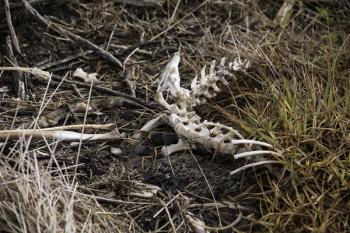
Researchers used ZooMS methodology to analyze a selection of 2922 bone fragments identifying novel peptide markers for 24 extant marsupial and monotreme species.
Thermo Fisher Scientific has announced the acquisition of Belgium-based PharmaFluidics, the developer of the μPAC range of micro-chip-based chromatography columns.
Sartorius has won the “Overall Best Bioprocessing Supplier” award at the Europe Bioprocessing Excellence Awards 2021.

Submissions for the 2022 Mülheim Water Award open on 1 December, kicking off a three month application period for the award and its €10,000 prize money.
Agilent Technologies Inc. has announced a sponsorship deal of My Green Lab, a leading nonprofit organization dedicated to improving the sustainability of scientific research.
Walsh University and Shimadzu Scientific Instruments have dedicated the Center for Analytical Excellence Laboratory, a collaborative project that includes the installation of nearly $1.2 million worth of new analytical equipment, at a recent event.
In this month’s blog, we provide information about the Subdivision on Chromatography and Separations Chemistry (SCSC) of the Analytical Division of the American Chemical Society (ACS), sharing our main goals and introducing our newly appointed executive board members.
Markes International moved its entire Welsh operations in March this year to relocate from Llantrisant to a newly refurbished site in Bridgend, which is twice as large as its former premises.

Lipidomics researchers from Örebro University have developed a method to analyze levels of per- and polyfluoroalkyl substances (PFAS) in human breast milk using UHPLC–QTOF-MS.
This ASMS 2021 session, chaired by Yina Liu of Texas A&M University, presents a series of talks on the topics of mapping of pathogen proteins, proteomics, purification and fragmentation, metaproteomics in microbiomes, and more.
This ASMS Wednesday morning session, entitled, “Food Safety & Chemistry: Foodomics, Allergens, Bacteria, Foods, and Supplements,” will be chaired by David Schroeder (Kraft Heinz) It covers multiple techniques associated with the analytical science of food safety.
In today’s afternoon plenary session, the 2021 Al Yergey MS Scientist awards will be presented, and the 2021 winner of the John B. Fenn Award for Distinguished Contribution in Mass Spectrometry will give his award lecture.
This Monday afternoon oral session, Environmental: Innovative Approaches and Instrumentation, will be held 2:30–4:30 pm in room 113 ABC. Nelson Vinueza of North Carolina State University will chair and preside the session. Six talks will take place during this session.
This Monday morning oral session on top-down protein analysis will be held 8:30-10:30 am in Ballroom B. The session, chaired by Caroline DeHart of the Frederick National Laboratory for Cancer, and presided by Joe Cannon of Bristol Myers Squibb, includes six talks addressing a variety of approaches and applications.
At ASMS 2021 in Philadelphia, three academic scientists were honored with the Research Awards, one received the Research at PUI Award, and five received Postdoctoral Career Development Awards.
The ASMS 2021 Tuesday afternoon oral session titled “Synthetic Polymers,” will be held from 2:30 to 4:30 pm in room 114.
The ASMS 2021 Tuesday morning oral session titled “Small Molecules: Quantitative Analysis,” will be held from 8:30 to 10:30 am in room 113 ABC.
Nuno Bandeira has won the 2021 Biemann Medal from the American Society for Mass Spectrometry.

Researchers have developed a viable alternative to existing GC methods for glycerol determination in biodiesel using SPE–HPLC-RI.

Agilent Technologies Inc. has announced David R. Liu as the recipient of an Agilent Thought Leader Award.

Mark Kushnir and Arapad Somogyi will each be presented with the Al Yergey Mass Spectrometry Scientist Award at the American Society for Mass Spectrometry (ASMS) Conference taking place from October 31–November 4 in Philadelphia.