



Liquid Chromatography (LC/HPLC)
Latest News
Advertisement
Latest Videos





Advertisement
More News

This week, LCGC International published a variety of articles on hot topics in separation science. From a feature article on about the latest challenges in U.S. research funding to an article that recaps the latest HPLC products sent to market this year, we remain dedicated to sharing the latest in chromatographic advancements. Below, we’ve highlighted some of the most popular articles that were published this week.

The latest edition of "Column Watch" features our annual review of new liquid chromatography columns and accessories, introduced at Pittcon and other events over the past 12 months.

In this installment, we explore the key relationships between efficiency and mobile phase flow rate and particle size, as well as secondary determinants of efficiency, including analyte retention, size, and chemistry, and instrumental effects.

This study reports a validated rapid, low-volume LC–MS/MS method capable of simultaneously quantifying remifentanil, etomidate, and rocuronium across a wide concentration range.
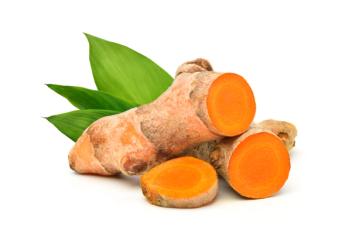
Curcumin is a polyphenol believed to have anticancer effects. To better quantify its existence in plasma, reversed-phase high-performance liquid chromatography (RP-HPLC) was used to create a new analytical approach for quantifying this substance.
Best of the Week: Call for New Technology Submissions, Decoding Plant Stress Responses, Quantifying Cocoa Alkaloids
Published: | Updated:
In this article, you’ll find some of the top content that was published on LCGC this week, including calls for new chromatography technologies and interviews with rising stars in the field.

To create a new approach for monitoring and quantifying free fatty acids (FFAs), Chinese researchers combined stable isotope derivatization coupled with liquid chromatography–triple quadrupole mass spectrometry (ID-LC-QQQ-MS).

Researchers from Comenius University Bratislava used LC–MS/MS to analyze albendazole substances in plasma samples.

To better detect cardiovascular diseases in people, researchers used high-performance liquid chromatography–tandem mass spectrometry (HPLC–MS/MS) to simultaneously quantify metabolites in human plasma.
Best of the Week: Forensic Chromatography, Precision in Ethanol Testing, Analyzing Plant-Based Bioactives
Published: | Updated:
In this article, you’ll find some of the top content that was published on LCGC this week, including our upcoming forensic science content series and an interview on preanalytical factors for ethanol testing.

Researchers at the Institute of Marine Research in Bergen, Norway used liquid chromatography–mass spectrometry to analyze resolvins in fish and human cells.

Johns Hopkins University researchers, in response to many high performance liquid chromatography (HPLC) systems having issues with peak resolution, created their own system for quantifying complex HPLC chromatograms.

Antiretroviral drug residues were monitored in breastmilk samples using ultrahigh-performance liquid chromatography–tandem mass spectrometry (UHPLC–MS/MS).

Study Explores How Minimal Surface Geometry Enables Micromixers to Function as LC Separation Columns
Researchers from Sapienza Università di Roma and ETH Zürich investigated the performance of micro- and nano-liquid chromatography systems by examining how capillary LC behaves under varying operational conditions.
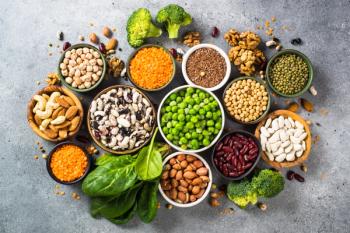
Bioactive compounds extracted from plants are revered for their abilities to enhance human health. However, due to the complex matrices of plant foods, the qualitative and quantitative analysis of metabolites in plant foods requires a prior separation step.
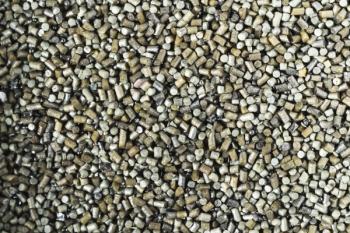
Smokeless powders can be vital aspects of forensic investigations, though distinguishing between different powders can prove difficult. Chinese researchers aimed to simplify this process using gel permeation chromatography.

To better analyze components from chaga (Inonotus obliquus) mushrooms, researchers created a supercritical fluid chromatography (SFC)-based approach to collecting and quantifying chaga components.

Universitat de Barcelona researchers have developed a new method for characterizing solute-solvent interactions in electrokinetic systems.

The components of explosive devices can be difficult to characterize, whether pre- or post-blast. To rectify this, two-dimensional liquid chromatography was tested as a means of analyzing these compounds.

To better analyze polyphenols, scientists from Sapienza University of Rome examined the capabilities of supercritical fluid chromatography (SFC), comparing it to traditional methods.
In this article, you’ll find some of the top content that was published on LCGC this week, including details on the recent merger between Waters Corporation and BD Biosciences.

Salvia is an herb that is utilized in various industries. High-performance thin-layer chromatography was used to analyze different Salvia extracts.

Circular dichroism and fluorescence were used to create a platform for monitoring changes in monoclonal antibodies.
Shifts in U.S. federal science funding—driven by the newly established Department of Government Efficiency (DOGE)—are causing delays, uncertainty, and program changes across academic and regulatory research institutions.

Sustainability and New Modality Therapeutics: An HPLC 2025 Interview with Paul Ferguson
Published: | Updated:
At HPLC 2025 in Bruges, Belgium LCGC International interviewed a member of our editorial advisory board (EAB), Paul Ferguson, a leading voice in sustainability in the pharmaceutical sector, to explore the intersection of green chemistry and emerging therapeutics.
Advertisement
Advertisement
Trending on LCGC International
1
UHPLC-MS Reveals Metabolic Signatures in Epilepsy
2
SFC Points to Greener Path for Chromatography
3
"One-Shot" Solutions for Preparative Chiral Sub/Supercritical Fluid Chromatography Using Chiroptical Detection
4
Py-GC-MS Reveals Rising Lung Microplastic Burden
5