
This one day meeting in London, UK, took a look at the use of SFC for pharmaceutical analysis.

This one day meeting in London, UK, took a look at the use of SFC for pharmaceutical analysis.

LCGC Europe eNews
Faculty of Health Sciences at the University of Copenhagen will open the doors of its new research centre, The Novo Nordisk Foundation Centre for Protein Research. The centre is the result of an historic donation from the Novo Nordisk Foundation, which in 2007 gave the university €80 million for its establishment.
LCGC Europe eNews
PerkinElmer and LEAP Technologies have entered into a resale agreement for ultra high performance liquid chromatography (UHPLC) and high performance liquid chromatography (HPLC) technology.

LCGC North America
The author looks at both the history and the recent developments in supercritical fluid chromatography (SFC).

LCGC North America
Presented here are four types of evaporation-free extractions that are widely applicable.

LCGC North America
The guest columnists continue their examination of how statistically rigorous QbD principles can be put into practice.

LCGC North America
Several approaches for purifying difficult samples more efficiently for discovery research support are mentioned in this paper. These approaches use mass triggered HPLC on various specialty columns.

LCGC North America
This month's "LC Troubleshooting" discussion will center on the recommendations of the CDER document, especially in terms of what it means from a practical method performance standpoint.
LCGC North America
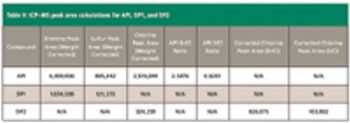
The authors investigate applications for ICP-MS detection with reversed-phase HPLC.
LCGC North America
This second part of the series describes the data loss inherent in most early method development experiments due to coelution, peak exchange, and the general difficulty of accurately identifying peaks across the experiment trial chromatograms.
LCGC North America
This installation of "Validation Viewpoint" describes how statistically rigorous quality-by-design (QbD) principles can be put into practice to accelerate each phase of liquid chromatography (LC) instrument method development.
LCGC North America
While the "Validation Viewpoint" column has focused on conventional and recombinant pharmaceutical products, and at times, bioanalytical methods, we have just begun to think about method validation as it relates to -omics type studies.
LCGC North America
This installment of SPP will compare and contrast the various types of polymeric and non-polymeric sorbents. The major advantages or polymeric sorbents will be discussed, and some applications will illustrate the versatility of polymeric SPE.

LCGC Europe
Very short columns filled with 1.9 µm particles were evaluated for the ultra-fast analysis of pharmaceutical formulations. Local anæsthetic, mydriatic and anti-hypertensive agents were chosen as analytes and a method was developed and validated for each of these substances, according to ICH guidelines. Excellent quantitative performance was obtained using an optimized chromatographic system that reduces the importance of extra-column effects and cuts the analysis time to less than 15 s.
LCGC Europe
The regulatory world and associated guidance documents within the pharmaceutical industry is changing rapidly. This column gives an overview of what's happened since the start of the year.
Special Issues
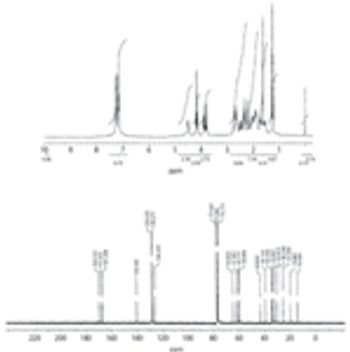
Ramipril impurities D and E are well-known degradation products of ramipril in the finished dosage form. A significant amount of an additional impurity was detected in ramipril tablets by an isocratic reversed-phase high performance liquid chromatography (HPLC) method on a short column. The structure of this impurity was proposed based on liquid chromatography–mass spectrometry (LC–MS) data using an electron spray ionization source. Structural elucidation using nuclear magnetic resonance (NMR) and infrared (IR) spectroscopy was facilitated by a newly developed preparative isolation method. This impurity was characterized as (2R,3aR,6aR)-1-[(R)-2-[[(R)-1-(ethoxycarbonyl)-3-phenylpropyl]amino]propanoyl]octahydrocyclopenta[b]pyrrole-2-carboxylic acid (impurity L). Its identification, synthesis and characterization are discussed.
Special Issues
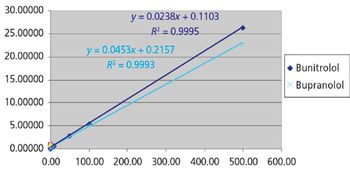
Automated solid-phase extraction (SPE) has been used extensively with liquid chromatography–tandem mass spectrometry (LC–MS-MS) to facilitate high-throughput analysis in the pharmaceutical, diagnostic, and forensic toxicology areas. In this work, we demonstrate the use of a systemized approach to SPE method development and LC–MS-MS analysis. This approach provides dramatic savings in analysis time and takes advantage of new innovations in high performance liquid chromatography (HPLC) columns to provide the cleanest extracts for LC–MS injection.

LCGC North America
The authors meet the need for a method for the determination of cytosine purity by developing a hydrophilic interaction chromatography (HILIC) method with demonstrated advantages in comparison to other separation techniques.
Special Issues
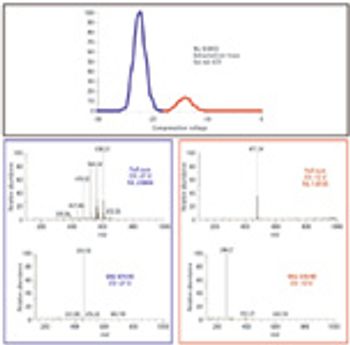
This article describes the ability to increase the sensitivity for a target compound in the presence of high-level background impurities by removing the dosing vehicle using a high-field asymmetric waveform ion mobility spectrometry gas-phase separation before mass spectrometry analysis.

LCGC North America
The authors present results that suggest that high-throughput, high-coverage profiling capabilities, such as those afforded by GCxGC-TOF-MS, can impact the development of personalized medicine.
LCGC Europe
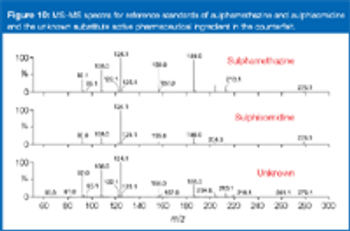
This month's column discusses the practicalities of detecting substitutions in counterfeit pharmaceuticals. The approaches used are practical "take home" lessons readers can apply to analyse unknowns in any mixture.
LCGC North America
This month's "Validation Viewpoint" installment highlights some method validation guidelines used in developing and validating dissolution test procedures.
LCGC North America
This month, guest columnists Kind and Fiehn discuss small-molecule structure elucidation (excluding peptides) using hyphenated chromatographic techniques, mass spectrometers, and other spectroscopic detectors.

LCGC North America
This article describes the factors that affect the selection of columns for two-dimensional (2D) LCxLC separations.

LCGC North America
Comprehensive GCxGC was employed for the separation of ICH and USP 1, 2, and 3 pharmaceutical solvents. The significantly improved peak capacity in GCxGC allows a single method for any combination of solvents and mitigates interference due to impurities in the solvents, diluents, analyte matrices, and from column or septum bleed, through the increased separation space.