






Special Issues
Implementation of the EU Directive proves to be challenging as regulatory variations among member states continue and questions remain unanswered.
Special Issues
Implementation of the EU Directive proves to be challenging as regulatory variations among member states continue and questions remain unanswered.
Special Issues
In the clinical trials arena, integrated software solutions help life science companies meet ever more stringent compliance challenges.
Special Issues
Two experts in the GCP field answer common questions about clinical trials and regulatory compliance.
Special Issues
At the same time the pharmaceutical industry faces new and complex issues with the drug development process and clinical trial environment, regulatory policies are increasing and adding to the burden of cost and time to market.
Special Issues
Safety and ethical concerns generate additional reporting and disclosure policies despite efforts to streamline research requirements.

LCGC North America
Globally, 2005 sales of pharmaceuticals have been estimated at approximately $550 billion. A significant fraction of this amount was due to the top pharmaceutical companies in the world. The top five companies alone were responsible for total revenues of $168 billion, or 30% of the entire market.

LCGC North America
This is the second installment of a two-part series on the practical aspects of configuring and operating a nano liquid chromatography-mass spectrometry (LC-MS) system.
LCGC North America
The first of a two-part series addresses HPLC pumps, sample introduction systems, and columns for nanoLC-MS.
LCGC Europe
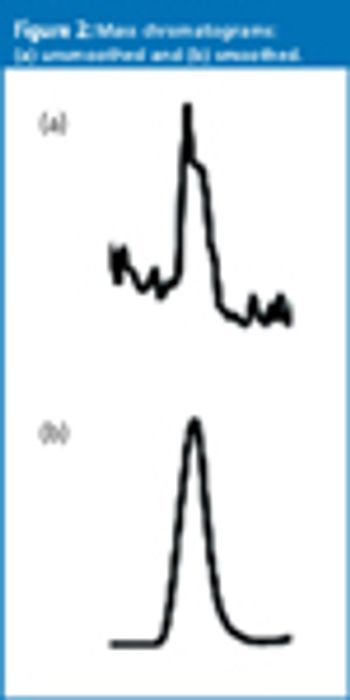
A more practical parameter for system suitability would be to use the peak width for a reference peak...
LCGC North America

LCGC North America
The authors explain why sample diluent is more than just a solubilizing agent and describe a systematic process for diluent selection when developing an HPLC assay of an active pharmaceeutical ingredient.
LCGC North America
Almost 40 years have passed since the concept of capillary electrophoresis (CE) was described by Hjertén (1) in 1967. It emerged as a viable analytical technique after the pioneering work of Jorgenson (2) in the early 1980s, and commercial instruments were first introduced at the end of that decade. It is appropriate at this time to survey the history of CE and to judge its success in the world of analytical instrumentation.

LCGC North America
process is interesting and involved, and in this month's installment of "MS - The Practical Art," Michael Balogh continues the Profiles in Practice series by exploring this topic with featured scientists Michele Kelly and Mark Kershaw.

LCGC North America
LC-MS monitoring of the drug clozapine is detailed along with a description of the overall system architecture, workflow, and maintenance routines that spport a large-scale drug monitoring program.
LCGC North America
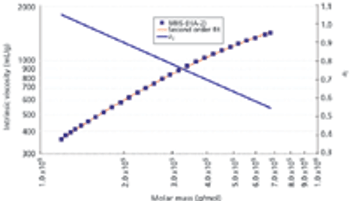
Hyaluronic acid (HA) is a naturally occurring, unbranched polysaccharide that consists of alternately repeating D-glucuronic acid and N-acetylglucosamine units. This biopolymer is present throughout all mammalian systems but occurs primarily in synovial (joint) fluid, vitreous humor, and various loose connective tissues (such as rooster comb) (1). HA is of enormous commercial interest for ophthalmic, medical, pharmacological, and cosmetic applications.
LCGC North America
In this month's installment of "Directions in Discovery," the authors discuss how, with the arrival of combinatorial libraries and high-throughput screening, pharmaceutical firms can develop new models of drug discovery that not only lessen the initial capital outlay involved in drug discovery, but also refine the discovery process.

LCGC North America
A simple HPLC procedure is described for the determination of bendroflumethiazide (BMFT) in pharmaceutical formulations and urine samples. No interferences from common additives or other drugs frequently administered with BMFT or from endogenous compounds in urine samples were found. The lack of an organic solvent in the mobile phase reduces the risk of environmental contamination and human toxicity.

LCGC North America
A new detection method based upon aerosol charging was examined for its applicability and performance with high performance liquid chromatography (HPLC). Our results demonstrate universal detection of nonvolatile analytes with response magnitude that is independent of analyte chemical properties, four orders of magnitude dynamic range, low nanogram, lower limits of detection, and < 2% relative standard deviation response variability. Broad applicability was demonstrated for a range of methods including those using gradient elution, reversed phase, hydrophilic interaction, and ion chromatography; normal and narrow bore column formats; and in combination with other detectors (for example, UV detectors, evaporative light-scattering detectors, and mass spectrometers).
LCGC North America
A new detection method based upon aerosol charging was examined for its applicability and performance with high performance liquid chromatography (HPLC). Our results demonstrate universal detection of nonvolatile analytes with response magnitude that is independent of analyte chemical properties, four orders of magnitude dynamic range, low nanogram, lower limits of detection, and < 2% relative standard deviation response variability. Broad applicability was demonstrated for a range of methods including those using gradient elution, reversed phase, hydrophilic interaction, and ion chromatography; normal and narrow bore column formats; and in combination with other detectors (for example, UV detectors, evaporative light-scattering detectors, and mass spectrometers).
LCGC North America
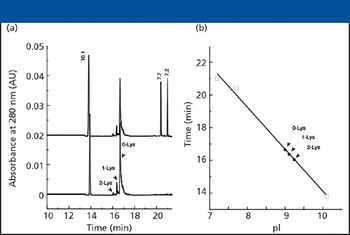
This month'ss "Directions in Discovery" column discusses current work in the use of capillary isoelectric focusing and mass spectrometry as a multidimensional separation technique for proteomic studies.
LCGC North America
How the use of peptide standards can indicate control as well as provide guidelines for method development.
LCGC North America
This article describes the optimum performance laminar chromatography technique and gives a brief account of recent applications in which it has been used.
LCGC North America
Wehr discusses strategies for coupling LC and CE with MALDI–MS for use in proteomic studies.
LCGC North America
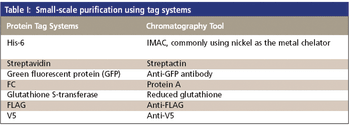
Two solutions to the problem of obtaining quantitative information about protein expression are to couple two or more chromatographic modes to increase resolution and to use affinity selection techniques.
LCGC North America
This column describes the principles of stir-bar sorptive extraction and presents some typical applications.