



Throughout 2024, the editors of LCGC International attended chromatography conferences across the globe. Below, you’ll find a sampling and overview of our conference coverage from the year.
Throughout 2024, the editors of LCGC International attended chromatography conferences across the globe. Below, you’ll find a sampling and overview of our conference coverage from the year.

An LC–HRMS approach for the simultaneous analysis of 15 N-nitrosamines in multiple APIs using a novel HILIC-based SPE clean-up step has been developed and tested.

Here is some of the most popular content posted on LCGC International this week.

In this article, we review some key considerations for chromatographic technique selection and method development across the full drug process—from early-stage active pharmaceutical ingredient (API) synthesis to routine commercial release activities.
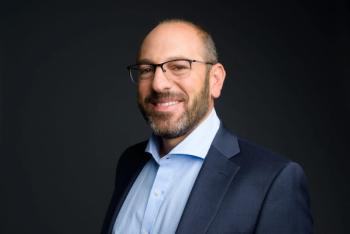
Ronald Piervincenzi, chief executive officer of the United States Pharmacoepia, focused on how collaboration and component quality can improve worldwide pharmaceutical production standards during a lecture at the Eastern Analytical Symposium (EAS) last month.

Organic solvents are generally not compatible with ion chromatography (IC) systems. The approach presented here assists the use of organic solvents for sample preparation and provides a mechanism for the removal of the organic solvents from the chromatographic flow path.

Three analytical and two pre-treatment methods—gas chromatography–mass spectrometry (GC–MS), gas chromatography–tandem mass spectrometry (GC–MS/MS), and liquid chromatography–tandem mass spectrometry (LC–MS/MS) plus liquid-liquid extraction (LLE) and dried blood spot (DBS) —were compared for the quantitation and characterization of barbiturates.
Here is some of the most popular content posted on LCGC International this week.

Webcasts
Webinar Dates/Times: Friday, December 13, 2024 Morning Session: 12:30 pm GMT | 1:30 pm CET | 7:30 am EST Afternoon Session: 2:30 pm GMT | 3:30 pm CET | 9:30 am EST

Mithibai College of Arts scientists recently used liquid chromatography-tandem mass spectrometry (LC–MS/MS) for detecting nitrosamines in blood pressure medication.

Webcasts
Webinar Date/Time: Wed, Dec 11, 2024 11:00 AM EST

Scientists recently developed new GC/LC-Q-TOF/MS-based method for determining pesticides in Angelica sinensis, a traditional Chinese medicine.

LCGC International sat down with Faith Johnson of ECOLAB to discuss her career and work with the Females in Mass Spectrometry (FeMS) group.

The grant will be part of a new collaborative scientific initiative to address the need for standards that define the desired performance of lateral flow immunoassay test strips to detect illicit drugs in tablets and powders.

Nicholas Ingram of IQVIA Laboratories recently spoke with LCGC International about using high-resolution mass spectrometry (HRMS) to help monitor drug stability.

Webcasts
Webinar Date/Time: Thu, Nov 14, 2024 10:00 AM EST

Webcasts
Webinar Date/Time: Thu, Nov 7, 2024 11:00 AM EDT

Webcasts
Webinar Date/Time: Tue, Nov 12, 2024 11:00 AM EST

An illuminating session at the International Symposium on Chromatography focused on currents trends and misconceptions surrounding oligonucleotide analysis.

Navin Rauniyar and Xuemei Han of Tanvex Biopharma USA recently discussed how identifying product-related variants through characterization enables the recognition of impurities that compromise the quality and safety of drugs.

Separation and Characterization of Macromolecules 11 (SCM-11) will take place from 22–24 January 2025 in Amsterdam, The Netherlands.

As part of our ISC 2024 coverage, we recently interviewed Alexandre Goyon of Genentech about his research and his being awarded our Rising Stars of Separation Science Award for Outstanding Achievement in Pharmaceutical Analysis.
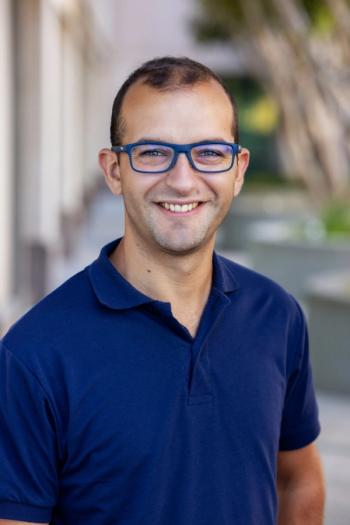
Alexandre Goyon specializes in developing advanced analytical methods to support new drug modalities.

The 34th International Symposium on Chromatography kicked off on October 6 in Liverpool, featuring two plenary sessions and an opening ceremony.

Universidad Católica del Maul scientists reviewed advancements made in using machine learning and MALDI-TOF-MS for predicting antimicrobial resistance in different materials.