

Pharmaceutical Product Development (PPD) is expanding its bioanalytical laboratory in Richmond, Virginia, in an effort to enhance its ability to meet biopharmaceutical clients’ increasing research needs.
Pharmaceutical Product Development (PPD) is expanding its bioanalytical laboratory in Richmond, Virginia, in an effort to enhance its ability to meet biopharmaceutical clients’ increasing research needs.
LCGC Europe
Click the title above to open the LCGC Europe September 2019 regular issue, Volume 32, Number 9, in an interactive PDF format.


The Column
The 9th International Symposium on Recent Advances in Food Analysis (RAFA 2019) will take place in Prague, Czech Republic, on 5–8 November 2019. This preview offers a glimpse of what to expect at the conference.
The Column
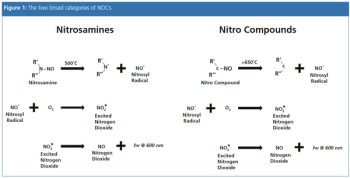
This article discusses the detection of N-nitroso compounds (NOC) in a range of different food and beverages.

The Column
The Chromatographic Society (ChromSoc) will be hosting the 4th “Grass Roots” educational event at the Longmynd Hotel in the beautiful market town of Church Stretton from the 4–7 October 2019.

The Column
Researchers from the University of Rome have developed a strategy for the identification of underivatized short peptides in urine using graphitized carbon black (GCB) solid-phase extraction (SPE) and liquid chromatography–mass spectrometry (LC–MS).
The Column
The first Analytica Lab Africa took place this July at the Gallagher Convention Center in Johannesburg with 148 exhibitors from 15 countries presenting their products and solutions for the African market.
The Column
Click the title above to open The Column September 2019 North American issue, Volume 15, Number 9, in an interactive PDF format.


The Column
Click the title above to open The Column September 2019 Europe & Asia issue, Volume 15, Number 9, in an interactive PDF format.

In an effort to better understand the current application potential of microscale liquid chromatography (micro-LC), I picked up a few recent review articles from the literature. What one immediately appreciates from glancing through the literature for such information, is that there are a lot of different configurations and alternative formats, which can be placed under the micro-LC umbrella.
LCGC Asia Pacific
Click the title above to open the LCGC Asia Pacific August/September 2019 regular issue, Vol 22, No 3, in an interactive PDF format.
LCGC North America
Click the title above to open the LCGC North America September 2019 issue, Volume 37, Number 9, in an interactive PDF format.

LCGC North America
Superficially porous particles have demonstrated separation efficiency gains compared to totally porous particles. The total pore blocking technique provides the purest possible measure of column packing quality. Here, we explain this technique and show what it has revealed.

LCGC North America
Glycosylation is the most common monoclonal antibody (mAb) posttranslational modification. What is essential to know about it?

LCGC North America
Are EU GMP Chapter 4 and USP Chapter on Good Documentation Guidelines similar or complementary? Should we consider any other sources of advice?
LCGC North America
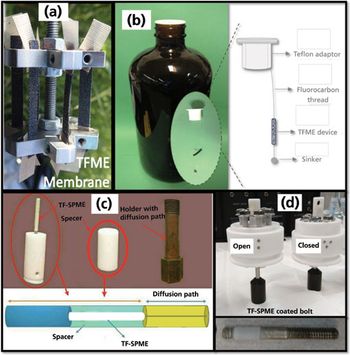
In on-site environmental applications, representative sampling and proper replication are essential. For these reasons, recent work in thin-film solidphase microextraction has focused on the development of unique holders and customized samplers that are tailored for distinct sampling environments. Here, we explore the latest developments.

LCGC Europe
The sample solvent can have a big impact on peak shape in both reversed-phase and hydrophilic interaction liquid chromatography (HILIC) separations, especially when large volumes are injected. Diluting the sample with weak solvent can be an effective solution to mitigate this problem, but we have to be careful to not lose analytes of interest to precipitation or phase separation.
LCGC Europe
Most manufacturers ship gas chromatographs with a small collection of consumable parts and accessories, such as extra ferrules, inlet liners, or septa, and a few instrument-specific tools. In earlier times, some convenience items might have been included as well, like a bubble flow meter or a small set of tools, but now it’s rare to find such things in the shipping boxes. This edition of “GC Connections” lists a number of essential items that should be on hand in every gas chromatography (GC) laboratory, their function, and how to use them effectively.
LCGC Europe
The 9th International Symposium on Recent Advances in Food Analysis (RAFA 2019) will take place in Prague, Czech Republic, on 5–8 November 2019.

Our recent discussion on the use of hydrogen as a carrier for gas chromatography applications elicited many questions and comments, however one common question was “what are the considerations for using hydrogen carrier with MS detectors?”
The Column
Click the title above to open The Column August 2019 Europe & Asia issue, Volume 15, Number 8, in an interactive PDF format.
The Column
Click the title above to open The Column August 2019 North American issue, Volume 15, Number 8, in an interactive PDF format.
Recently, I was honored to attend the 2019 Shimadzu Global Innovation Summit, hosted by Shimadzu Corporation in Kyoto, Japan. The focus of this meeting was to highlight innovation at the interface between analytical chemistry and medicine.

The Column
Incognito is thinking long-term. Is there scope for hope in the future?