
PharmTech LCGC Sciex Webinar 11.10

Food and Beverage Analysis

Latest News


i3-390802-1408681612263.gif

The Application Notebook

Soft drink formulas often include preservatives, artificial sweeteners, flavours or caffeine in their list of ingredients. Using the Acclaim OA column, as many as eight common additives may be determined in a single run. Many of these additives are hydrophilic organic acids for which this column was designed. Notably, benzoate and sorbate, which do not resolve on C18 columns at low pH, are fully separated.

Special Issues

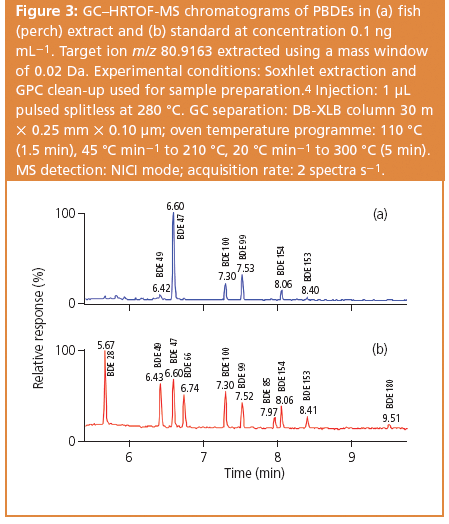
Ultrahigh performance liquid chromatography (LC)–time-of-flight mass spectrometry –(TOF-MS) and gas chromatography (GC)–TOF-MS are powerful approaches for screening target compounds and identifying or characterizing nontarget compounds in complex mixtures. The combination of accurate mass data and newly developed software enables truly generic screening methods with TOF-MS, and the confident detection, identification, and confirmation of small molecules in a range of application areas.

i1-323295-1408685928326.jpg

LCGC Europe

Any wine can suffer from that corked wine taint. This spoilage, recognized by a distinct aroma of damp musty leaves and a damp cardboard taste, makes a wine undrinkable.

i1-323290-1408685941848.jpg

LCGC Europe

VICAM, the food safety technology business, headquartered in Watertown, Massachusetts, USA, has been acquired by Waters. The deal also included the associated net assets of VICAM and has proceeded under undisclosed terms.

i8_t-623548-1417779203757.jpg

The Application Notebook

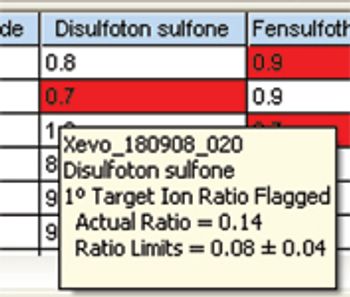
To utilize the power of the Waters® UltraPerformance Liquid Chromatography (UPLC®) System combined with the fast MS acquisition rates of the Xevo™ TQ Mass Spectrometer for rapid determination and confirmation of pesticide residues in baby food.

i12_t-153453-1408695412315.gif

LCGC North America

Co-occurrence of several mycotoxins (deoxynivalenol, zearalenone, T-2-toxin, HT-2 toxin) produced by field fungi, such as Fusarium graminearum and Fusarium culmorum, requires several analysis methods for their characterization. A reliable method for the determination of type A- and B-trichothecenes and zearalenone in cereal-based samples is presented. To achieve optimal mass spectrometric detection, electrospray ionization (ESI) and atmospheric pressure chemical ionization (APCI) were compared. Best results were obtained with ESI by implementing a two-period switching for the ionization polarity. The limit of quantification differs for each individual substance within the range 1–10 ppb. Mean recoveries using a standardized clean-up procedure were in the 54–93% range.

The Application Notebook

The current concern over acrylamide levels in food has unexpectedly brought amino acid analysis to the forefront . . .