



Webcasts
Webinar Date/Time: Thu, May 18, 2023 11:00 AM EDT
Webcasts
Webinar Date/Time: Thu, May 18, 2023 11:00 AM EDT

A new way to automate buffer management systems with greater precision and accuracy may revolutionize biopharmaceutical purification processes.

By improving fluorescent labeling, scientists can find new ways to help treat and prevent influenza.

Waters Corporation has purchased Wyatt Technology, expanding both parties' reach in biopharmaceutical development and creating better healthcare technology for all.

Webcasts
Webinar Date/Time: Wed, May 3, 2023 11:00 AM EDT
Some traditional MAM workflows are being substituted with iMAM workflows that rely on analyzing the intact mass of mAbs in their native form, resulting in significant improvements in high-throughput sample analysis.

Neil Kelleher received the 2023 Pittsburgh Analytical Chemistry Award for his contributions to analytical chemistry. He was recognized at Pittcon 2023, which took place in Philadelphia, Pennsylvania.

Webcasts
Webinar Date/Time: Thu, Mar 9, 2023 11:00 AM EST

A column with chemically modified column hardware showed improvements in analytical performance for siRNA compared to a conventional stainless-steel column.

A drug stability program is a fundamental part of ensuring product quality, safety, and efficacy. Here, we summarize essential guidelines, differences between large- and small-molecule stability, and the analytical methods used.

Webcasts
Webinar Date/Time: Monday, March 20th, 2023 at 11am EDT|8am PDT|3pm GMT|4pm CET

Webcasts
Webinar Date/Time: Thu, Jan 19, 2023 11:00 AM EST

In this extended special feature to celebrate the 35th anniversary edition of LCGC Europe, key opinion leaders from the separation science community explore contemporary trends in separation science and identify possible future developments.

Webcasts
Webinar Dates/Times: Wednesday, December 14th, 2022 at 10am EST|3pm GMT Wednesday, December 14th, 2022 at 2pm EST|11am PST Thursday, December 15th, 2022 at 12pm JST|11am CST

Webcasts
Webinar Date/Time: Friday, December 9th, 2022 at 11am EST|8am PST|4pm GMT|5pm CET

What is the right number of replicates in biopharmaceutical analysis? Does the answer depend on the type of analysis?

Pepsin digestion and guanidine hydrochloride post-digestion can improve sequence coverage in antibody peptide mapping compared with trypsin digestion.

In response to regulatory concerns, host cell protein (HCP) analysis is now often conducted using LC–MS/MS. Unlike ELISA, LC–MS/MS can positively identify and quantify specific HCPs and characterize the total amount of HCPs present.

To reach satisfactory results in terms of accurate retention time prediction, new in silico optimization approaches must be considered.

Sample preparation and analysis of pharmaceuticals in wastewater present unique challenges. Here, we describe those challenges.

Small metabolic molecules often are chiral and can play important roles in regulating a variety of biological functions, occasionally providing information about the presence and progression of disease.

Headspace GC reveals that sonication can degrade common organic solvents.
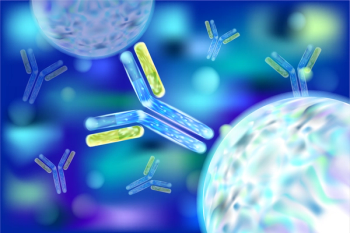
The effect of the mobile phase composition, organic alcohols, ion-pair reagents, and different bonding chemistries on mAb separations is discussed.

An analytical method for the separation of oligonucleotides of different chain length by IEC using a bio-inert UHPLC system is presented.

An overview of mRNA-based vaccine production and a discussion on the methods that are currently in use to check the quality of these vaccines.