




The Column
This is the first in a series of articles exploring current topics in separation science that will be addressed at the HPLC 2019 conference in Milan, Italy, from 16–20 June.
The Column
This is the first in a series of articles exploring current topics in separation science that will be addressed at the HPLC 2019 conference in Milan, Italy, from 16–20 June.

LCGC Europe
CZE–ESI‑TOF‑MS for the characterization of the mAb infliximab and its variants is presented. Infliximab was analyzed using a middle-up approach involving either reduction or digestion with the enzyme IdeS. A multilayer capillary coating of PB-DS‑PB in combination with a background electrolyte of 40% acetic acid provided efficient separation of the obtained antibody fragments, that is, LC and HC, as well as F(ab’)2 and Fc/2 parts. C-terminal lysine variants were also resolved. Recorded mass spectra of HC and Fc/2 fragments permitted assignment of 13 glycoforms and provided a quantitative profile, with G0F the most abundant glycoform (~50%). CZE–ESI-TOF-MS represents an efficient means for the straightforward analysis of a monoclonal antibody and its proteoforms.

LCGC Europe
A discussion of hydrophobic interaction chromatography (HIC) theory and its application to the analysis of proteins and biomolecules is presented.

LCGC North America
Determining the higher order structure of a protein pharmaceutical is important. Here, we review the approaches for HOS determination that are currently receiving the most attention in the literature and at scientific meetings.

LCGC North America
New strategies for “bottom-up” analysis of therapeutic proteins, using faster enzymes, new buffer systems, and optimal column chemistries, enable analysts to perform these studies much faster and with fewer artifacts.

The Column
The Column spoke to Steven Janvier, a PhD student at Sciensano and Ghent University (Belgium), and Celine Vanhee, a scientist at Sciensano, about their work to develop a hydrophilic interaction chromatography (HILIC) methodology capable of detecting counterfeit polar peptide drugs available on the black market.
The Column
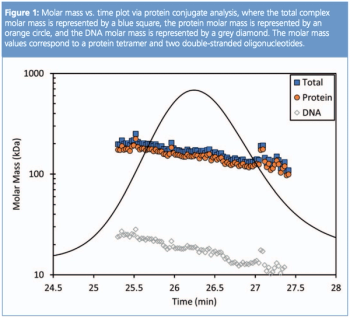
This article presents two case studies regarding the characterization of protein-DNA complexes using two complementary multi-angle light scattering (MALS) techniques, namely size-exclusion chromatography (SEC–MALS) to determine absolute molar mass of each component, and composition-gradient MALS (CG–MALS) to quantify stoichiometry and affinity at binding sites in solution.

The Column
Within the broad scope of analytical techniques required to characterize a protein, chromatographic methods have shifted towards high-flow analyses that can drop development time significantly. However, fast analytical methods for charge heterogeneity have lagged in development because current column technologies are ultrahigh-pressure liquid chromatography (UHPLC)-incompatible. This article will demonstrate the development of a high-flow method for charge variant analysis made possible through a bioinert titanium column flow path.
LCGC North America
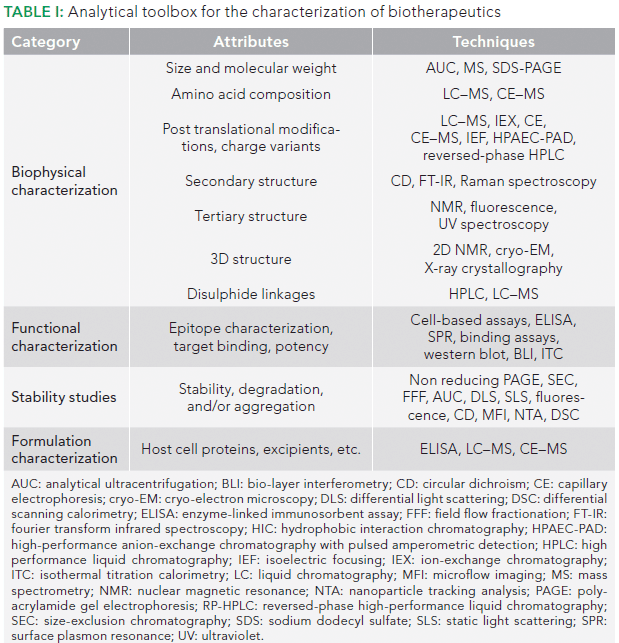
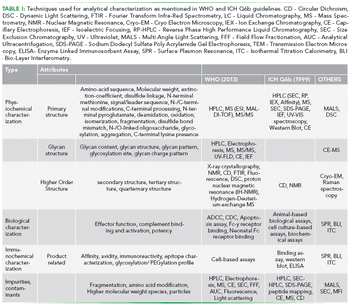
The analytical techniques used for characterizing biotherapeutics have evolved. We review the utility of the traditional tools and discuss the new, orthogonal techniques that are increasingly being used.

Special Issues
Among all the analytical techniques available for epitope mapping studies, hydrogen–deuterium exchange mass spectrometry (HDX-MS) is usually the fastest and easiest to carry out. We present here the epitope mapping of three distinct monoclonal antibody (mAb) candidates targeting the same antigen, an interleukin receptor. The goal is to establish the binding mode of these mAbs, and explain possible differences observed for in vitro binding and in vivo function.

LCGC Europe
Glycosylation is a critical quality attribute (CQA) that can impact on product safety and efficacy of protein biopharmaceuticals. Characterization of N-glycans is therefore of paramount importance for the pharmaceutical industry. Hydrophilic interaction liquid chromatography (HILIC) combined with fluorescence detection (FLD) and 2-aminobenzamide (2-AB) labelling is the golden standard for the analysis of N-glycans enzymatically liberated from biopharmaceuticals. However, for phosphorylated N-glycans, that is, those attached on lysosomal enzymes, irreproducible data and recovery issues are observed on conventional liquid chromatography (LC) instrumentation and columns, which can be attributed to the interaction of the phosphate moieties with stainless steel components in the flow path. This article demonstrates the analysis of phosphorylated glycans with full recovery on a bio-inert LC system and PEEK-lined HILIC column.

LCGC North America
Much of the conventional wisdom regarding size-phase separations of proteins has been negated thanks to development of superior chemistries and advances in research. In this article, details that the authors have found to be especially beneficial in achieving effective SEC separations are examined.

LCGC North America
Why the technique is a handy component of any analyst’s arsenal.

LCGC North America
For reversed-phase separations of proteins, you must consider pore size,column temperature, and stationary-phase chemistry. Here are some guidelines.

LCGC Europe
Federal regulations concerning the safety and efficacy of biopharmaceuticals require the implementation of a comprehensive toolbox of physicochemical and biological characterization methods. In order to demonstrate consistent overall structure, even minute differences in primary structure and post‑translational modifications (PTMs) have to be detectable in therapeutic proteins. Because of their remarkable capability of revealing small changes in molecular structure, high performance liquid chromatography (HPLC) and mass spectrometry (MS) rate among the most powerful technologies for comprehensive protein analysis. This article details the potential of both methods with regard to revealing methionine oxidation, a chemical modification that may be induced during downstream processing and storage of biopharmaceuticals. The benefits and limitations of bottom-up, middle-down, and top‑down HPLC–MS analysis will be demonstrated for the detection of oxidation variants in a therapeutic monoclonal antibody (mAb).
LCGC Europe
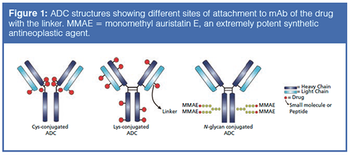
This instalment of “Perspectives in Modern HPLC” provides an overview of antibody–drug conjugates (ADCs) as a new class of biotherapeutics and describes their analytical characterization for quality assessment with examples from extensive applications libraries.

LCGC North America
Comprehensive characterization of ADCs requires increasingly powerful approaches consisting of small- and large-molecule techniques.

LCGC North America
To ensure the reliable and accurate characterization of biotherapeutics, an arsenal of orthogonal analytical techniques is needed.
Special Issues
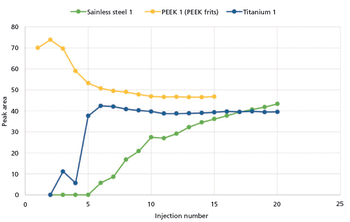
In this study, we compare the performance of plastic and metal materials in UHPLC columns designed for the analysis of biological molecules. We evaluate the performance of these materials in terms of inertness, column chromatographic performance, and reproducibility.

LCGC Europe
Monoclonal antibodies are becoming a core aspect of the pharmaceutical industry. Together with a huge therapeutic potential, these molecules come with a structural complexity that drives state-of-the-art chromatography and mass spectrometry (MS) to its limits. This article discusses the use of micro-pillar array columns in combination with mass spectrometry for peptide mapping of monoclonal antibodies (mAbs) and antibodyÐdrug conjugates (ADCs). Micro-pillar array columns are produced by a lithographic etching process creating a perfectly ordered separation bed on a silicon chip. As a result of the order existing in these columns, peak dispersion is minimized and highly efficient peptide maps are generated, providing enormous structural detail. Using examples from the author’s laboratory, the performance of these columns is illustrated.
LCGC North America
Parameters such as pore size, column dimensions, temperature, flow rate, and mobile phase are important to consider when developing SEC methods.
LCGC Europe
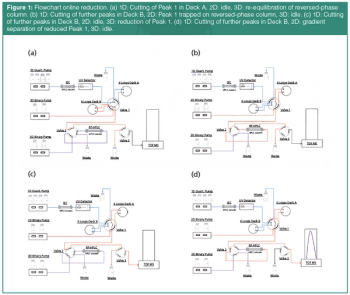
Characterization of protein modifications is an essential aspect of biopharmaceutical development. Traditionally, the characterization process of chromatographic peaks involves manual, larger-scale fractionation to obtain a sufficient amount of material for further analytical studies. This article presents a fully automated process for online peak fractionation and reduction of therapeutic antibodies with subsequent quadrupole time-of-flight mass spectrometry (QTOF-MS) characterization. This innovative technique significantly accelerates MS peak characterization compared to traditional approaches and avoids the risk of unintended modifications of the variants as a result of the isolation process, for example, deamidation during storage of isoforms. This approach considerably reduces the required sample amount and can be used for the characterization of product-related impurities during early stage development.
LCGC North America
A look at techniques for charge-variant analysis of monoclonal antibodies and the question of whether pH gradients are really better than salt gradients


The Column
The discovery and development of biopharmaceuticals that target specific diseases can be transformative for people living with illness. However, bringing a new therapy to market is a prolonged and costly process mired in uncertainty. Ensuring safety, efficacy, and product quality is paramount. Biopharmaceuticals, by their nature, are highly complex. A myriad of heterogeneity can be intentionally functional, an unwanted consequence of manufacturing and storage, or generated by biological modification in vivo. Not all, but some post-translational modifications or biotransformations can impact development, manufacturing, safety, efficacy, and overall product quality. These critical quality attributes (CQAs) need to be identified, characterized, controlled, and monitored throughout the drug discovery and development cycle. Specialty measurement using mass spectrometry (MS) continues to play an ever‑increasing role across the continuum.