


LCGC North America
The strategies described here can improve the efficiency and analyte recovery of chromatographic methods used to characterize monoclonal antibodies and antibody– drug conjugates.
LCGC North America
The strategies described here can improve the efficiency and analyte recovery of chromatographic methods used to characterize monoclonal antibodies and antibody– drug conjugates.

Filip Cuyckens from Janssen R&D in Belgium spoke to LCGC Europe about recent innovative approaches he and his team developed to support drug metabolism and pharmacokinetic studies, and the inventive role that two-dimensional liquid chromatography (2D-LC) plays in his laboratory to boost sensitivity, solve recovery issues, and increase overall efficiency.
![[1]L1593120170948.jpg](https://cdn.sanity.io/images/0vv8moc6/chroma/77f8f859bb7a2582ccded7f5dd0b4cc0efde35c1-500x137.jpg?w=350&fit=crop&auto=format)
Special Issues
Single-column (batch) chromatography, involving two or more successive single-column (batch) chromatographic steps, is a standard approach for purifying biopharmaceuticals. Step one, known as the capture step, is used to remove product-related impurities, and step two, the polishing step, is used to remove product-related impurities. Here we present and illustrate the advantages of continuous chromatography for these separations: capture simulated moving bed (captureSMB) for the capture step and multicolumn countercurrent solvent gradient purification (MCSGP) for polishing.

LCGC North America
Multidimensional separations, in which two or more separation methods are coupled, are a valuable analytical tool for higher peak capacity and improved selectivity for the analysis of complex samples like biotherapeutics.
The Column
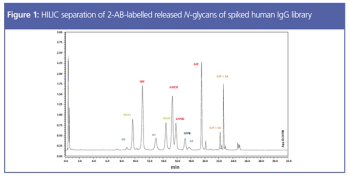
Post-translational modifications are potential critical quality attributes (pCQAs) routinely assessed in biotherapeutic development. Glycosylation is one of the most important attributes to assess because it affects protein function as well as antigen receptor binding. N-glycosylation of asparagine residues is the most common pCQA assessed during monoclonal antibody (mAb) therapeutic development. There are a few protocols to assess and quantitate N-glycans, but the most common approach is through an enzymatic release and labelling procedure, followed by separation and detection. This article demonstrates the method development considerations for sample preparation and chromatographic analysis of N-glycans of therapeutic mAbs.
LCGC Europe
The dried blood spot (DBS) sampling technique has been around for decades, predominantly for small molecules and mainly in newborn screening. Although determination of proteins after DBS sampling is usually performed with immunometric assays, the combination with mass spectrometry (MS) is gaining interest. This article provides an overview of DBS sampling for mass spectrometry-based protein analysis. The first part will focus on clinical applications for DBSs and on sampling other biological matrices apart from whole blood, including dried matrix spots (DMSs). The second part will explore the new frontiers of the DBS sampling technology, including novel sampling materials/devices, and novel combinations with mass spectrometry. Examples of use in both qualitative and quantitative protein analysis are highlighted as well as examples using both bottom-up and top-down proteomics approaches.
Special Issues
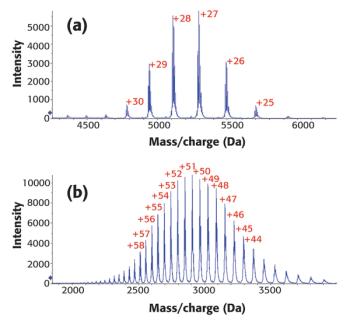
Size-exclusion chromatography (SEC), with the use of ammonium acetate buffer, can be coupled on-line to electrospray ionization MS for the characterization of size variants of therapeutic monoclonal antibodies (mAbs). A quadrupole time-of-flight (QTOF) MS system was employed, and the MS method was optimized to achieve favorable sensitivity for high-mass detection, while maintaining the structural integrity of the aggregates (or high molecular weight species) and fragments (or low molecular weight species).

LCGC North America
How do I know when bioinert liquid chromatography columns, systems, or components are needed for my separations of biomolecules?

LCGC North America
A top-down approach to quantifying intact proteins from biological fluids using liquid chromatography–triple quadrupole–mass spectrometry (LC–MS/MS) offers the potential for more absolute quantitation than bottom-up approaches. To make this broadly viable, however, commercial sample preparation tools are needed.
![[1].jpg](https://cdn.sanity.io/images/0vv8moc6/chroma/f970d09fd9a78d8d758b609bc5555ac0efcf1f2b-1000x228.jpg?w=350&fit=crop&auto=format)
LCGC North America
A method was developed for the molecular weight characterization of heterogeneous polymer mixtures, such as heparins and glatiramer acetate, noting that single molecular structures are not adequate for creating a molecular weight calibration curve. That limitation is overcome in this work, which demonstrates method validation and application to process samples.
LCGC North America
Advanced separation and mass spectrometry methods enable comprehensive profiling of the inherent glycan heterogeneities of protein therapeutics. In particular, reversed-phase HPLC–based multiattribute methods (MAMs) provide a wealth of information, and other techniques, such as HILIC and CE-MS, also continue to evolve.

The Column
To fully characterize a protein biopharmaceutical, it must be broken down into smaller segments (peptides). Several high performance liquid chromatography (HPLC) techniques can be used to provide a wealth of information on everything from post-translational modifications (PTMs) to the glycoprofile to information on similarity when characterizing biosimilars.
The Column
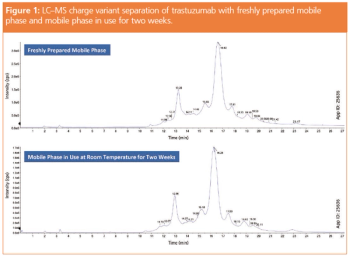
The utility of native high-resolution mass spectrometry (HRMS) in intact protein characterization is rapidly growing because of advances in both ion-exchange chromatography (IEC) as well as MS-compatible buffer systems. MS is a critical component of biotherapeutic characterization, but its combination with traditional chromatographic separations, such as size-exclusion chromatography (SEC) and IEC, has been slow because of the predominant use of high salt mobile phases, which are incompatible with MS. Recently reported methods using cation-exchange chromatography (CEX) with volatile buffer systems for pH gradient elution has given researchers the ability to use these chromatographic techniques with MS detection. In this article a robust, MS-compatible buffer system for high sensitivity IEC with pH gradient elution for charge variant analysis of intact monoclonal antibodies (mAbs) is described.

LCGC Asia Pacific
The versatile size-exclusion ultrahigh‑performance liquid chromatography (SE-UHPLC) platform method described here provides superior separation for bispecific monoclonal antibody formats compared to a previous method.
LCGC North America
Hydrogen–deuterium exchange–mass spectrometry enables determination of higher order structures of biopharmaceuticals and direct comparisons between a biosimilar and its proprietary analog.
Special Issues
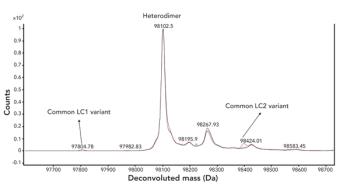
Given the complexity of producing bispecific antibodies, suitable analytical methods to detect and measure the levels of undesired variants are essential. Here, a novel MS-based method for variant detection is presented.
Special Issues
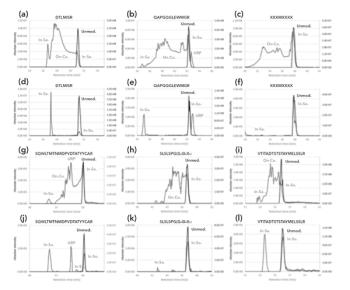
Long-term column use can lead to on-column methionine oxidation during LC–MS/MS peptide mapping of antibody-based biotherapeutics. Following the approach described here minimizes the risk of measuring oxidative artifacts, and helps generate high quality data to provide reliable quantitative information about product-related heterogeneities.
Special Issues
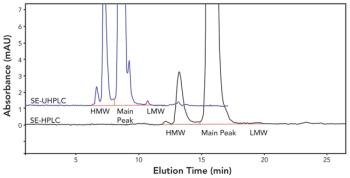
Applications of size-exclusion chromatography (SEC) are presented for characterization and quality control of novel biotherapeutic products, including antibody–drug conjugates, hydrophobic proteins, and coformulations.
Special Issues
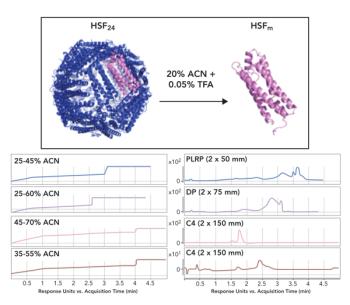
In this study, a conjugation strategy for Fab–ferritin conjugates, used for drug delivery, was successfully optimized using LC–MS. Characterization of the resulting conjugates was performed using SEC-MALS-QELS.
Special Issues
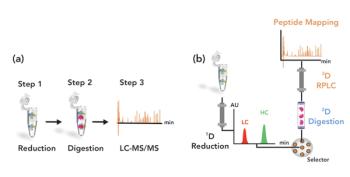
The potential of multidimensional online peptide mapping analysis as a strategy for improving a postlabeling workflow for protein–protein interactions is demonstrated using both hydroxy radical footprinting–mass spectrometry (HRF–MS) and LC–MS/MS.

Special Issues
A simple and robust size-exclusion chromatography (SEC) method has been developed for characterizing a multimeric PEG–protein conjugate. A wide range of size variants of the conjugate, ranging from 50 kDa to >1000 kDa, can be resolved and quantitated.

LCGC Europe
This article investigates host cell protein analysis using micro-pillar array columns combined with mass spectrometry.

LCGC North America
Glycosylation is the most common monoclonal antibody (mAb) posttranslational modification. What is essential to know about it?

The Column
The Column spoke to Richard Shannon from AstraZeneca about his work characterizing monoclonal antibodies (mAbs), why ion-exchange chromatography (IEC) is his technique of choice for analyzing mAbs, and offers his advice for anyone wanting to use the technique.

Special Issues
Glycan isomer expressions have not been well studied, due to inefficient separation and structural identification techniques. Fortunately, with the development of novel separation techniques and liquid chromatography–mass spectrometry (LC–MS) based glycan isomer identification strategies, new efforts have been made to investigate the glycan isomers in various diseases. Here, we review the recent advances of several isomeric separation techniques for both N- and O-linked glycans.