

E-Separation Solutions
Click here to view the complete E-Separation Solutions newsletter from April 19, 2012.
E-Separation Solutions
Click here to view the complete E-Separation Solutions newsletter from April 19, 2012.
E-Separation Solutions
This Wednsday morning session will be presided over by Professor Feldmann of the University of Aberdeen, Aberdeen, Great Britain.
E-Separation Solutions
A session titled ?Advances and Challenges in Separation Science? chaired by Professor Engewald, Leipzig, Germany, begins at 2:00 p.m. today.
From 17?20 April 2012, representatives of the laboratory technology, analysis and biotechnology sectors will meet at Analytica 2012 in Munich, Germany. In this 23rd year, visitors can expect a special highlight: For the first time ever, the international trade fair will feature three completely equipped laboratories with live demonstrations on each day of the fair.
E-Separation Solutions
This Tuesday session will be chaired by Dr Juan Pablo Albar, Proteomics Facility, Centro Nacional de Biotecnologia (CSIC), Madrid, Spain.
Analytica conference spotlight 2012
Analytica exhibitor highlights 2012
Guide to Munich, Analytica 2012
Useful Phrases, Analytica 2012
E-Separation Solutions
This Tuesday session will be chaired by Professor Ralf Zimmermann of the University of Röstock, Germany.
LCGC Europe eNews
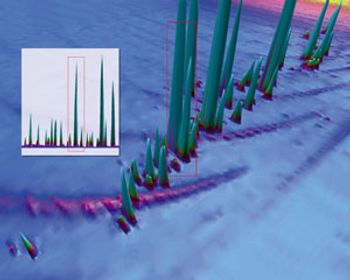
A retention index tool called iMatch that aims to reduce the number of false positive results when using gas chromatography mass spectrometry (GC-MS ) and comprehensive two-dimensional gas chromatography mass spectrometry (GC×GC-MS) has been developed by a team of researchers from the University of Louisville. Alasdair Matheson, editor of LCGC Europe, spoke to Xiang Zhang to find out more.
LCGC Europe eNews
Good news for users analyzing complex sample mixtures: Shimadzu offers an extra dimension in peak separations for all hyphenation technologies in chromatography.
LCGC Europe eNews
Shimadzu has announced that they will establish the Shimadzu Centre for Advanced Analytical Chemistry at the University of Texas at Arlington, USA.
LCGC Europe eNews
GE Healthcare has announced the acquisition of SeqWright, a provider of nucleic acid sequencing and other genomic services.
E-Separation Solutions
Kevin Schug, an associate professor of chemistry and biochemistry at The University of Texas (UT) at Arlington, has been named the university's new Shimadzu Distinguished Professor of Analytical Chemistry.
LCGC North America
Thermo Fisher (Waltham, Massachusetts) has launched a seminar series, ?New Frontiers in Water Analysis,? which is scheduled for major European cities now through December 2012.
Beckman Coulter Life Sciences (Indianapolis, Indiana) has acquired Blue Ocean Biomedical, LLC, a Pembroke Pines, Florida-based manufacturer of automated flow cytometry systems and reagents.
LCGC Europe eNews
Novasep (Pompey, France) has announced the opening of a new facility in Shanghai, China. This new site will complement Novasep?s existing 12 global synthesis and process sites in France, the US, Germany, Belgium and the Bahamas.
LCGC Europe eNews
AB SCIEX (Framingham, Massachusetts, USA) has announced the AB SCIEX Academic Partnership Programme to increase the number of scientists who benefit from the company?s assistance and resources for advancing research in proteomics, metabolomics and lipidomics.
E-Separation Solutions
Click here to view the complete E-Separation Solutions newsletter from April 5, 2012.
Agilent Technologies Inc. (Santa Clara, California) and FAPESP, the São Paulo Research Foundation and principal funding agency for academic research in the city of São Paulo, Brazil are jointly funding two research projects.
The Column
Researchers from the University of Basque, Spain, have conducted an experiment into different cooking oils and discovered that compounds known as aldehydes released from the oils increase the risk of neurologic degenerative diseases and several different cancers.
The Column
Two scientists from Uludag University in Turkey have examined the potential transfer of harmful phthalates from toys onto the skin of children via sweat.

The Column
A stable baseline is a prerequisite for precise, accurate and reproducible GPC/SEC analysis, especially for samples with a broad molar mass distribution. Baseline problems can include drift, wander (long-term noise), noise/spikes (short-term noise), as well as positive or negative system peaks.

The Column
A recent study into the beneficial qualities of porcine haemoglobin has revealed some interesting results.

The Column
The majority of the human brain is not yet fully understood and we still have a lot to learn about its workings. A group of scientists have performed a comprehensive first characterization of the human occipital lobe (primary visual cortex) and cerebellum proteomes from 12 post-mortem samples.
LCGC North America
Recent Developments in LC Column Technology.
LCGC North America
Trace-Level GC-MS Analysis of Pesticides

LCGC North America
A review of a gas chromatographic procedure developed for the direct measurement of trace levels of lindane, aldrin, heptachlor epoxide, dieldrin, o,p-DDD, and dichlorodiphenyltrichloroethane (DDT)